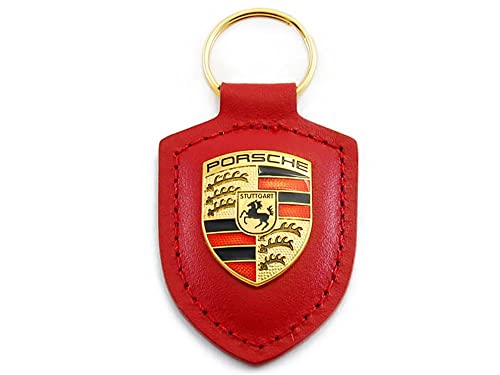
Best Porsche Merch categories, shortlists and suggestions compiled here and elsewhere on our webpages aim to assist you in getting the biggest bang for your buck on all Porsche gear presented here
Best Porsche Merch November 18, 2026
Not much is more exciting than picking up some new Porsche merch. But perhaps the next best thing, besides muscling a Porsche around Laguna Seca, of course, is embarking on the hunt for that next piece of Porsche gear.
So it comes quite naturally for most of us here at StuttgartDNA to sniff out every intriguing item of merch — searching for the best of the best Porsche gear.
Which brings us to one of our favorite pastimes — scouring and surveying the Internet for buried Porsche treasure. Following below, we’re puttin’ down the best of the best that we’ve unearthed — the Best Porsche Merch…
As an Amazon Associate I earn from qualifying purchases.
Sign up for our free e-book to totally bone up on the Porsche of your dreams — as well as take full advantage of our Guide‘s thorough Checklists to document the critical milestones along your journey to Porsche Nirvana…
Check back in with us frequently here — new Best Porsche Merch gems are added practically every day…
* * *
Keep Reading: Need Tires Soon…?
Check out these articles from our Tire Guide series. Start with the Master Pillar Guide for the full picture, then dive into the narrower topics that interest you and/or match your desired next tire or wheel purchase.
MASTER PILLAR tire buying guide
Want a much broader overview? Of how to go about choosing between winter and all-season tires and buying the right tires for your car or SUV?
From decoding sidewall numbers, to covering every tire type, sizing code, brand tier, and maintenance practices, our master tire pillar article, “Your Complete Tire Buying Guide,” covers all you need to make a safe, smart choice through the link immediately below…
From max-performance summer to Michelin Cup 2 and semi-slicks — how to choose the right performance tire for street, canyon, and track use.
You’ll get a clear understanding of the well-documented conclusions drawn in this guide, knowing exactly which tire rung is right for your high-performance car by how you drive within its parameters.
TIRE RACK — the one and only name constantly rises to the top as the crème de la crème of tires and wheels. We’ve spent a considerable amount of time researching every major tire outlet — big-box clubs, dealership parts counters, local independents, and all online tire retailers.
And we determined that Tire Rack is your very best source for tires and wheels not because it’s the flashiest or the cheapest resource in every single case — but because it is thee best tire retailer and independent tester that most consistently gets all the fundamentals right.
Our Tire Rack wheel & tire package review shows you how to build your ideal set step by step without making any fitment mistakes, the honest math on whether a winter set really pays for itself, how to put together a dedicated second set of Porsche Track-Day wheels for DE and club racing, and more…
Once you’ve owned a second set of wheels — a dedicated winter set, or a track set for your next DE weekend — it’s hard to imagine going back to that old tiresome routine of having the same four wheels stripped, remounted, and rebalanced year in and year out.
Everything you need to know about the N-spec co-development program and what the N0, N1, and NA0 codes on a Porsche-approved tire actually mean — and why they matter for handling and warranty.
Also why these N0, N1, NA0, etc. tires are physically different from the consumer version of the same name.
Click here to peruse Our StuttgartDNA Porsche Recall Guide
* * *
How Do We Evaluate Porsche Merch and Compile Our Best Porsche Merch Shortlists?
StuttgartDNA draws upon various recognized and trusted Review and Rating platforms, search engines and websites, as well as high-volume retailers across the Internet.
As avid Porsche enthusiasts ourselves, we search out, buy and use the best Porsche products that our hard-earned dollars, pounds and euros can buy in these inflationary times. Why throw good money after bad on bunk and junk?
How Is the Best Porsche Merch Chosen?
The shortlisted books here and on our other Best Lists rank high in the ratings on various recognized and trusted review and rating platforms, search engines and websites, as well as on high-volume retailer stores across the Internet.
The list is updated on a regular basis to reflect prevailing trends, as well as to include hot newcomers on the usual suspects’ retail and review & rating websites.
StuttgartDNA is supported by viewers like you to keep access to our content entirely free. This means we may earn a modest commission as you purchase through links on this or any other page — but at no additional expense nor risk to you.
Why You Can Trust Our Ratings and Reviews
Our Star Ratings and Reviews are a blended consensus of star ratings as well as positive researcher and end-user reviews from various recognized and trusted rating and review platforms, search engines and retail websites published across the Internet.
Our Reports and Ratings are rigorously uncompromised, unbiased and independent because we never solicit nor take funds from any of the businesses producing our surveyed, evaluated and endorsed Porsche merch products and gear.
As an Internet affiliate among others, however, we may earn modest commissions via securely linking from our website to their retail websites — but at absolutely no additional cost nor risk to you.
So thanks for your support in keeping all of our content entirely free, as well as keeping the lights on here at StuttgartDNA!
As Amazon Associates, we may earn a modest commission when you make a secure purchase through our links — but at absolutely no additional cost to you. So thanks for your kind support IN KEEPING US AD-FREE and keeping the lights on, here at StuttgartDNA! Please peruse ourdisclosure policy to learn more.
Valentine’s Day for Porsche enthusiasts longing for Porsche merch is coming — but time is running out faster than a 911 S/T rock -n’-rollin’ round the Nürburgring Nordschleife
So skip the florist this year. Why?
Roses are red Violets are blue All of which turn up dead But treasured trinkets of Porsche merch seldom do…
Our Valentine’s Day for Porsche Enthusiasts Gift Guide 2024 Covers Budgets Both Big and Not So Much…
Many of our Valentine’s Day merchandise items are affordable enough to be bundled into a lovely gift package. Your sweet Valentine in return will surely indulge you with his or her gratitude in spades.
So order your Porsche merch gifts now before it’s too late…
Our Star Ratings and Reviews are a blended consensus of star ratings as well as positive researcher and end-user reviews posted on various recognized and trusted rating and review platforms, search engines and retail websites published across the Internet.
Our Ratings and Reviews are rigorously uncompromised, unbiased and independent because we never solicit nor take funds from any of the companies producing our surveyed, evaluated and endorsed Porsche merch products and gear.
As an Amazon affiliate among others, however, we may earn modest commissions via securely linking from our website to their retail websites — but at absolutely no additional cost nor risk to you.
So thanks for your support in keeping the lights on here at StuttgartDNA!
Your car has one job above all others: to keep you safe. And of every component under the hood, behind the firewall, and beneath the chassis, none influences that more directly than your tires.That’s just what our Tire Buying Guide is all about…
Every decision you make behind the wheel — every brake application, every steering input, every moment of acceleration — is ultimately executed through four contact patches of rubber, each roughly the size of a sheet of letter paper. What you choose to put in those four spots matters more than most drivers ever stop to consider.
This tire buying guide exists to change that. Whether you drive a family crossover, a daily commuter sedan, a full-size pickup, a utilitarian or sporty SUV, or a sports car tuned within an inch of its life not unlike the awesome Porsche 911 S/T and its meaty Michelins in our featured image above, the framework for buying tires very well informed is the same: understand what the codes mean, match your tire to your climate and driving style, use real test data to compare brands, and know when it’s time to replace what you have.
We’ll walk through all of it — including the numbers, the science, the practical shortcuts, and the traps that catch even experienced drivers.
Key Takeaways
Tires are your most critical safety component. The AAA Foundation found that all-season tires worn to 4/32″ tread need 87 extra feet to stop from 60 mph in the wet — a car still rolling at 40 mph when a car with new tires has already stopped.
Three numbers tell you almost everything: section width (e.g., 225), load index (e.g., 91), and speed rating (e.g., W). Never go lower than what your door-jamb placard specifies.
The 45°F / 7°C rule is real. Below that temperature, all-season rubber stiffens and loses grip — on dry roads, not just snow. Tire Rack’s BMW test showed winter tires stopping in ~59 feet from 30 mph on packed snow; all-seasons needed ~89 feet — so do the math to avoid a crash…
Premium tires are usually cheaper per mile than budget tires — and they stop shorter every single mile.
Replace at 6 years regardless of tread depth. Read the 4-digit DOT date code on the sidewall. Rubber ages whether you use it or not.
StuttgartDNA may earn a modest commission if you buy through the secure links on this page at no additional expense to you. TIA.
In Your Tire Buying Guide…
1. Why Tires Are Your No. 1 Safety Component
The U.S. National Highway Traffic Safety Administration (NHTSA) attributes an estimated 733 highway fatalities in a single year to tire-related failures — a figure the agency revised sharply upward after a methodological review.
That number sits alongside a finding from NHTSA’s National Motor Vehicle Crash Causation Survey: tires that are under-inflated by 25% or more are three times more likely to be identified as a critical pre-crash factor.
87 ft
Extra stopping distance on worn (4/32″) vs. new all-season tires from 60 mph in wet conditions
— AAA Foundation
733
Estimated U.S. fatalities per year attributable to tire failure
— NHTSA revised estimate
3×
Higher odds of tire being cited as a crash factor when under-inflated by 25%+
— NHTSA NMVCCS
43%
Increase in wet stopping distance on tires worn to 4/32″ versus new
— AAA Foundation
The AAA finding is the one worth reading twice. Their 2018 test compared brand-new all-season tires to identical tires worn to a legal — but marginal — 4/32″ tread depth. At 60 mph in wet conditions, the worn tires needed 87 more feet to stop.
To put that in perspective: a car with new tires has already come to a complete halt at the point where the car with worn tires is still traveling at 40 mph. That gap, across millions of cars on wet roads every day, explains a meaningful portion of those 733 deaths.
“The only thing connecting your car to the road are four contact patches of rubber — each about the size of your open hand.”
The takeaway from your tire buying guide here isn’t meant to be taken away as pessimism — the ultimate takeaway is prioritization.
Most drivers will spend hours researching a set of floor mats and ten minutes choosing tires. The data suggests that ratio should most definitely be reversed.
2. Reading the Sidewall: Every Code Explained
The string of numbers and letters molded into the side of every tire looks cryptic the first time. Once you decode it, you’ll read it in seconds. Here’s what a typical tire marking looks like — and what every character means.
How to Read a Tire Size Code — 225/45R17 91W XL
Speed Ratings at a Glance
RATING
MAX SPEED
TYPICAL USE
Q
99 mph / 160 km/h
Winter / snow tires
T
118 mph / 190 km/h
Family sedans, minivans
H
130 mph / 210 km/h
Sports sedans, coupes
V
149 mph / 240 km/h
High-performance sedans & touring
W
168 mph / 270 km/h
Ultra-high performance cars
Y
186 mph / 300 km/h
Exotic / supercar OEM
(Y) / ZR (Porsche, baby!)
186+ mph / 300+ km/h
Track-capable road cars
Common Load Index Values
Index
Max Load (lb)
Max Load (kg)
Index
Max Load (lb)
Max Load (kg)
87
1,201
545
99
1,709
775
89
1,279
580
100
1,764
800
91
1,356
615
102
1,874
850
94
1,477
670
105
2,039
925
95
1,521
690
110
2,337
1,060
97
1,609
730
116
2,756
1,250
THE GOLDEN RULE OF SIZING
Always match or exceed the load index and speed rating on your driver’s door-jamb decal. Going lower on either voids most insurance policies and is unsafe.
Going slightly higher (e.g., V to W) is fine. Never change the rim diameter without confirming ride-height impact via an online plus-sizing calculator.
To figure out alternative tire dimensions, use Tire Rack’s “Tire Sizes by Wheel Diameter” to look up your original equipment (OE) sizes, and input them into this dimension calculator.
Any such calculator, however, is for information purposes only and does not guarantee fitment based on those calculators alone.
Tire and rim plus-sizing works like this: Plus-sizing (or “inch-up” sizing) increases the wheel diameter while decreasing the tire’s sidewall height (aspect ratio).
This practice lets you run larger rims without compromising suspension clearance or altering your speedometer readings.
“Golden” Rule of Thumb: For each 1-inch increase in wheel diameter, increase the tire width by 10 millimeters and decrease the sidewall height by 5% to 10%.
Speedometer Accuracy: The overall diameter of your new tire/rim combination must remain within 3% of your original equipment (OE) diameter.
Typical plus-size path:
OE Size: 205/55R16 (16″ rim)
Plus 1: 225/45R17 (17″ rim)
Plus 2: 225/40R18 (18″ rim)
To get precise, vehicle-specific wheel fitment and plus-sizing recommendations for your exact car, definitely play it most safe and sound by shopping directly through the Tire Rack Official Website.
IMHO, Tire Rack is the very best-all-around way to shop for and purchase tires and wheels through its website, or by calling Tire Rack’s Sales Dept. directly at 1-800-428-8355 (ext. 4370) to actually speak with a human lifeform for well-informed answers to any and all questions you may have.
FREE
Credit: StuttgartDNA
Our Porsche Pre-Purchase Inspection Guide
Sign up for our free e-book to totally bone up on the Porsche of your dreams — as well as take full advantage of our Guide‘s thorough Checklists to document the critical milestones along your journey to Porsche Nirvana…
3. Tire Types: Which One Do You Actually Need?
TYPE
BEST FOR
DRY GRIP
WET GRIP
SNOW/ ICE
TREAD LIFE
NOTES
All-Season
Most cars, mild climate
Good
Good
Light only
Long
M+S marked. The compromise choice.
All-Weather (3PMSF)
Year-round, real winters
Good
Very Good
Good
Medium
Best single-tire solution in cold climates.
Summer / UHP
Sports & performance cars
Excellent
Excellent
None
Medium
Do not use below 45°F / 7°C.
Winter (3PMSF)
Dedicated cold-weather use
Fair
Excellent
Excellent
Medium
Switch back by spring — wears fast in heat.
Touring All-Season
Comfort-focused daily drivers
Good
Good
Light
Very Long
Quietest, smoothest — not for performance use.
Run-Flat
Cars without spare tires
Good
Good
Varies
Shorter
Stiffer ride; 50 mi / 50 mph after puncture.
All-Terrain (SUV)
SUVs with off-road use
Good
Good
Good
Medium
Slightly louder on-highway than H/T.
Mud-Terrain (SUV)
Serious off-road only
Fair
Fair
Good
Short
Very loud on highway. Not for daily commuters.
A Word on Run-Flat Tires
Run-flats use reinforced sidewalls — sometimes up to ¾” thick — that support the car’s weight for approximately 50 miles at 50 mph after a complete air loss, letting you reach a tire shop without a roadside change. They come standard on many BMW, MINI, Corvette, and Lexus models.
The tradeoffs are real: the stiffer sidewall transmits more road noise and harshness, tread life tends to be 10–30% shorter than a comparable standard tire, the tires cost 20–30% more, and most cannot be repaired after any puncture.
Many owners swap to conventional tires plus road-hazard protection and a roadside-assistance subscription at first replacement such as through purchase at Tire Rack — a worthwhile trade for most.
Symmetrical tires have the same pattern on both halves of the tread and can be mounted in any orientation. They rotate freely to any position — forward, backward, cross-axle — making tire management simple and inexpensive. The tradeoff is that they don’t specialize: they handle and drain adequately, but not optimally in any single condition.
Asymmetrical tires use different tread zones on the inner and outer halves. The outer section is typically a denser block pattern for dry cornering grip; the inner section carries wider grooves for wet-weather drainage and aquaplaning resistance. The marked “OUTSIDE” sidewall must always face outward. They can still be rotated front-to-rear — just keep each tire on the same side of the car.
Directional tires use a V-shaped groove pattern engineered to pump water outward as the tire spins in one direction. They provide outstanding wet-weather performance, but the rotation arrow on the sidewall cannot be ignored: mount them in the wrong direction and the V channels water toward the center of the contact patch instead of away from it — exactly backward. Directional tires can only rotate front-to-rear on the same side of the car. Cross-axle swaps require dismounting and remounting on different rims.
5. UTQG Ratings — Useful, With Caveats
The UTQG (Uniform Tire Quality Grade) is a U.S. government-required rating system, and it’s printed on every passenger car tire sidewall. It has three parts:
Treadwear (a number, e.g., 400, 600, 800) — a relative index where 100 = baseline. A treadwear of 400 lasted 4× as long as the reference tire in standardized Texas convoy testing. Touring all-seasons often reach 600–800; performance summer tires sit at 200–340; max-performance track tires can be as low as 140.
Traction (AA, A, B, C) — straight-line wet braking grade. AA is top and indicates roughly 0.54g of wet-pavement deceleration. Most modern premium tires earn A or AA.
Temperature (A, B, C) — heat resistance at speed. Grade A is rated for sustained use above 115 mph. Below A is rare on modern passenger tires.
⚠ CRIICAL LIMITATION
Treadwear ratings are self-certified by the manufacturer — not independently verified.
A Hankook rating of 700 and a Michelin rating of 700 were each tested in separate convoys by the manufacturers themselves, on different test vehicles, in different weather, on different days.
Cross-brand comparison using UTQG treadwear is therefore largely meaningless. Use it as an indicator only within a single brand’s lineup, or as a rough category guide (touring vs. UHP).
For true comparisons, use Consumer Reports‘ and ADAC’s independent test data instead.
6. OE Markings: N-Spec, ★, MO, AO, and More
Some tires carry a small additional code on the sidewall that most buyers never notice — a letter or symbol indicating that the tire was co-developed with a specific automaker and is physically different from the same-named tire on the open market.
These are OE (Original Equipment) approvals, and they matter more than the general public appreciates.
CODE
AUTOMAKER
WHAT IT MEANS
N0, N1, N2… / NA0, NB0…
Porsche
Co-developed at Weissach, tested at the Nürburgring. The second letter identifies model line: NA = 911, NB = 718 / Boxster / Cayman, NC = Cayenne, ND = Panamera, NE = Macan, NF = Taycan. The number is the revision — higher ≠ better, just newer.
★
BMW Group
Acoustic foam-lined for cabin noise, often run-flat specific compound tuning
MO / MO1 / MOE
Mercedes-Benz
MOE = Extended (run-flat). Often stiffer sidewall for AMG fitments.
AO
Audi
Tuned for Audi-specific suspension geometry and quattro AWD dynamics
T0 / T1
Tesla
Low rolling resistance compound; HL (High Load) construction for EV weight
K1 / K2
Ferrari (Michelin)
Track-focused compound calibration; K2 is the higher-performance revision
J
Jaguar
Acoustic and handling tuning for specific Jaguar platforms
LR
Land Rover
Load and off-road tuning for Range Rover / Defender platforms
MGT
Maserati
Compound and sidewall stiffness calibration for Maserati chassis
THE PORSCHE N-SPEC IN MORE DETAIL
Of all the OE marking systems, Porsche’s is the most rigorously documented and arguably the most consequential. The “N” stands for Nürburgring — where every approved tire is tested — and the approval process begins four years before a new Porsche enters production.
Porsche’s tire development team tests more than 150 sets of prototype tires per model, across the Nürburgring, Nardò Technical Center, and the Contidrom wet-handling facility in Germany.
The tire that earns the N stamp may have different sipe geometry, different compound hardness, or additional reinforcement plies compared to the identical-sounding consumer version.
For a car like the 911 — which is extraordinarily sensitive to front-to-rear tire balance due to its rear-engine weight distribution — fitting the wrong N-number, or mixing N-spec with non-N-spec, can measurably change how the chassis behaves at its limit.
Everything you need to know about the Porsche N-specification co-development program — N0, N1, NA0, etc. — and why these tires are rather physically different from the consumer version of the same name.
Access our Porsche N-Rated Tire Guide via the link immediately below…
7. Winter vs. All-Season vs. All-Weather: The Data
Understanding the distinctions between winter, all-season, and all-weather tires is critical for optimal vehicle performance under varying weather conditions per your tire buying guide.
Winter tires are specifically engineered for low temperatures and icy surfaces, providing superior grip and handling.
In contrast, all-season tires offer a balance suitable for a range of conditions, while all-weather tires are designed to perform adequately in both winter and summer climates.
Selecting the appropriate tire type based on regional climate and driving habits is essential for ensuring safety and efficiency.
Seriously Consider Running a Dedicated Winter Wheel & Tire Package
The most important decision most car owners in cold climates never make is whether to run a dedicated set of winter tires per this tire buying guide. The argument for it is entirely data-driven as dramatically illustrated in the image above.
Keep Reading: Related Deeper-Dive Tire Guides
For further reading, dive into these articles which are parts of our Tire Rack series.
The very best go-to source for tires
TIRE RACK — the one and only name constantly rises to the top as the crème de la crème of tires and wheels. We’ve spent a considerable amount of time researching every major tire outlet — big-box clubs, dealership parts counters, local independents, and all online tire retailers.
And we determined that Tire Rack is your very best source for tires and wheels not because it’s the flashiest or the cheapest resource in every single case — but because it is thee best tire retailer and independent tester that most consistently gets all the fundamentals right.
Our Tire Rack wheel & tire package review shows you how to build your ideal set step by step without making any fitment mistakes, the honest math on whether a winter set really pays for itself, how to put together a dedicated second set of Porsche Track-Day wheels for DE and club racing, and more…
Once you’ve owned a second set of wheels — a dedicated winter set, or a track set for your next DE weekend — it’s hard to imagine going back to that old tiresome routine of having the same four wheels stripped, remounted, and rebalanced year in and year out.
“In Tire Rack’s BMW 325i comparison test, winter tires stopped from 30 mph on packed snow in approximately 59 feet. All-season tires needed approximately 89 feet — roughly two additional car lengths.”
—The Tire Rack, Test #103: All-Season vs. Winter (Passenger Vehicle)
The 7°C / 45°F Rule
Winter tires are not just for snow. The rubber compounds in all-season tires begin to stiffen and lose elasticity below approximately 7°C (45°F) — which means reduced grip on dry and wet cold pavement, not only in snow or ice.
If your winters regularly dip below this threshold — even without significant snowfall — a 3PMSF-marked winter or all-weather tire is the honest choice.
3PMSF vs. M+S: Know the Difference
The Three-Peak Mountain Snowflake (3PMSF) symbol means the tire passed an independent standardized snow-traction test (ASTM F1805 or UNECE R117).
The M+S (Mud and Snow) marking is self-assigned by the manufacturer based on tread pattern geometry alone — no independent test required.
Every 3PMSF tire earns M+S by default, but millions of tires carry M+S without the snowflake. In heavy snow or sustained cold conditions, M+S alone is not enough.
Metric
Summer Tire
All-Season
All-Weather (3PMSF)
Winter Tire (3PMSF)
Dry grip (>45°F)
Excellent
Good
Good
Fair–Good
Wet grip (>45°F)
Excellent
Good
Very Good
Very Good
Cold dry (<45°F)
Poor
Fair
Good
Excellent
Packed snow
Dangerous
Poor–Fair
Good
Excellent
Ice
Dangerous
Poor
Fair–Good
Good–Excellent
Tread life
Medium
Long
Medium
Short (if used in summer)
Seasonal swap needed?
Yes (spring/fall)
No
No
Yes (spring/fall)
A University of Michigan Sustainable Worldwide Transportation study (SWT-2016-10) put the snow-stopping data in striking context: winter-tire stopping distance on packed snow is approximately 35% shorter than all-season tires, and approximately 50% shorter than summer tires.
The same study cited Transports Québec’s 2011 impact analysis of the province’s mandatory winter-tire law, which found a net reduction in crash victims of about 5% — roughly 574 fewer injuries in the first two enforcement seasons.
⚠ caution! breaking! In California Only, safe, Sticky Tires are Going the Way of the Dodo Bird
Attempts to ban the private automobile as we know it have all been utter failures. So far…
Hmmn, but what’s stopping the single-party California bureaucrats from outlawing car components…piece by piece…? Until there’s nothing left of the car…but a carcass…?
So now the next best tactic appears to be the virtual draconian measure of strictly regulating that one critical automotive component on which the safety of every vehicle depends — its tires.
That RTEP’s unilateral bureaucrats’ edict imposes America’s first mandatory “energy efficiency standards” for replacement passenger tires and light-duty truck tires. The hush-hush, behind-closed-doors goal: making replacement tires much more low-rolling resistant.
The RTEP’s Core “Objective”
The RTEP mandates that a vehicle’s replacement tires must match the average efficiency and rolling resistance range of OEM or original equipment tires.
Specifically, consumers take delivery of new cars and trucks with highly efficient, moderate-rolling-resistance range tires that enable automakers to meet rigorous federal mileage standards.
But many consumers understandably replace those original tires once worn with less-expensive and therefore slightly less-efficient ones that yield slightly lower fuel economy or slightly lower EV battery range.
Hence this is the California Energy Commission’s wonky, feeble rationale for the passage of its harsh RTEP, “saving Californians ‘billions’ in fuel costs,” according to the CEC.
The RTEP’s Two-Phase Rollout
The program caps a tire’s “Rolling Resistance Coefficient” (RRC) — measured in newtons per kilonewton (N/kN) — spanning two rapid-fire phases:
Phase 1 (commencing January 1, 2029): sets a maximum passenger and light-duty truck tire RRC cap of 9.0 to 9.1 N/kN. The CEC alleges that 60% to 70% of tires on the market already meet this standard.
Phase 2 (commencing January 1, 2033): lowers the maximum allowable RRC down to a severe 7.1 to 7.2 N/kN.
The “70% Ban” Controversy
Such major tire manufacturers as Goodyear and others caution that the severe 2033 Phase 2 ceiling in effect could ban as much as 70% of tire offerings currently sold in California.
This potentially raises tire acquisition costs by hundreds of dollars per family and severely limits consumer choice.
Also potentially at risk is the sacrifice of traction — and the much, much more important wiping out of life-or-death wet-weather grip — solely to meet low-rolling-resistance moving targets. Moreover, low-rolling-resistant tires are just fine in a straight line, but they have much less grip when cornering or when taking split-second evasive maneuvers.
And what about a department of a state government making laws? Isn’t that what the state legislature is there for…?
In conclusion, as stated in our 15 Epic Performance Tires Guide, each and every tire is a stark compromise between performance and grip.
So, in the final analysis, that very dramatically reduced cornering grip and wet-weather grip are fatally compromised by the bureaucrats’ decree of RTEP.
8. Performance Tires Deep Dive
Performance tires exist on a spectrum from “slightly sportier all-season” to “essentially a slick with a token tread pattern.” Per your tire buying guide, understanding where on that spectrum you actually need to be will save you money and potentially your car.
Max-Performance Summer (i.e., “Ultra-High Performance”) tires signify the sweet spot for sports cars, hot hatches, and performance sedans used primarily on public roads above 45°F.
Key models: Michelin Pilot Sport 4S (and now the brand-new emerging Pilot Sport S 5), Continental SportContact 7, Bridgestone Potenza Sport, Pirelli P Zero PZ4, Goodyear Eagle F1 Asymmetric 6.
Treadwear ratings span the 280–340 range; most owners get 15,000–25,000 miles from a rear set.
In the 2025 ADAC summer tire test of 225/40 R18 tires, Continental SportContact 7 placed first, followed by Bridgestone Potenza Sport and Michelin Pilot Sport 5.
Extreme / Track-Day Road Tires (Cup Tires)
These are the tires on which records get broken and are newly set.
The Michelin Pilot Sport Cup 2 is standard equipment on the Porsche 911 GT3, GT3 RS, GT2 RS, Corvette Z06, and BMW M4 CSL — and it comes in N0, N1, N2, MO1A, K1, K2, and TPC SPEC variants, each with compound calibrations tuned to a specific car.
The Cup 2 R (Road) is the next step: it earned Michelin’s “connect” track-to-road positioning and is specifically what the Porsche 911 GT2 RS MR used for its Nürburgring record laps. Treadwear is typically 180–240; expect rear tires to last 3,000–6,000 miles on a car driven hard.
They are genuinely good in the wet when warm, but not recommended for cold-weather driving or daily use in heavy rain from a cold start.
Semi-Slick / Competition Road Tires (100 Treadwear and below)
These highly specialized tires consist of the Toyo Proxes R888R, Yokohama Advan A052, and Nankang AR-1. Street-legal but track-focused.
Sketchy in the wet, very fast in the dry, very short tread life. They are the right choice only for dedicated track-day cars that are trailered to competition events.
⚠ Match the tire to how you actually drive
Cup 2s on a street-driven car that never sees a track day are a waste of money (short life, cold-weather risk) and a slight safety compromise in the rain at lower temperatures.
A Michelin Pilot Sport 4S or Continental SportContact 7 is faster in real-world conditions, lasts longer, and handles a wider range of weather.
9. Tire Brands: Who Makes What, and Does the Tier Matter?
Note: This is just an abbreviated approximation of tiers for illustrative informational purposes only. Please refer to our table immediately below for our actual designated Tier levels.
Frequently within a few percent of Tier 1 in independent tests. The 2025 ADAC test rated Falken Azenis FK520, Yokohama Advan Sport V107, and Vredestein Ultrac Pro as “good” alongside Tier-1 brands.
Quality varies widely. The 2025 ADAC test included a budget tire that needed 17 additional meters (56 feet) to stop from 80 km/h compared to the top-rated tire. For performance or winter use, avoid this tier entirely.
It’s worth noting that some Tier-2 brands are owned by Tier-1 companies: Dunlop and Kelly are Goodyear brands; Firestone is Bridgestone; General Tire is Continental; Laufenn is Hankook.
Shared parent companies don’t guarantee equivalent tire performance — each brand operates somewhat independently — but it does suggest manufacturing standards aren’t wildly different from top to bottom within a corporate family.
Best independent test data, widest catalog, survey results. Ships to a local installer or The Tire Rack installer nearest you or to one of its 11 distribution centers nationwide.
Two-transaction process (buy online, install separately). Returns more complex.
Discount Tire / America’s Tire
Price-match guarantee, 70+ brands, fast installations, huge store network.
Can be aggressive with upsells (TPMS sensors, road hazard). Negotiate.
Costco
Best total-cost option for members: installation + lifetime rotation + balancing + flat repair + nitrogen + 5-year road hazard bundled into the sticker price.
Members only; smaller brand selection (mainly Michelin, Bridgestone, Pirelli, BFGoodrich). Wait times can be long.
Dealership
The only reliable source for obscure OE-specific tires (Porsche N-spec, BMW ★, Corvette TPC). Right choice for in-warranty vehicles where you want documentation.
Almost always the most expensive option, often 30–50% above independent shops.
Local Independent Shop
Personal service, good advice, often willing to price-match.
Quality varies. Verify they have a Hunter Road Force balancer — critical for performance and staggered fitments.
No installation, no road hazard, warranty support inconsistent. Best only if you’re comfortable arranging separate installation.
5 Questions to Ask Before You Commit
What is the DOT date code on those specific tires? (Ask to see the sidewall — refuse anything manufactured more than ~12–18 months ago.)
Does the quoted price include installation, balancing, valve stems, TPMS reset, and old-tire disposal?
What does the road hazard warranty cover, and is it prorated over time?
Do you include a four-wheel alignment check, and what does it cost with the tire purchase?
For staggered setups or performance cars: do you have a Hunter Road Force balancer?
Oh, the “joys” of a HUNTER road force balancer
A Hunter Road Force balancer is an advanced tire-balancing machine that simulates real-world driving conditions by applying a heavy load roller (typically 1,400 to 1,500 pounds of pressure) against a spinning tire and wheel assembly.
While traditional “spin balancing” only measures free-spinning weight imbalances, a Hunter Road Force balancer detects radial runout (out-of-roundness) and force variation (hard or soft spots in the tire sidewall) under simulated vehicle weight.
This allows the machine to direct the balancing technician to execute “match mounting”— repositioning the tire on the rim so the high/stiff spots of the tire counteract the low spots of the wheel for an exceptionally smooth ride.
11. When to Replace Your Tires
Tread Depth: New vs. Replace Soon vs. Replace Now
Five triggers tell you it’s time for new tires:
Tread depth at 4/32″ — start shopping immediately. This is the safety-conscious threshold, backed by AAA’s stopping-distance data. Use the quarter test: insert a U.S. quarter upside-down into the tread groove. If you can see the top of Washington’s head, you’re at or below 4/32″.
Tread depth at 2/32″ — replace now, not tomorrow. This is the U.S. legal minimum and also the point at which wet-weather grip is critically compromised. The penny test applies here: if Lincoln’s entire head is visible, you’re done.
Age over six years — replace regardless of tread depth. Rubber oxidizes, hardens, and micro-cracks from the inside out whether you drive on it or not. Read the DOT date code (last 4 digits of the DOT string on the sidewall — e.g., 2322 = week 23 of 2022). Never use tires more than ten years old under any circumstances, and inspect for cracking at five years. Don’t forget the spare.
Visible damage. Any sidewall bulge, crack, or cut; any cord showing through the tread or sidewall; any puncture within 1 inch of the sidewall — replace, do not repair.
Uneven wear patterns. Inner-edge wear suggests excessive negative camber or worn control arm bushings. Outer-edge wear points to positive camber or chronic under-inflation. Cupping or scalloping suggests dead shock absorbers or an out-of-balance wheel. None of these fix themselves; address the alignment or suspension issue at the same time as the tire replacement.
Inflate to the pressure on the driver’s-door jamb placard — not the “MAX PRESS” number molded on the tire sidewall (that’s the tire’s structural limit, not the car’s recommended operating pressure).
Check cold, monthly. Tires lose roughly 1 psi per month naturally, and an additional 1 psi for every 10°F (5.5°C) drop in ambient temperature — meaning a properly inflated tire in October can read 5–8 psi low by January in cold climates.
The U.S. Department of Energy estimates that every 1 psi drop across all four tires reduces fuel economy by approximately 0.2%.
Properly inflated tires can improve mileage by up to 3%.
Don’t rely solely on your TPMS: it only triggers a warning when pressure has dropped 25% below target — well past the point where wear and fuel economy are already suffering.
Rotation
Rotate every 5,000–8,000 miles — most conveniently at every oil change. The pattern depends on drivetrain:
FWD — Forward Cross: fronts go straight back; rears cross to opposite front corners.
RWD / AWD / 4WD — Rearward Cross: rears go straight forward; fronts cross to opposite rear.
Directional tires: front-to-rear only, same side. Cannot cross over.
Staggered fitments (e.g., most 911s, many rear-drive sports cars): cannot be rotated at all. Budget for replacing rears approximately twice as often as fronts.
Alignment and Balancing
Get a four-wheel alignment every time you install new tires and any time the car pulls, the steering wheel sits off-center at straight-ahead, or you’ve hit a significant pothole.
Misalignment by even 0.3° can cut tire life by thousands of miles.
Balance at every new mounting and whenever you feel a steering-wheel vibration at highway speed.
For performance cars and staggered fitments, insist on a Hunter Road Force balancer, which simulates the tire rolling under load — standard spin-balance misses the internal irregularities that cause vibration at speed.
Off-Season Storage
Store seasonal tires clean, bagged (airtight bags reduce ozone exposure), and in a cool dark area away from electric motors and direct sunlight.
Lay unmounted tires flat, or hang mounted assemblies. Avoid standing mounted tires on their tread for months — it can flat-spot the tire.
13. EV and Some Hybrid Tires: What’s Actually Different
(NOTE: Also refer to our more in-depth article on this subject, “12 Toughest EV Tires Guide: Why They Wear Slower Than Most”here.)
Electric vehicles pose three specific challenges that standard tires weren’t designed for:
Weight. Most EVs weigh 20–30% more than comparable ICE vehicles due to battery packs. A standard load-index tire may be technically adequate but wears faster and runs hotter under the extra load.
Instant torque. EV motors deliver maximum torque at zero rpm, subjecting the rear (or all four) tires to shear forces that a gradually-spooling combustion engine never generates. Michelin reports EV tires can wear up to 20% faster than equivalent ICE-car tires.
Noise. Without an engine to mask it, tire noise becomes the dominant in-cabin sound on an EV. Most EV-specific tires incorporate acoustic foam liners (Continental ContiSilent, Bridgestone Turanza EV) or specific resonator cavities to address this.
Rolling resistance matters more on an EV than on any other vehicle type. Michelin’s internal testing across approximately 50 tire models on the same EV found a 14% difference in range between the best and worst tires tested.
On a 300-mile-range vehicle, that’s 42 miles of range difference — from a tire choice.
Practical buying advice for EV owners: Look for the EU tire label’s rolling resistance grade of A, an XL or HL load designation meeting or exceeding OE specs, and a wet-grip grade of A or B.
EV-specific branding (Pirelli P Zero Elect, Goodyear ElectricDrive, Hankook iON, Bridgestone Turanza EV) is real, but the label itself matters less than those three underlying specs.
14. SUV and Truck Tires: Load Ratings and Real-World Choices
P-Metric vs. LT: Know Which Your Vehicle Requires
The prefix on your tire size tells you which standard to which it was built:
P (P265/70R17) — Passenger metric. Used on most crossovers and lighter SUVs.
LT (LT265/70R17) — Light Truck. Stronger sidewall, higher inflation, greater load capacity. Required on most ¾-ton and 1-ton trucks.
No prefix (265/70R17) — Euro-metric; functionally similar to P but a different load-capacity standard. Common on European-market vehicles.
⚠ If your truck came with LT tires, replace with LT
Fitting P-metric tires on a vehicle that was designed for LT requires a mandatory 10% load-capacity de-rating per Tire and Rim Association rules. Your factory specs already account for this. Don’t downgrade.
15. Budget Guide: Think Cost Per Mile, Not Cost Per Tire
The framing most buyers use — “the cheapest tire that fits” — is mathematically wrong.
A $200 tire that lasts 65,000 miles costs $0.003 per mile. A $120 tire that lasts 30,000 miles costs $0.004 per mile — 33% more expensive over its life, and with shorter stopping distances every single mile it’s driven.
The premium tier nearly always wins on cost-per-mile when tread life is factored in.
DRIVER PROFILE
RIGHT TIRE TYPE
SUGGESTED BRANDS
ESTIMATED 4-TIRE INSTALLED COST (USD)
Daily commuter, mild climate
Premium touring all-season
Michelin Defender2, Continental PureContact LS
$700–$950
Daily commuter, real winters
All-weather 3PMSF or all-season + winter set on steel wheels
Mixing tire brands or types across an axle. Two different tires on the same axle behave differently under load. On AWD vehicles, mismatched circumference can damage the center differential. Always replace in matched pairs, minimum — all four is ideal.
Ignoring the DOT date code on “new” tires. Tires can sit in a warehouse for 2–4 years before reaching your car. Always check the production date before accepting installation. A tire with 8/32″ of tread but a four-year-old DOT code is already nearly halfway to its recommended replacement age.
Running summer tires in winter temperatures. Below 45°F, summer rubber stiffens dramatically. This is not a theoretical risk — it is a documented, measurable loss of braking and cornering grip on cold-dry and cold-wet roads.
Chronic under-inflation. Three times the pre-crash factor risk per NHTSA, reduced fuel economy, dramatically accelerated wear on the outer tread edges. A $7 tire gauge used monthly prevents all of this.
Skipping rotation. On a FWD car, front tires can wear out 10,000–15,000 miles before rears without rotation, forcing you to replace a single axle at odd intervals and creating potential for mismatched wear states across the car.
Fitting cheap tires on a performance or sports car. The chassis, brakes, and electronics of any performance car were engineered around specific tire behavior. Downgrading to a Tier-3 tire to save $200 per corner changes the braking distance, grip limit, and handling balance the engineers designed in.
Skipping alignment after new tires. Even a minor misalignment — within normal spec but at the edge of tolerance — can eat through new tires 20–30% faster than correctly aligned wheels. New tires plus a fresh alignment is money better spent than new tires alone.
Frequently Asked Questions
Do I need to replace all four tires at once?
You should replace tires in matched pairs by axle at minimum, per our tire buying guide research. On AWD vehicles (Subaru, Audi Quattro, Porsche Carrera 4, most modern crossovers), significant tread-depth differences front-to-rear can stress the center coupling — many manufacturers recommend replacing all four when any tire is significantly worn. On RWD sports cars with staggered fitments, fronts and rears are different sizes and cannot be swapped, so replacement timing differs naturally.
Can I mix brands as long as the size and rating are the same?
Technically legal in most places, but not recommended. Two tires from different manufacturers — even with identical size codes — can have different grip curves, lateral stiffness, and aquaplaning behavior. Ideally, run four matching tires. At minimum, run matched pairs on each axle.
What does the “XL” or “Extra Load” designation mean on my tires?
XL (or Reinforced / RF) tires are built with a stiffer carcass that allows them to carry approximately 10–15% more weight than a standard-load tire of the same size, at higher inflation pressures (up to 41 psi versus ~36 psi for standard load). They are commonly required for heavier vehicles — SUVs, EVs, and performance cars with significant curb weight. If your car’s door-jamb placard specifies XL or Extra Load, you must replace with XL.
Are all-weather tires (3PMSF) as good as dedicated winter tires?
Close, but not equal on ice. In moderate cold-climate conditions (occasional snow, mostly cold wet roads) all-weather 3PMSF tires like the Michelin CrossClimate2 or Nokian WRG5 perform very close to dedicated winters. In deep-cold Nordic conditions, severe ice, or sustained sub-freezing temperatures, dedicated winter tires — particularly Nordic studless designs like the Bridgestone Blizzak — still have a grip advantage. Per our tire buying guide research, for most North American and Northern European climates outside of Scandinavia and Quebec, the all-weather is an excellent and convenient choice.
What is the OE tire on my car, and should I replace it with the same model?
Your door-jamb placard and owner’s manual specify the OE tire size and minimum speed/load ratings. For most cars, replacing with the same or equivalent model from the original tier is right. For high-performance cars with OE markings (N-spec Porsches, BMW ★, Mercedes MO), matching the exact OE specification is important — particularly while under warranty. For everyday drivers, a well-reviewed Tier-1 or Tier-2 equivalent with better consumer-facing tread life can be a legitimate improvement over a pure OE replacement.
Can I inflate my tires to the maximum pressure shown on the tire sidewall?
No. The “MAX PRESS” figure on the tire is the tire’s structural maximum — not the recommended operating pressure. Always use the pressure specified on your car’s door-jamb placard. Over-inflating reduces the tire’s contact patch (less grip), increases wear in the center of the tread, and creates a harsher, less controlled ride.
How do I know if my tires are too old even if there’s tread left?
Read the DOT date code on the tire sidewall. Find the letters “DOT” followed by a series of characters; the last four digits are week and year of manufacture (e.g., 2321 = week 23 of 2021). We discovered during our tire buying guide research that Porsche recommends replacing tires older than six years regardless of remaining tread depth, and never using tires over ten years old. Most major tire manufacturers and the British Rubber Manufacturers Association hold to the same six-year guidance.
Keep Reading: Related Deeper-Dive Tire Guides
Porsche N-Spec Tires
Everything you need to know about the N-spec co-development program and what the N0, N1, and NA0 codes on a Porsche-approved tire actually mean — and why they matter for handling and warranty.
Also why these N0, N1, NA0, etc. tires are physically different from the consumer version of the same name.
From max-performance summer to Michelin Cup 2 and semi-slicks — how to choose the right performance tire for street, canyon, and track use.
You’ll get a clear understanding of the well-documented conclusions drawn in this guide, knowing exactly which tire rung is right for your high-performance car by how you drive within its parameters.
TIRE RACK — the one and only name constantly rises to the top as the crème de la crème of tires and wheels. We’ve spent a considerable amount of time researching every major tire outlet — big-box clubs, dealership parts counters, local independents, and all online tire retailers.
And we determined that Tire Rack is your very best source for tires and wheels not because it’s the flashiest or the cheapest resource in every single case — but because it is thee best tire retailer and independent tester that most consistently gets all the fundamentals right.
Our Tire Rack wheel & tire package review shows you how to build your ideal set step by step without making any fitment mistakes, the honest math on whether a winter set really pays for itself, how to put together a dedicated second set of Porsche Track-Day wheels for DE and club racing, and more…
Once you’ve owned a second set of wheels — a dedicated winter set, or a track set for your next DE weekend — it’s hard to imagine going back to that old tiresome routine of having the same four wheels stripped, remounted, and rebalanced year in and year out.
Everything you need to know about the N-spec co-development program and what the N0, N1, and NA0 codes on a Porsche-approved tire actually mean — and why they matter for handling and warranty.
Also why these N0, N1, NA0, etc. tires are physically different from the consumer version of the same name.
We may earn a modest commission when you make a secure purchase through our links — but at absolutely no additional cost to you. So thanks for your kind support IN KEEPING US AD-FREE and keeping the lights on, here at StuttgartDNA! Please peruse ourdisclosure policy to learn more.
In our pillar article, “Why Tire Rack Is Your Very Best Source for Tires and Wheels,” we touted Tire Rack’s free two-year Road Hazard Protection program among the many reasons why Tire Rack earns our highest recommendation as your go-to source for buying tires and wheels.
But that’s only one line in my aforementioned review article. It deserves a lot more than just one line, because it’s the part of your tire purchase you’ll never seriously think about until that proverbial worst possible moment screws your groove:
A loose screw finds a new home, comfortably ensconced inside one of your brand-new rear P Zeros on an idyllic canyon-carving Sunday afternoon
A pothole lying in wait chomps an unbelievably huge chunk out of your sidewall on the way to work, or
A curb you misjudged in a tight parking garage fashions a lovely snot-bubble in your not-so-cheap front Pilot Sport Cup 2’s sidewall
For this guide I have read the fine print of Tire Rack’s Road Hazard Protection agreement so you don’t have to — but it’s still highly advisable that you do so anyway before pulling the trigger in order to make sure you’re totally cool with the deal and its terms.
We’ll walk through exactly what the program pays for, the exclusions that trip people up, the claims process step by step — including the one rule that can totally sink your whole freakin’ claim if you miss it — and how the program all applies to the expensive, staggered, low-profile tires that Porsche owners and other high-performance-car owners live with and relish every day.
Yes, this is a plain-language summary of Tire Rack’s Road Hazard Protection program — but not legal advice — and it definitely isn’t a substitute for the actual tire road hazard warranty contract, either.
Terms can change, and some states have their own rules, which the claims administrator publishes on its claims portal.
Before you rely on coverage for a specific situation, study the current Customer Terms & Conditions linked from Tire Rack’s Road Hazard Protection page.
Key Takeaways
Tire Rack’s free two-year Road Hazard Protection program is free and automatic on almost every tire you buy from Tire Rack, and it runs for 24 months from your purchase invoice date.
Replacement pays 100% of the tire’s current Tire Rack price, up to $599 per tire — not a prorated amount based on how much tread is left. Repairs are reimbursed up to $40 per tire, per occurrence.
Curbs count. The contract’s definition of a road hazard specifically includes curbs, alongside potholes, nails, glass, and other road debris.
Get pre-approval before you replace a tire. During the administrator’s business hours, replacing a tire without authorization means the claim will be denied — virtually no exceptions.
Know the big exclusions: tread at 2/32″ or less, accidents and vandalism, reckless continued driving on a flat, cosmetic damage, track or competition use, wheels, TPMS sensors, and labor, mounting, balancing, and taxes.
StuttgartDNA may earn a modest commission if you buy through the secure links on this page at no additional expense to you. TIA.
Table of Contents
1. What Tire Rack’s Road Hazard Protection Actually Is
Tire Rack’s Road Hazard Protection is a limited tire road hazard warranty that repairs or replaces an eligible tire that becomes unserviceable because it hit something on the road that didn’t belong in the road in the first place.
It comes free with almost every tire purchase, it isn’t something you add at checkout, and it can’t be cancelled or sold separately.
The program is provided by Nation Safe Drivers. In practical terms, that means Tire Rack sells you the tire, while Nation Safe Drivers’ Claims Team handles authorizations, paperwork, roadside dispatch, and reimbursement checks.
Knowing all of this up front saves time: when you have a Nation Safe Drivers tire claim, you’ll be dealing with the Nation Safe Drivers’ claims portal and phone lines run by Nation Safe Drivers, not Tire Rack’s sales team. And knowing the bare basics from the get-go saves your precious time and search efforts:
24 mo
Coverage period from your original purchase invoice date
$599
Maximum replacement benefit per tire, at 100% of current Tire Rack price
$40
Flat repair reimbursement per tire, per occurrence
25 mi
Complimentary towing for tire-related disablements
2. Manufacturer Warranty vs. Road Hazard Protection: Two Different Safety Nets
Most people assume that “my tires have a warranty” means a comfortably ensconced nail embedded in one of their tires is covered. Usually it isn’t.
Tire Rack points out that nails, glass, and potholes — the most common road hazards — typically aren’t covered by tire manufacturers’ warranties.
The two kinds of coverage are designed to be complementary, and neither one overlaps with the other:
QUESTION
MANUFACTURER WARRANTY
TIRE RACK ROAD HAZARD PROTECTION
What problems does it address?
Defects in materials or workmanship; sometimes treadwear mileage
Damage from impact with a “road hazard”
Nail, screw, or glass puncture
Typically not covered
Covered (repair or replacement)
Pothole or curb impact
Typically not covered
Covered — curb damage named explicitly
Tread separation or manufacturing defect
The manufacturer’s gig
Excluded
Whom you deal with
The tire maker, usually the dealer through whom you purchased the tires in question
For a deeper look at how manufacturer warranties, returns, Tire Rack road hazard claims, and road hazard coverage stack up together, see our upcoming guide, “Returns & Warranty Explained.”
Credit: Tire Rack
3. The Three Benefits of Tire Rack’s Road Hazard Protection, in Plain English
Benefit 1: Tire replacement — up to $599 per tire
If a covered tire is damaged beyond safe repair, the program reimburses 100% of that tire’s current retail price as listed on tirerack.com, capped at $599 per tire.
That “100%” matters.
Many other road hazard protection plans scale the payout down as the tread wears. Tire Rack’s terms donot — a tire with plenty of tread left (above the 2/32″ cutoff) at month 20 is reimbursed on the same basis as one damaged at month 2.
Two not-so-minor details of Tire Rack’s Road Hazard Protection plan are easily overlooked, however:
First, the benefit is based on the current Tire Rack price, not what you originally paid, so the reimbursement tracks what replacing it actually costs today.
Second, it covers the tire only. Mounting, balancing, wheel weights, valve stems, TPMS sensors, shop supplies, taxes, and disposal or environmental fees are all your monetary responsibility.
Benefit 2: Flat repair — up to $40 per tire, per occurrence
If a puncture can be properly repaired, you’re reimbursed up to $40 per tire each time it happens.
Repairs do not need pre-approval — you just submit the repair invoice.
It‘s extremely prudent, in any case, to take note of one invaluable clause for performance-car owners:if your vehicle’s manufacturer doesn’t permit tire repair, the program will replace an eligible tire that a covered road hazard made unserviceable — definitely worth looking into by calling and discussing it with Claims at 855-623-0468…
Benefit 3: Roadside assistance for tire problems
If a covered tire goes flat, Nation Safe Drivers will send a roadside service provider to install your good, inflated spare.
If you don’t have a usable spare — common on modern performance cars — your car is towed to the nearest tire service facility, up to 25 miles. Try your best to calmly and courteously request a flatbed instead of a typical common wrecker (no promises, though).
If the nearest facility is farther than that, or you choose a shop beyond 25 miles, you pay the extra mileage at the time of service. Ask at the time of filing your Nation Safe Drivers tire claim what that current extra-mileage rate is.
Exercising common sense, which apparently isn’t so common these days, please bear in mind that roadside assistance in these tire-hazard scenarios is for tire-related problems only.
Save These Two Numbers in Your Phone Now
Roadside assistance (tire change or tow): 877-920-0503.
Both numbers as well as the above hyperlink come from Tire Rack’s Road Hazard Protection page as of this writing — verify them there periodically on the Protection page to keep yourself up to date.
The contract specifically defines a road hazard as a condition on a public roadway that doesn’t belong there and damages a covered tire.
It names potholes, nails, glass, and other road debris — and it specifically includes curbs.
That last item is worth the underscoring: curb strikes are among the most common ways a low-profile tire gets a sidewall bubble, and plenty of other road hazard protection plans in the broader marketplace don’t spell out or offer such generous curb coverage at all. Tire Rack’s curb damage tire warranty aspect is awesome.
Pothole tire damage coverage is also very important — our nation’s highways, byways, and roadways are becoming more and more pockmarked with gaping potholes at an alarming rate of escalation year after year.
The test isn’t “did I hit something?” It’s “did hitting something make this tire unsafe to drive on?”
To qualify, the damage has to make the tire unserviceable, which the terms define as punctured or damaged to the point where it’s unsafe or won’t hold a seal with the wheel.
A scuff or a scraped sidewall that doesn’t compromise the tire’s integrity is merely cosmetic damage — and cosmetic damage is excluded.
FREE
Credit: StuttgartDNA
Our Porsche Pre-Purchase Inspection Guide
Sign up for our free e-book to totally bone up on the Porsche of your dreams — as well as take full advantage of our Guide‘s thorough Checklists to document the critical milestones along your journey to Porsche Nirvana…
5. What Isn’t Covered Under Tire Rack’s Road Hazard Protection?
The exclusions list is long, as these lists always are. Most of it is common sense — the program covers road hazards, not accidents, weather, or neglect.
A handful of items, though, fall into that gray area of uncertainty and thus tend to catch people off guard.
So, then, is road hazard protection worth it? We’ve grouped the full list of exclusions into plain categories for clarification so you can decide for yourself:
CATEGORY
EXCLUDED
WHY IT MATTERS
Worn tires
Any tire with tread at 2/32″ or less where it contacts the road
Coverage ends at that point, even inside the 24 months
Accidents & insurance events
Collisions, hitting another vehicle or an animal, theft, vandalism, fire, floods, storms, riots, and the like
These belong to your auto insurance, not road hazard coverage
Driver & maintenance issues
Improper inflation, driving on a flat (run-flat damage), brake lock-up, wheelspin, misuse, poor alignment or balancing, lack of maintenance
Always keep pressures correct and pull over immediately after a puncture
Mechanical causes
Failed shocks or struts, or tire contact with fenders, exhaust, or springs
Rubbing from lowered or modified cars won’t be covered
Off-road use
Anything other than a paved road maintained by a government or private entity
Gravel roads, trails, and fields are out
Competition use
Vehicles used for competitive driving or racing; competition tires aren’t eligible at all
Track days and autocross aren’t covered
Prior repairs & retreads
Tires repaired outside manufacturer and industry-approved methods; retreaded, re-grooved, or tubed tires
Use a reputable shop for every repair
Defects & recalls
Manufacturer defects or recalls; anything the manufacturer replaces
That’s the manufacturer warranty’s gig
Parts & extras
Wheels, TPMS sensors, mounting, balancing, taxes, fees, storage or freight
The benefit covers only the tire itself
Cosmetic damage
Damage that doesn’t make the tire unserviceable
Scuffs and scrapes alone don’t qualify
Outside the U.S.
Damage occurring anywhere other than the 50 United States
A Canada or Mexico road trip isn’t covered
⚠ The Exclusion That Costs Enthusiasts the Most
Drivingonaflat. Run-flat damage — the internal sidewall destruction that happens when a deflated tire keeps rolling — is excluded.
A nail, for instance, is a covered road hazard; but a nail plus five miles driven on a flat to “make it home” can turn a $40 repair into an uncovered tire. When your TPMS warning lights up, pull over safely and immediately and call roadside assistance.
(Factory run-flat tires driven within their rated limits are a different matter — check your owner’s manual and ask the claims administrator.)
Keep Reading: Related Deeper-Dive Tire Guides
This guide is part of our Tire Rack series. For further reading, start with the master Pillar article for the full picture, then dive into the narrower topics that interest you and/or match your desired next tire or wheel purchase.
MASTER PILLAR tire buying guide
Want a much broader overview? Of how to go about choosing between winter and all-season tires and buying the right tires for your car or SUV?
From decoding sidewall numbers, to covering every tire type, sizing code, brand tier, and maintenance practices, our master tire pillar article, “Your Complete Tire Buying Guide,” covers all you need to make a safe, smart choice through the link immediately below…
Our Tire Rack wheel & tire package review shows you how to build your ideal set, the honest math on whether a winter set really pays for itself, how to put together a dedicated second set for DE and club racing, and more…
Once you’ve owned a second set of wheels — a dedicated winter set, or a track set for your next DE weekend — it’s hard to imagine going back to that old tiresome routine of having the same four wheels stripped, remounted, and rebalanced year in and year out.
6. Who, What & Where Qualifies for Road Hazard Protection?
Eligible Tires
Any tire purchased from Tire Rack is eligible except competition tires and trailer tires. The tire must be clearly listed on your original purchase invoice and must be damaged while mounted on the vehicle it was originally installed on.
Eligible Vehicles & Owners
You must be the original purchaser and a private individual who is the registered owner or lessee of the vehicle.
Vehicles used commercially are excluded, as are motorcycles, ATVs, motor homes, trailers, vehicles used for racing or competitive driving, police or emergency service, snow removal, towing, construction, postal service, and farming or ranching.
When Coverage Ends Early
The 24-month clock can stop sooner. Coverage ends for a tire when it’s replaced, when its tread reaches 2/32″ or less, when you sell or otherwise transfer the vehicle, or if the tire is ever installed on a different vehicle. Finally, the coverage doesn’t transfer to the car’s next owner.
⚠ Swapping Wheel Sets Between Cars terminates Coverage
Because coverage is tied to the vehicle listed on your invoice, moving a set of tires to a different car — say, sharing a winter package between two compatible Porsches — ends coverage on those tires.
If you run seasonal packages, as we describe and suggest that you do in our Wheel & Tire Packages guide, use each set only on the car it was bought for.
“2. DOCUMENT” — Take photos of damage to both the tread and sidewall(s) in case you need to seek pre-approval, and then initiate your tire damage claim in the portal and/or over the phone. Credit: Unsplash
7. Filing a Tire Rack Road Hazard Protection Claim, Step by Step
Tire Rack describes the Nation Safe Drivers tire claim process as consisting of three steps: document, repair or replace, then complete the claim. In practice, the order is what matters most. Here’s the full sequence of Tire Rack’s Road Hazard Protection claims filing, including where repairs and replacements differ:
How a Road Hazard Protection Claim Works
Step 1: Get safe — and stop driving on it immediately
Pull over somewhere safe as soon as you notice a problem. If you need a tire change or a tow, call roadside assistance at 877-920-0503.
Remember the run-flat exclusion: continuing to drive on a deflated tire can abruptly void the claim on that tire.
Step 2: Document the damage and open a claim
Take clear photos before anything is removed or repaired: the puncture or impact damage, the tread across its width, the sidewall size marking, and the DOT code if you can get it.
Then open a claim on the Nation Safe Drivers claims portal, which is available 24/7 from any device, or call 855-623-0468. The administrator may ask for a signed claim form, digital photographs, or other reasonable documentation, and reserves the right to inspect the tire before authorizing a replacement and before it’s disposed of.
Step 3: Repair or replace at any tire shop
You can use any tire service facility — it doesn’t have to be a Tire Rack Recommended Installer, although those shops are used to Tire Rack customers.
You pay the shop yourself. For a repair, no pre-approval is needed; keep the invoice.
For a replacement, you need pre-approval before the shop mounts the new tire. Tire Rack says pre-approval is typically immediate when your documentation is in order, and you can then buy the replacement tire from Tire Rack or wherever you choose.
Step 4: Upload your receipts and get reimbursed
Return to the portal to finish the claim. For replacements, the terms require:
A signed receipt for the repair or replacement work, showing the installation date.
Your original Tire Rack invoice for the damaged tire.
The receipt showing installation of the damaged tire on your vehicle originally.
Proof of the replacement tire purchase, plus anything else the administrator reasonably asks for.
For repairs, the repair invoice alone is generally all that’s needed. Once the claim is complete, Tire Rack says a Nation Safe Drivers reimbursement check is mailed within 7–10 business days.
⚠ Keep Your Original Installation Receipt!
Your claim filing requires proof of when and on which car the original tire was installed — and when you buy online, that receipt comes from your installer, not from Tire Rack.
If a shop mounted your tires, ask for an itemized receipt and save a copy with your Tire Rack invoice.
If you installed the tires yourself, ask the claims administrator up front what documentation it will accept.
Missing paperwork is one of the stated grounds for denying a claim.
8. Beware The Iron-Clad After-Hours Rule
This is the single most important rule in the whole program.
The Nation Safe Drivers claims administrator’s phone hours are Monday through Friday, 8:30 a.m. to 8 p.m. Eastern. During those hours, if you replace a tire without prior authorization, the claim will be denied. The terms state it IN CAPITAL LETTERS.
Outside those hours, you have two options:
Submit the claim through the online portal, which runs 24/7/365. This is the preferred route and the one we strongly recommend.
Proceed with the replacement without authorization — at your own risk. You must then report the Nation Safe Drivers claim the next business day, and the shop has to keep the damaged tire for inspection. If the claim is later denied, you’re responsible for the full bill. The terms state plainly that there’s no guarantee an unauthorized after-hours replacement will be accepted.
Pacific and Mountain Time zone Owners, pleaseTakeNote
8 p.m. Eastern is 5 p.m. Pacific and 6 p.m. Mountain. A total-bummer Friday-evening flat tire somewhere on the West Coast, or high in the Rockies or due east of them, is effectively an after-hours claim.
So, in that event, open your claim in the Nation Safe Drivers portalbefore you initiate a replacement, and have the shop safely secure the damaged tire until the claim is approved.
9. What You’ll Still Pay Out of Pocket in Any Case
Road hazard protection covers the tire. It doesn’t make a damaged tire totally free. As “they” proverbially say, “other charges may apply.”
Here’s an illustrative example of a single covered rear-tire replacement on a performance car.
The prices are hypothetical round numbers to show how the math works — your actual tire, shop rates, and local taxes will undoubtedly differ:
One Covered Replacement tire: Who Pays What (Illustrative only)
Even in the example above, the program covers more than 70% of the bill — and for most passenger-car tires priced under $599, the tire itself is covered in full.
The remaining costs are labor, sensors, taxes, and fees, and the plan is clear about not covering them, so they shouldn’t come as any surprise.
Beware those nasty curb strikes — but thank goodness Tire Rack is among only the very few tire retailers who cover curb strikes. Credit: Unsplash
10. Road Hazard Protection Earns Its Keep on a Porsche
Porsche sports cars and SUVs are where Tire Rack’s Road Hazard Protection Coverage earns its keep.
Many modern Porsche tire road hazard issues emerge from low-profile sidewalls on 20- and 21-inch wheels that have very little cushion between a pothole and the rim, and wide rears present a big bullseye target for road debris.
At the same time, Porsche tires are expensive and staggered, which shapes how the coverage plays out in practice.
“Dude, you’re screwed if you didn’t buy that tire from Tire Rack…”
What Porsche Owners Should Know
The $599 cap covers most, but not all, Porsche tires. Many front sizes and plenty of rear sizes fall under it. Some large rear sizes — particularly N-spec Cup-class tires for GT models — can exceed it, and you’ll pay the difference. Check your tire’s current Tire Rack price so you know where you stand, especially before you file that claim.
The benefit covers only the damaged tire. If a rear tire is replaced at mid-life, you may want to replace its partner on the same axle so tread depths match — especially on all-wheel-drive models such as the Carrera 4, Turbo, Macan, and Cayenne, where uneven tire circumferences can matter. That second tire is your cost. Ask your shop and check your owner’s manual for Porsche’s guidance on matching tread depth.
N-spec replacements are reimbursed at the current Tire Rack price of the damaged tire, so replacing an N-spec tire like-for-like works the same way as any other replacement. See our Porsche N-Spec Guide for why matching the approval marking matters.
Track days aren’t covered. Vehicles used for competitive driving or racing are excluded, and competition tires aren’t eligible. Damage at a DE event or autocross is on you — another reason a dedicated track set makes sense, as we covered in our Wheel & Tire Packages guide.
Wheels aren’t covered. The pothole that kills a tire can also bend or crack a factory forged wheel. Wheel damage falls outside this program; look to your auto insurance or a separate tire-and-wheel protection plan if that risk concerns you.
No spare? The tow benefit matters. Many modern Porsches carry an inflator kit rather than a spare. In that case, the program tows you to the nearest tire service facility within 25 miles. Shops that stock low-profile staggered sizes can be scarce, so plan for the possibility that the nearest shop may have to order your tire in, which may take some precious time.
Lowered or modified cars: damage from tire contact with fenders or suspension components is excluded, as are problems caused by poor alignment.
11. But What If You Already Have Other Pre-Existing Tire Coverage?
Some Porsche owners and other high-performance-car owners already have tire-and-wheel coverage through a dealer protection package, a vehicle service contract, an auto club, or their automobile, classic-car and umbrella insurance.
Tire Rack’s program is secondary to any of those “primary” sources. If another plan pays part of a road hazard claim, Tire Rack’s benefit is reduced by that amount. If your other contract also says it’s secondary, Tire Rack’s program pays 50% of the eligible reimbursement.
In practice, you file with your primary coverage first and use Tire Rack’s Nation Safe Drivers program for the remainder. Ask your other provider how it coordinates with secondary coverage before you have a claim, not after.
12. Real-World Scenarios: Covered Under Tire Rack’s Road Hazard Protection — or Not?
Here’s how the terms apply to the situations we hear about most often. Study them to try to surmise whether a Nation Safe Drivers tire claim will cover them, or not.
Final decisions belong to the Nation Safe Drivers claims administrator, of course, but these reflect the plain reading of the published terms:
SCENARIO
LIKELY OUTCOME
WHY
Screw in the tread at month 8, repaired at a local shop
Covered — up to $40
Road hazard; repairs need no pre-approval
Pothole causes a sidewall bubble at month 15; pre-approved and replaced
Covered — up to $599
Impact with a road hazard made the tire unserviceable
Clipped a curb parallel parking; sidewall cut and leaking
Covered
The terms specifically include curbs
Curb scuff on the sidewall, tire holds air fine
Not covered
Cosmetic damage — tire is still serviceable
Nail, but drove 10 miles on the flat; sidewall shredded
Likely not covered
Run-flat damage is excluded
Saturday flat; shop replaces tire before you call or file
At risk for possible no coverage
After-hours rule: report next business day, shop must keep the tire
Weekday flat; tire replaced without authorization
Denied
Pre-approval is mandatory during business hours
Tire damaged at a track day or autocross
Not covered
Competitive driving is excluded
Bent wheel and cut tire from the same pothole
Tire covered; wheel not
Only the tire is covered
Hit debris in Canada or Mexico on a road trip
Not covered
Coverage applies only in the 50 U.S. states
Puncture at month 20, tread at 3/32″
Covered
Still above the 2/32″ cutoff, inside 24 months
Bought the car used with nearly new tires from Tire Rack
Not covered
Coverage isn’t transferable to a new owner
13. Your 8-Step Claim-Ready Checklist
Do This Now, Before You Ever Need It
Save your Tire Rack invoice — a PDF somewhere in your email account or cloud storage is perfect.
Get and keep an itemized installation receipt showing the date and the vehicle, as this one item can make or break your claim; again PDF it ASAP.
Save both phone numbers: roadside 877-920-0503 and claims 855-623-0468, plus bookmarking the claims portal address.
Check your car’s current tire prices against the $599 cap so there are no surprises.
When That Dreaded Worst-Case Scenario Happens
Stop driving on a flat. Pull over safely and immediately and call roadside assistance instead.
Photograph the damage before anything is repaired or removed.
Open the claim and get pre-approval before any replacement — through the portal if it’s after hours.
Upload signed receipts promptly and then be on the lookout for your reimbursement check.
Frequently Asked Questions
Does Tire Rack Road Hazard Protection cost anything?
No. It’s included free with almost all tire purchases from Tire Rack. Because it’s free, it can’t be cancelled and has no separate cash value.
Is the Tire Rack replacement benefit prorated by tread depth?
No. During the 24-month coverage period, the replacement benefit pays 100% of the damaged tire’s current retail price on Tirerack.com, up to $599 per tire. Coverage ends entirely, though, once the tread reaches 2/32″ or less.
Are curb impacts covered?
Yes, if the impact makes the tire unserviceable. The terms of the curb damage tire warranty aspect specifically include curbs in the definition of a road hazard. Cosmetic scuffs that don’t affect the tire’s safety aren’t covered.
Do I need pre-approval?
For replacements, yes. During the administrator’s business hours (Monday–Friday, 8:30 a.m.–8 p.m. Eastern) for a Nation Safe Drivers tire claim. Replacing a tire without prior authorization means the claim will be denied. Repairs up to $40 don’t need pre-approval — just be sure to keep the itemized repair invoice.
Can I use any tire shop?
Yes. You can take your car to any tire service facility for the repair or replacement. You pay the shop, then submit your receipts to be reimbursed.
How long does reimbursement take?
Tire Rack says pre-approval is typically immediate with the right documentation, and a reimbursement check is mailed within 7–10 business days after the claim is completed.
Does coverage transfer if I sell my car?
No. Tire Rack’s Road Hazard Protection coverage ends when you transfer ownership of the vehicle, and it doesn’t pass to the next owner. It also terminates if the tires are ever installed on a different vehicle.
Are my wheels or TPMS sensors covered?
No. Tire Rack’s Road Hazard Protection program covers the tire only. Wheels, TPMS sensors and their components, valve stems, mounting, balancing, taxes, and disposal fees aren’t included.
Is my Porsche covered at Track Days for any Porsche tire road hazard?
No. Vehicles used for competitive driving or racing are excluded, and competition tires aren’t eligible for the program at all.
What if I’m traveling outside the U.S.?
Coverage only applies to damage that occurs in the 50 United States. Damage in Canada, Mexico, or elsewhere isn’t covered.
Keep Reading: Related Deeper-Dive Tire Guides
This guide is part of our Tire Rack series. Start with the master Pillar article for the full picture, then dive into the narrower topics that interest you and/or match your desired next tire or wheel purchase.
MASTER PILLAR tire buying guide
Want a much broader overview? Of how to go about choosing between winter and all-season tires and buying the right tires for your car or SUV?
From decoding sidewall numbers, to covering every tire type, sizing code, brand tier, and maintenance practices, our master tire pillar article, “Your Complete Tire Buying Guide,” covers all you need to make a safe, smart choice through the link immediately below…
From max-performance summer to Michelin Cup 2 and semi-slicks — how to choose the right performance tire for street, canyon, and track use, with emphasis on Porsche tires.
You’ll get a clear understanding of the well-documented conclusions drawn in this guide, knowing exactly which tire rung is right for your high-performance car by how you drive within its parameters.
TIRE RACK — the one and only name constantly rises to the top as the crème de la crème of tires and wheels. We’ve spent a considerable amount of time researching every major tire outlet — big-box clubs, dealership parts counters, local independents, and all online tire retailers.
And we determined that Tire Rack is your very best source for tires and wheels not because it’s the flashiest or the cheapest resource in every single case — but because it is thee best tire retailer and independent tester that most consistently gets all the fundamentals right.
Our Tire Rack wheel & tire package review shows you how to build your ideal set step by step without making any fitment mistakes, the honest math on whether a winter set really pays for itself, how to put together a dedicated second set of Porsche Track-Day wheels for DE and club racing, and more…
Once you’ve owned a second set of wheels — a dedicated winter set, or a track set for your next DE weekend — it’s hard to imagine going back to that old tiresome routine of having the same four wheels stripped, remounted, and rebalanced year in and year out.
Everything you need to know about the N-spec co-development program and what the N0, N1, and NA0 codes on a Porsche-approved tire actually mean — and why they matter for handling and warranty.
Also why these N0, N1, NA0, etc. tires are physically different from the consumer version of the same name.
We may earn a modest commission when you make a secure purchase through our links — but at absolutely no additional cost to you. So thanks for your kind support IN KEEPING US AD-FREE and keeping the lights on, here at StuttgartDNA! Please peruse ourdisclosure policy to learn more.
Your “Complete Guide to Buying Tires”covered how to decode a sidewall, how to weigh winter tires against all-season tires, and how to compare brand tiers using independent test data. But perhaps it left one question partially unanswered: once you know what to buy, does it actually matter where you buy it? In short, what’s the very best source for tires and wheels?
For anyone who has ever guessed at a fitment, argued with a counter’s clerk temp about a warranty claim, or been slammed immediately with a “recommended” upsell upon walking through the door, the answer is an emphatic yes.
We’ve spent a considerable amount of time researching that question against every major tire outlet — big-box clubs, dealership parts counters, local independents, and all online tire retailers — and only one name keeps rising to the top as the crème de la crème, our highest tire review recommendation: Tire Rack.
Tire Rack is your very best source for tires and wheels not because it’s the flashiest or the cheapest resource in every single case — but because it is thee tire tester and retailer that most consistently gets all the fundamentals right as determined here in our pillar article, which is our exhaustive Tire Rack review:
Independent data you can check
A catalog deep enough to routinely accommodate the basic needs of a Camry, on up through to addressing the demanding nuances of tires for a Porsche GT3 RS
Protection that’s actually spelled out in plain terms, and
An installation network that turns “buy online” from a leap of faith into a thoroughly trusted, money-back routine transaction if not absolutely satisfied
Best of all, you can actually speak to a human lifeform by calling Tire Rack directly at 1-800-428-8355 (ext. 4370) for well-informed answers to any and all questions you may have
My pillar Tire Rack review article, Why Tire Rack Is Your Very Best Source for Tires and Wheels, which I wholeheartedly stand behind, walks you through exactly why, category by category, with the same rigor that our StuttgartDNA team brings to picking the tires themselves in all of our other StuttgartDNA guides on tires.
Key Takeaways
Tire Rack is America’s largest independent tire tester, not just a reseller. Findings from its own test track and winter-testing program in Sweden are published for anyone to read and thoroughly scrutinize before they buy.
Buy online nationally, install locally. Tire Rack ships to your choice of over 10,000 independent Recommended Installers nationwide, or to your own door, or to a local distribution-center pickup at a reasonable discount — thus skipping the showroom upsell usually endured and suffered when buying tires, wheels, and wheel packages in a run-of-the-mill brick-and-mortar shop.
The protection is real and spelled out: free shipping over $50, a 30-day inspection-based return window, and a free 2-year Road Hazard Protection with roadside assistance on most tires.
Tire Rack Wheel and Tire Packages arrive mounted, balanced, and ready to bolt on — a genuine time-saver for staggered, seasonal, and Porsche-specific fitments, which are already heat-cycled as an exclusive option on a second set of track tires to be trailered for track use.
An A+ BBB rating held since 1988 and a family-founded culture that survived a 2021 acquisition by Discount Tire, without losing its own brand, headquarters, or management team.
StuttgartDNA may earn a modest commission if you buy through the secure links on this page at no additional expense to you. TIA.
Table of Contents
1. Why Where You Buy Matters as Much as What You Buy: Tire Rack — Your Very Best Source for Tires and Wheels
Two people can search for the exact same tire size, in the exact same speed and load rating, and end up with completely different outcomes depending on at what brick-and-mortar they plunked down their dough or at what website where they clicked on “buy.”
One prospective tire buyer does his due diligence online, researching and getting his fitment double-checked against his car’s exact trim, studies the documented warranty online, and then vets and selects the right installer for the job who owns a Hunter Road Force balancer.
The other prospective tire buyer gets whatever the brick-and-mortar has in stock, a verbal promise about a road hazard claim that turns out to be prorated, and an installer who’s never mounted a staggered set of high-performance tires in their life.
That gap isn’t about just the rubber — it’s all about the retailer’s incentives and infrastructure rubber meeting the road.
More specifically, does the site publish real comparative independent test data, or just the manufacturers’ marketing copy relabeled as a “buying guide”? Does the return policy have teeth, or is it “at the manager’s discretion”? Can the shop actually handle your car’s specific fitment, or is your asking for a staggered 19-inch set of tires the first they’ve fielded this month?
Digging up answers to those questions for every retailer you’re considering would be utterly exhausting. So we’ve done it all for you here in our Tire Rack review — and, as all roads lead to Rome, Tire Rack is where our homework consistently leads.
In this biography, we learn that Peter Veldman, founder of Tire Rack, always stood up to challenges. He was the 14-year-old eldest son of a farmer in eastern Holland when Germany invaded. As recounted in Veldman’s own words — the words of a master storyteller — it seems a mystery why his teenage years were filled with near escapes, efforts to outwit the occupiers, the tedium of isolation — and hope. Hope for life, for liberation, for meaningful work. Credit: Tire Rack
2. Tire Rack’s Rich Retrospective: 47 Years of Independent Tire Testing
Tire Rack was founded in 1979 in Indianapolis by Wilma and Peter Veldman, alongside Mike Joines, on a simple premise: tire shoppers deserve real independent comparative data, not just a salesperson’s haphazard opinion.
The company grew into what it calls America’s largest independent tire tester and consumer-direct source for tires, wheels, and performance accessories, and it now operates out of a purpose-built headquarters and test facility in South Bend, Indiana.
1979
Year founded, in Indianapolis, Indiana
10,000+
Independent Recommended Installers in the network nationwide
90+
Sales specialists who are also trained, active test drivers
— source: Tire Rack
4 Million+
Estimated monthly trusting visitors researching tires at TireRack dot com well before they buy
What makes Tire Rack unique in retail is that its sales team and its testing team are the very same people, thankfully.
Our Tire Rack review found that every specialist who answers the phone is also trained as a test driver, which means the person walking you through a tire recommendation has typically driven the products they’re describing — on wet pavement, on snow, and at the limit on a closed course — rather than reciting a spec sheet by rote.
Credit: Tire Rack
3. Tire Rack’s Test Tracks: Data You Can Verify, Not Just Trust
Most tire retailers sell whatever a manufacturer ships them. Conversely, Tire Rack built a purpose-designed test track — more than 10 acres, adjacent to its South Bend headquarters — specifically to independently verify how their desired tires actually behave.
Credit: Driftpoint Media
Our Tire Rack review found that the facility includes an integrated sprinkler system for consistent wet-braking and handling tests, a coned slalom course for limit-handling comparisons, and a seven-mile public-road loop to evaluate everyday ride quality and noise.
When winter testing calls for real snow and ice, the Tire Rack evaluation team travels to groomed courses in Sweden and rents a local hockey rink for controlled ice testing — conditions most retailers simply never witness.
“When every sales specialist has actually driven the tire you’re about to buy — on wet asphalt, on snow, and totally at the tire’s outer limits — ‘trust me’ becomes ‘here’s the unvarnished data, sir / ma’am.'”
Each testing season, specialists work through dozens of tire models back-to-back, under identical conditions, on identical test vehicles — the kind of controlled comparison that’s nearly impossible to replicate from a driveway or a single test-drive at a dealership.
The results are indiscriminatingly published on Tire Rack’s website as searchable test data, not filtered marketing language, which is exactly the kind of independent verification we point readers toward throughout our own Complete Tire Buying Guide.
FREE
Credit: StuttgartDNA
Our Porsche Pre-Purchase Inspection Guide
Sign up for our free e-book to totally bone up on the Porsche of your dreams — as well as take full advantage of our Guide‘s thorough Checklists to document the critical milestones along your journey to Porsche Nirvana…
4. The Tire Rack Review & Ratings Engine: Millions of Real Owners, Countless Real Miles
Track data answers “how does this tire perform under controlled conditions?” Owner data answers the equally important question: “how does the same tire hold up after two years of actual driving?”
Per our Tire Rack review here, Tire Rack pairs its own testing with a consumer survey and review database it describes as one of the largest of its kind anywhere — verified customer reviews that the company says are backed by more than 3.4 billion cumulative real-world miles of driving.
In our research for our Tire Rack review, we found that data feeds directly into the master database of Tire Rack homepage’s Tire Decision Guide — Tire Rack’s incomparable, comprehensive initial point of departure on your quest for seeking the very best ultimate tire that meets your consistent unique driving-style needs:
Enter your vehicle’s requested vital information
Answer a short set of questions about your climate and driving priorities
Then, astonishingly, the Tire Decision Guide narrows down a catalog of thousands and thousands of tires, funneling them down to a short list ranked by fit, test results, and owner satisfaction
Simply hit this Tire Decision Guide link, scroll a little bit down the homepage, and then click or tap on Tire Rack’s big, red button labeled “See The Tires We Recommend For You.”
Oh, then there’s your only other alternative…you have the unenviable tasks of cross-referencing spec sheets on your own across your visits to brick-and-mortar shops as well as second-rate tire websites on the Internet.
“Survey says! Your final choice for tire-shopping therefore is…….?”
Why This Matters More Than It Sounds
A “five-star average” means little without volume and context.
Ratings drawn from tens of thousands of verified owners — cross-referenced against independently controlled test-track results — have a meaningfully different cachet and significance than a paltry handful of reviews on a tire manufacturer’s own product page.
Such is the substantive difference between ill-informed guessing and enabling your well-informed comprehensive, and therefore very sound, decision-making process.
Note: This is just an abbreviated approximation of tiers for illustrative informational purposes only. Please refer to our table immediately below for our actual designated Tier levels.
5. Tire Rack’s Incredibly Vast Warehouse Tire Selection: Each and Every Tire and Every Tire Tier, in Just One Humongous Catalog
A retailer’s test data is only useful if it can also sell you what it recommends. Tire Rack’s in-stock catalog spans dozens and dozens and dozens of tire brands across every tier — from Tier-1 leaders like Michelin, Continental, and Bridgestone down through value-oriented lines — plus dozens of wheel brands, so the same website that tells you which tire tested best can also fill that wheel order for you too.
TIER
WHAT YOU’LL FIND
TYPICAL BUYER
Premium / Tier 1
Michelin, Continental, Bridgestone, Goodyear, Pirelli — full size runs, including staggered performance fitments
OE replacement, performance, and enthusiast buyers
Mid-Premium / Tier 2
Hankook, Yokohama, Toyo, Falken, Nokian, Vredestein, and more
Value-conscious buyers who still want strong test scores
Value / Tier 3
Budget-tier options, clearly labeled and cross-referenced against test data
Fleet, high-mileage, or short-term ownership situations
For Porsche and Other OE-Sensitive Owners
Tire Rack’s vehicle-specific search returns the correct staggered front and rear sizes for your exact model, which matters enormously on a car where mismatched fitments can radically alter how the chassis behaves.
I highly recommend that you go beyond our Tire Rack review here for the full technical picture on Porsche’s “N” approval system specifically, see our Porsche N-Spec Guide — and cross-reference any N-marked recommendation against that guide before you order.
Keep Reading: Related Tire Guide
MASTER PILLAR tire buying guide
Want a much broader overview? Of how to go about choosing between winter and all-season tires and buying the right tires for your car or SUV?
Our master pillar article, “Your Complete Tire Buying Guide,” covers all you need to make a safe, smart choice…
For anyone running a dedicated second set of wheels — (e.g., track-day setups, winter setups, or a staggered upgrade, etc.) — Tire Rack’s Wheel & Tire Packages solve a genuine logistics problem, while both most efficient as well as most economical.
Order a package and it arrives already mounted, balanced, and fitted with the correct hardware, ready to bolt directly onto your car or SUV. No separate mount-and-balance appointment, no waiting at a shop while a short-handed tech works through the long queue ahead of you.
You can also have your tires in the set pre-heat-cycled before delivery at a low nominal charge. Unbelievable…
How a Tire Rack Order REACHEs Your Driveway
This is especially invaluable for seasonal swaps, as we discovered while researching for this Tire Rack review — build a dedicated winter package once, and every fall it’s simply a matter of bolting on a finished set rather than re-running the entire mount-and-balance process on the same wheels twice a year.
7. Pricing, Shipping, and the Perfect Fit Promise
Tire Rack backs purchases with what it calls its Perfect Fit Promise — a set of concrete, published terms rather than a vague satisfaction guarantee:
$50
Minimum order for free standard ground shipping
30 days
Return window for unused, undamaged tires, subject to inspection
2 yrs
Free Road Hazard Protection on most tires, plus roadside assistance
$599
Maximum replacement value per tire under that protection
The road hazard coverage includes flat-tire service — a provider will change your tire using a good spare, or arrange a tow if none is available — plus repair reimbursement up to $40 per tire, per occurrence.
Returns are inspected before approval and credited minus freight; a returned Wheel & Tire Package is credited minus shipping and a dismounting labor charge, since those units ship already assembled.
Larger purchases can also be financed through Tire Rack’s Affirm integration, with fixed payment terms shown before checkout — useful for a full staggered set on a performance car, a full second set of winters, or even a single replacement tire if you are so inclined.
Tire Rack ships to more than 10,000 independent Recommended Installers nationwide, so ordering online doesn’t strand you without a place to have the tires mounted. You can also have an order shipped straight to your home or office, or save by receiving a discount if you choose to pick it up directly from a regional distribution center.
While doing the research for our Tire Rack review here, we discovered that every recommended shop in the network is tracked against ongoing customer feedback, and locations that consistently underperform are removed.
⚠ Confirm that Your Installer Has a HUNTER oad Force Balancer
Not every shop in the 10,000-location network owns a Hunter Road Force balancer.
For staggered, low-profile, or performance fitments — the kind common on Porsches and other sports cars — a standard balance simply isn’t precise enough.
Call ahead and confirm Hunter Road Force balancer availability before you ship wheels to any installer, recommended or not.
9. The Tire Rack’s Stellar Reputation: What the Independent Ratings Actually Show
A+
Better Business Bureau rating, accredited since 1988
86.5
Self-reported Net Promoter Score (80+ is considered “world-class”)
95%
Of 10,000+ Google reviews rated five stars, per an independent 2026 retailer comparison
1988
Year Tire Rack’s BBB accreditation began — 38 years and counting
⚠ A Fair Note on Complaint-Aggregator Sites
Like any large retailer, Tire Rack’s scores on complaint-focused platforms (where dissatisfied customers are disproportionately likely to post) run lower and noisier than its BBB and Google numbers.
That’s a pattern common to the entire industry, not unique to Tire Rack.
But it’s still worth doing your own spot-check of recent reviews — and especially of your specific chosen installer’s local reputation — before you commit.
10. Who Owns Tire Rack Now? And Does It Dramatically Change Anything during My Tire-Buying Process?
In December 2021, Discount Tire — the largest independent tire dealer in the U.S. — acquired Tire Rack as a wholly-owned subsidiary. It’s a fair question to ask whether that changes anything for online buyers, and the honest answer is: less than you’d expect.
Tire Rack kept its own brand, its own website, its own South Bend headquarters, and its own leadership team; and the Veldman family retained board representation at the parent company.
The practical upside has been expanded reach — deeper integration between Tire Rack’s online catalog and Discount Tire’s physical store network for installation and fulfillment — without folding Tire Rack’s independent test data or its own installer program into Discount Tire’s separate operation.
In other words: you’re still buying from the same testing-first team that built the brand since 1979, just with a larger and more research-rich corporate parent’s logistics behind it.
Credit: Porsche AG
11. Tire Rack is a Perfect Fit for Staggered Fitments: Ideal for Porsche & Other Sports Car Owners
Most Porsches — the 911, 718 / Cayman / Boxster, Panamera, Cayenne and Macan among them — run staggered fitments, with a narrower tire up front and a wider tire at the rear.
That configuration cannot be rotated corner to corner, which means rears wear roughly twice as fast as fronts on a rear-engine 911, and makes exact-match sizing across all four corners non-negotiable for predictable handling. It’s a setup that punishes guesswork.
It’s common to see Porsche and BMW owners on enthusiast forums describe exactly this kind of order: assembling a dedicated staggered winter package — correct front and rear sizes, correct offsets — shipped already mounted and balanced directly to their installer of choice, then bolted on in a single visit.
That’s the practical value of pairing a vehicle-specific fitment search with pre-mounted Wheel & Tire Packages: the retailer does the fitment homework before the boxed tires and or wheel/tire packages ever leave the warehouse.
never Skip the N-Spec Check
A tire being the correct size for your Porsche doesn’t guarantee it’s the correct N-specification.
Porsche’s own approval marking can mean a genuinely different compound or construction from the consumer version of the same tire name.
Before ordering anything for an in-warranty and/or performance-sensitive Porsche, cross-reference against our full Porsche N-Spec Guide. Your can thank us later…
12. Whom Tire Rack Is Best For When Shopping for Your Life-Saving Tires
In all scenarios, always make your first step on your journey to seek the best safe tire for your vehicle the best. Your very best step is to go directly to Tire Guide’s Tire Decision Guide to point you in the exact right direction. By so doing, you’ll never be led astray…
DRIVER PROFILE
OBJECTIVE
RECOMMENDED COURSE OF ACTION
Daily commuter
Wants a data-backed pick without spending a weekend researching
Begin short-cut search with the Tire Decision Guide
Initiate a vehicle-specific fitment search + Wheel & Tire Package
Cold-climate driver
Wants a dedicated winter set that swaps on and off with minimal shop time
Concentrate on pre-mounted seasonal Wheel & Tire Packages
Truck / SUV owner
Needs correct load-range and P-metric vs. LT guidance
Begin search with the Tire Decision Guide + owner reviews filtered by vehicle
Track-day / autocross driver
Wants independently verified performance data, not marketing claims
Scour our Performance Tires Guide and then study Tire Rack’s published test-track results by category for your own sound trust but verification
Budget-conscious shopper
Wants to compare value-tier options against real test scores, not just price
Conduct tier comparisons + study verified owner reviews
13. Where Tire Rack Isn’t the Perfect Fit for Your Unique Needs — Let’s be Honest Here…
Yes, the most convenient way to shop for tires is to buy tires online. But no retailer is the right answer for every situation, and pretending otherwise wouldn’t serve your best interests. Consequently, this is why we strive nonetheless to do our very best in serving your interests while you shop on our StuttgartDNA website.
We have absolutely no qualms in calling out vendors who do not meet our very highest Porsche standards. Our research for this Tire Rack review in search of the best place to buy tires unearthed a few honest trade-offs worth knowing going in:
⚠ know before you order
It’s a two-transaction process. You buy the tires online, then arrange installation separately — even with a huge installer network, that’s an extra step compared with a one-stop shop like a warehouse club or a full-service local shop.
You can’t physically inspect the product before purchase. You’re relying on published specs and reviews, not a hands-on look at the tire in a showroom.
Tire Rack Wheel & Tire Package returns include a labor charge. Because those units ship already mounted and balanced, an unwanted return is credited minus a dismounting fee — factor that in before you order a package on a whim.
None of these are deal-breakers for most buyers — they’re simply the trade-offs of an online-first, testing-first model. Weigh them against the alternative of being at the mercy of walking into a shop with no independent data and a single set of tires on the shelf.
14. Getting the Best Tire Rack Experience: A 6-Step Checklist
Do This Before You Click or Tap on “Buy”
Confirm your exact fitment — front and rear separately if your vehicle is staggered — using the vehicle-specific search rather than typing in a remembered size.
Cross-check OE markings (N-spec, star, MO, and similar) against your owner’s documentation if the vehicle is in-warranty or performance-sensitive.
Run the Tire Decision Guide and compare at least two tiers, not just the first recommendation — the price-to-test-score gap is often smaller than it looks.
Choose your installer deliberately. If your fitment is staggered or performance-oriented, call ahead and confirm the shop has a Road Force balancer.
Decide on your delivery method — installer, home, or distribution-center pickup — based on whichever saves you the most time or money for your situation.
Read the Road Hazard Protection terms before checkout so you know exactly what’s covered if you pick up a nail six months from now.
Frequently Asked Questions
Is Tire Rack still independent, or is it just a Discount Tire storefront now?
Is Tire Rack still independent, or is it just a Discount Tire storefront now? Tire Rack has been a wholly-owned subsidiary of Discount Tire since the acquisition closed at the end of 2021, but it kept its own brand, South Bend headquarters, leadership team, and independent testing program. For day-to-day shopping to buy tires online, it still operates and feels like the same company.
Does Tire Rack install the tires, or do I have to arrange that myself?
Tire Rack doesn’t operate its own installation bays. Instead, it ships to your choice of over 10,000 independent Recommended Installers, to your home or office, or to a distribution center for pickup — you then have the tires mounted at whichever option you selected. Finding Tire Rack installers is super-simple to do on their website.
What happens if I get a flat two years after buying tires from Tire Rack?
Most tires include free 2-year Road Hazard Protection: a service provider will change your flat using a good spare (or arrange a tow if none is available), repair reimbursement runs up to $40 per tire per occurrence, and full replacement is covered up to $599 per tire if the damage is beyond repair.
Can I return tires if I change my mind?
Yes — unused, undamaged tires can be returned within 30 days of delivery, subject to inspection, with credit issued minus freight charges. Tire Rack Wheel & Tire Packages, since they ship pre-assembled, are credited minus shipping and a dismounting labor charge.
Is Tire Rack a good source for Porsche N-spec and staggered fitments specifically?
Yes, with one caveat: the vehicle-specific search correctly surfaces staggered front/rear sizing, but you should still cross-reference any N-spec recommendation against Porsche’s own documentation — see our Porsche N-Spec Guide for the full breakdown.
Does Tire Rack offer financing?
Yes — Tire Rack integrates Affirm financing at checkout, showing fixed payment terms before you commit, which is useful for a full four-tire or Tire Rack Wheel & Tire Package order, or even for a single replacement in a pinch.
How does Tire Rack’s pricing compare to my local shop?
Sticker price is only part of the comparison — factor in the free 2-year Road Hazard Protection, free shipping over $50, and independent test data that can steer you toward a longer-wearing tire in the first place. As we cover in Your Complete Tire Guide, cost-per-mile is the number that actually matters, not the number on the price tag.
Final Word
Tire Rack is America’s largest independent tire tester, not just a reseller, so you can rest assured that you’re receiving the very best advice in acquiring the very best and safest tires for your vehicle, be it a daily driver, winter, and snow driver, or a high-performance sports car for either road and/or track.
The true benefit that Tire Rack affords you is buying online nationally in the comfort of your own home or office, and then effortlessly installing them locally at the shop of your choice. There is no more convenient way but to buy tires online.
Tire Rack ships to your choice of over 10,000 independent Recommended Installers nationwide, or to your own door, or when shipping to a local distribution-center for pickup you receive a substantial discount — thus skipping the showroom upsell usually endured and suffered when buying tires, wheels, and wheel packages at a run-of-the-mill brick-and-mortar shop. In addition, all Tire Rack installers are scrutinized by Tire Rack on a regular basis.
Finally, you receive not only a spelled-out, iron-clad protection plan, but also the convenience of wheel-and-tire packages for a track-day or winter auxiliary “second-set” of tires from a tire provider that has earned an A+ BBB rating held since 1988.
So, in my humble opinion, Tire Rack is the very best place to buy tires, especially if you’re interested in shopping for Tire Rack Wheel and Tire Packages via the company’s convenient Affirm financing program.
Please tell me in the comments, what more can you ask for…?
Keep Reading: Related Deeper-Dive Tire Guides
This guide is part of our Tire Rack series. Start with the master Pillar article for the full picture, then dive into the narrower topics that interest you and/or match your desired next tire or wheel purchase.
MASTER PILLAR tire buying guide
Want a much broader overview? Of how to go about choosing between winter and all-season tires and buying the right tires for your car or SUV?
From decoding sidewall numbers, to covering every tire type, sizing code, brand tier, and maintenance practices, our master tire pillar article, “Your Complete Tire Buying Guide,” covers all you need to make a safe, smart choice through the link immediately below…
From max-performance summer to Michelin Cup 2 and semi-slicks — how to choose the right performance tire for street, canyon, and track use.
You’ll get a clear understanding of the well-documented conclusions drawn in this guide, knowing exactly which tire rung is right for your high-performance car by how you drive within its parameters.
TIRE RACK — the one and only name constantly rises to the top as the crème de la crème of tires and wheels. We’ve spent a considerable amount of time researching every major tire outlet — big-box clubs, dealership parts counters, local independents, and all online tire retailers.
And we determined that Tire Rack is your very best source for tires and wheels not because it’s the flashiest or the cheapest resource in every single case — but because it is thee best tire retailer and independent tester that most consistently gets all the fundamentals right.
Our Tire Rack wheel & tire package review shows you how to build your ideal set step by step without making any fitment mistakes, the honest math on whether a winter set really pays for itself, how to put together a dedicated second set of Porsche Track-Day wheels for DE and club racing, and more…
Once you’ve owned a second set of wheels — a dedicated winter set, or a track set for your next DE weekend — it’s hard to imagine going back to that old tiresome routine of having the same four wheels stripped, remounted, and rebalanced year in and year out.
Everything you need to know about the N-spec co-development program and what the N0, N1, and NA0 codes on a Porsche-approved tire actually mean — and why they matter for handling and warranty.
Also why these N0, N1, NA0, etc. tires are physically different from the consumer version of the same name.
We may earn a modest commission when you make a secure purchase through our links — but at absolutely no additional cost to you. So thanks for your kind support IN KEEPING US AD-FREE and keeping the lights on, here at StuttgartDNA! Please peruse ourdisclosure policy to learn more.
Tires have a way of demanding money at inconvenient moments. The tread gauge says 3/32″ two weeks after the insurance bill. A sidewall bubble shows up the morning of a road trip. Or the car simply wears staggered 20- and 21-inch performance rubber, and a full set costs more than some people’s first car.
We’ll cover exactly how Affirm works inside Tire Rack’s checkout; what it really costs across the rate range (with the math done for you); how it stacks up against the Tire Rack credit card and a regular credit card; and — most importantly — the honest test for when financing a full set is a smart move and when it’s a costly one.
Financing isn’t good or bad on its own; it’s merely a tool. Used well, financing gets safe tires on your car today at little or no extra cost. Used carelessly, it turns a $2,400 set of tires into a $3,900 one.
just a Quick Note Before We Start
We’re enthusiasts — not financial advisors — and this guide offers general information rather than personal financial advice.
Every rate and term below reflects Tire Rack’s and Affirm’s published information as of this writing.
Financing terms change, every offer is subject to credit approval, and your actual rate depends on your credit profile — so always read the exact terms shown to you before you lock yourself into a loan.
Key Takeaways
Affirm at Tire Rack runs from 0% to 36% APR, with terms of up to 36 months, no late fees, and a total cost shown before you commit.
Checking your rate doesn’t affect your credit score, but taking the loan can — and since 2025, Affirm reports its pay-over-time loans to Experian and TransUnion.
The Tire Rack credit card is a different animal: 6, 9, or 12 months of no-interest promotional financing — but with deferred interest at a 34.99% purchase APR if you don’t clear the promo balance in time.
Rate and term matter enormously. On a $2,400 set, total interest ranges from $0 at 0% APR to roughly $1,557 at 36% APR over 36 months.
The golden rule: never be still paying for tires you’ve already worn out. Match the loan term to the tire’s realistic life — and think very hard before financing track tires.
StuttgartDNA may earn a modest commission if you buy through the secure links on this page at no additional expense to you.
Tire Rack offers two distinct kinds of financing, and understanding the difference between them is the single most important thing in this entire article.
One is an installment loan with a fixed schedule and a fixed total cost. The other is a store credit card with a promotional no-interest window and a deferred-interest penalty if you miss it.
They can look similar at checkout — but they behave very differently when life gets in the way.
OPTION
WHAT IT IS
HEADLINE TERMS
Affirm
Installment loan selected in the Tire Rack cart
0–36% APR, up to 36 months, no late fees, total cost shown up front
Tire Rack Credit Card
Store-branded card issued by Synchrony Bank
No interest if paid in full within 6, 9, or 12 months on qualifying purchases; deferred interest otherwise
Brand credit cards
Tire-maker cards listed on Tire Rack’s financing menu (Bridgestone, Tire Rack, Continental, General, Goodyear)
Terms vary by card — read each program’s disclosures
Your own card or cash
Any general-purpose credit card, or savings
Your card’s regular APR and rewards; cash costs nothing but liquidity
2. How Affirm Works at Tire Rack Checkout
Affirm is built directly into the Tire Rack cart, so there’s no separate application to fill out before you shop. The process takes a few minutes and tells you virtually in real time whether you qualify and on what terms.
Using Affirm at Tire Rack — Five Steps
What you’ll need to prequalify
According to Tire Rack, Affirm asks for your full name, birthdate, email address, phone number, and the last four digits of your Social Security number. Affirm runs a credit check, but checking your eligibility doesn’t affect your credit score.
What you’ll see before you commit
If you qualify, Affirm shows you one or more payment schedules — each with the monthly payment, the number of payments, the APR, and the total interest over the life of the loan. Tire Rack emphasizes that Affirm never charges more than what you see up front. Pick the schedule that works, confirm, and your order proceeds normally.
After you buy
Your payments go to Affirm, not to Tire Rack. You manage the loan through Affirm’s website or app, and you can pay it off early with no prepayment penalty. Tire Rack’s shipping, returns, Road Hazard Protection, and installer network all work exactly as they do on a cash order.
Tire Rack’s example: a $600 purchase over 12 months at 15% APR
Affirm charges simple interest on the principal — no compounding, no interest on interest, and no annual, prepayment, or late fees. That makes the cost easy to predict.
What makes the cost big or small is the combination of your APR and your term. Longer terms lower the monthly payment but raise the total interest, often dramatically.
Here’s what three realistic tire purchases cost across the rate range. These are standard amortization calculations; your actual offer will show exact figures…
PURCHASE
APR
12 MONTHS
24 MONTHS
36 MONTHS
$1,200 Commuter set, installed
0%
$100/mo – $0 interest
$50/mo – $0
$33/mo – $0
15%
$108/mo – $100
$58/mo – $196
$42/mo – $298
36%
$121/mo – $247
$71/mo – $501
$55/mo – $779
$2,400 Staggered performance set
0%
$200/mo – $0
$100/mo – $0
$67/mo – $0
15%
$217/mo – $199
$116/mo – $393
$83/mo – $595
36%
$241/mo – $493
$142/mo – $1,001
$110/mo – $1,557
$4,000 Winter wheel & tire package
0%
$333/mo – $0
$167/mo – $0
$111/mo – $0
15%
$361/mo – $332
$194/mo – $655
$139/mo – $992
36%
$402/mo – $822
$236/mo – $1,669
$183/mo – $2,596
Total Interest on a $2,400 PERFORMANCE Set — 12 vs. 36 Months
The monthly payment tells you whether you can afford the loan. The total interest tells you whether you should take it.
FREE
Credit: StuttgartDNA
Our Porsche Pre-Purchase Inspection Guide
Sign up for our free e-book to totally bone up on the Porsche of your dreams — as well as take full advantage of our Guide‘s thorough Checklists to document the critical milestones along your journey to Porsche Nirvana…
4. Affirm and Your Short- and Long-Term Credit Scores
Checking whether you qualify with Affirm doesn’t affect your credit score. Taking the loan is a different story, and the rules changed meaningfully in 2025.
All Affirm pay-over-time loans are now reported. Affirm began reporting all of its pay-over-time products to Experian for loans issued from April 1, 2025, and expanded the same reporting to TransUnion shortly after. On-time payments can help build your credit history; missed payments can hurt it.
Some longer loans may involve a hard inquiry. Depending on the loan, Affirm may run a hard credit check when you proceed, which can cause a small, temporary dip in your score.
No late fees doesn’t mean no consequences. Affirm won’t charge you a fee for paying late, but a late or missed payment can still be reported and can make it harder to qualify for Affirm financing in the future.
⚠ PLANNING A MORTGAGE OR CAR LOAN SOON?
If you’re about to apply for a mortgage, refinance, or auto loan, a new installment account on your credit file can raise questions from raised-eyebrow underwriters, even when it’s small and paid on time.
If your submission of a major credit application is just weeks away, consider paying cash for tires or waiting until after closing if your current tires are still safe enough to allow you to do so.
5. The Tire Rack Credit Card Alternative
The Tire Rack credit card is issued by Synchrony Bank and is accepted wherever Synchrony Car Care is honored — Tire Rack says that’s more than a million auto-related merchant locations nationwide, including parts, repair, service, and gas.
The Tire Rack credit card’s main attraction is promotional financing: no interest on qualifying purchases if you pay the promotional balance in full within the promotional period.
QUALIFYING PURCHASE (one receipt)
NO-INTEREST PROMO PERIOD
PAYMENT TO CLEAR IT IN TIME
$199 – $999.99
6 months
e.g., $750 ÷ 6 = $125/mo
$1,000 – $1,499.99
9 months
e.g., $1,200 ÷ 9 = $134/mo
$1,500 and up
12 months
e.g., $2,400 ÷ 12 = $200/mo
Other published card features: no annual fee, $0 liability on fraudulent transactions, prequalification with no impact to your credit bureau score, and the ability to combine manufacturer rebates and Tire Rack deals with card purchases.
For new accounts, the standard purchase APR is 34.99% and the penalty APR is 39.99%. Gas station purchases aren’t eligible for promotional financing.
6. The Deferred-Interest Trap, Explained
“No interest if paid in full” is not the same as “0% APR.” With a true 0% loan, interest never accrues.
With deferred interest, interest quietly accrues in the background from the purchase date — and if even a dollar of the promotional balance remains when the promo period ends, all of that accrued interest is charged to your account all at once.
⚠ A WORKED EXAMPLE: $2,400 ON A 12-MONTH PROMO
Scenario A — you pay $200 a month. The balance hits $0 in month 12. You pay nothing in interest. The promotion worked exactly as designed.
Scenario B — you pay $150 a month. After 12 months, $600 is still outstanding. Interest that had been accruing at 34.99% on the declining balance since the purchase date is now charged — roughly $550 in our simple illustration — on top of the $600 you still owe, which keeps accruing at 34.99% from there.
Same tires. Same card. A $50-per-month difference in payments creates a roughly $550 difference in cost.
Minimum monthly payments may not be enough to clear the promo balance in time, so set your own payment to the purchase price divided by the number of promo months.
Used with discipline — autopay set to the full “divide by the promo months” amount — the Tire Rack card’s promotion is genuinely interest-free money. Used carelessly, it can be the most expensive option on this list.
7. Side-by-Side: Which Way to Pay?
CRITERION
AFFIRM
TIRE RACK CREDIT CARD
GENERAL CREDIT CARD
CASH / SAVINGS
Interest structure
Simple interest, fixed schedule
Deferred interest during promo
Revolving, compounding
None
Rate
0-36% APR
0% if cleared in promo; 34.99% otherwise (new accounts)
Your card’s APR
___
Max term
Up to 36 months
6, 9, or 12 months promo
Open-ended
___
Late fees
None
Per card agreement; penalty APR 39.99%
Typically, yes
___
Total cost known up front?
Yes
Only if you pay on plan
No
Yes
Worst-case risk
High APR on a long term
Retroactive interest on the promo balance
Balance lingers at a high APR
Draining your emergency fund
Best for
Predictability; 0% offer; longer payoff
Disciplined payoff within 6-12 months
Rewards, when paid in full monthly
Anyone who can comfortably afford it
Keep Reading: Related Deeper-Dive Tire Guides
This guide is part of our Tire Rack series. For further reading, here are two other articles in the series.
MASTER PILLAR tire buying guide
Want a much broader overview? Of how to go about choosing between winter and all-season tires and buying the right tires for your car or SUV?
From decoding sidewall numbers, to covering every tire type, sizing code, brand tier, and maintenance practices, our master tire pillar article, “Your Complete Tire Buying Guide,” covers all you need to make a safe, smart choice through the link immediately below…
Our Tire Rack wheel & tire package review shows you how to build your ideal set, the honest math on whether a winter set really pays for itself, how to put together a dedicated second set for DE and club racing, and more…
Once you’ve owned a second set of wheels — a dedicated winter set, or a track set for your next DE weekend — it’s hard to imagine going back to that old tiresome routine of having the same four wheels stripped, remounted, and rebalanced year in and year out.
The honest case for financing tires is strong in a few specific situations — mostly the ones where procrastination costs you and your family’s safety, or where the financing itself costs little or nothing.
Your current tires are unsafe, and cash is tight right now
As we covered in our Complete Tire Buying Guide, wet-weather stopping distances grow significantly as tread wears toward the 2/32″ legal minimum. Tires are the only part of your car that touches the road. If the choice is financing a safe set today or driving another three months on bald tires, financing is the responsible choice — even at a middling rate.
You’re offered 0% APR (or a promo you’ll genuinely clear)
A true 0% Affirm offer is simply free money spread over time. A Tire Rack card promotion you pay off on schedule is equally free. In both cases, the math is straightforward: if the financing costs nothing, keeping your cash liquid has real value.
The purchase is lumpy, but the budget is steady
A $4,000 winter wheel-and-tire package lands in one October bill but serves you for years. Spreading that across 6 to 12 months at a low or zero rate can be sensible budgeting — especially when, as we illustrated in our Wheel & Tire Packages Guide, the package itself pays for itself over several winters.
The alternative is revolving credit card debt
If you’d otherwise put tires on a credit card and carry the balance for months, a fixed-term Affirm loan at a lower APR — with a known end date and no late fees — is often the better structure, even if it isn’t free.
A rebate or sale window outweighs the interest
If a manufacturer rebate or seasonal promotion saves you more than the financing will cost, financing now can beat waiting and paying full price later. Just do the arithmetic before assuming it.
9. When Financing Doesn’t Make Sense
Here’s the single test that catches most bad tire loans: never be still paying for tires you’ve already worn out.
Tires are consumables. A loan that outlives the product it paid for means you’ll be financing your next set while still paying off the last one.
TIRE TYPE
TYPICAL USEFUL LIFE (varies widely)
SENSIBLE MAXIMUM LOAN TERM
Touring / grand-touring all-season
Several years for most commuters
Up to 24-36 months, if needed
Dedicated winter tires
Multiple winters, since they only wear in season
12-24 months
Max-performance summer (rear-engine 911)
Often much shorter — rears can wear roughly twice as fast as fronts
12 months or less
Cup-class track tires
A handful of track weekends
Pay cash or clear within a few months
⚠ RED FLAGS — RECONSIDER BEFORE YOU FINANCE
You’re financing a want, not a need, at a high APR. Upgrade wheels at 30%+ APR over 36 months can add well over a thousand dollars to the price.
You’re stacking loans. Multiple buy-now-pay-later plans running all at once are easy to lose track of — and every one of them now shows up on your credit reports.
You’re choosing the term by monthly payment alone. Always look at the total interest line before you confirm.
You’re planning to “just pay the minimum” on a deferred-interest promo. That’s how the retroactive-interest trap springs.
10. Financing Porsche Tires & Packages
Porsche ownership raises the stakes on every tire decision. Staggered fitments can’t be rotated front to back, N-spec approvals narrow your choices, and large-diameter, wide-section performance tires simply cost more.
At the extreme end, Tire Rack recently listed the N2-spec Michelin Pilot Sport Cup 2 in the 325/30ZR21 rear size for the 911 GT2 RS and GT3 RS at roughly $700 per tire(!).
This is why financing questions come up more often among Porsche owners than almost anyone else.
Porsche-Specific Financing Guidance
Street sets on a daily driver: Reasonable to finance if needed, but keep the term inside the tires’ realistic lifespan. On a rear-engine 911, that often means 12 months or less for the rears.
Winter wheel & tire packages: The best candidate for financing — a multi-season asset. A 0% offer or a Tire Rack credit card promo cleared within 12 months is ideal. See our Wheel & Tire Packages Guide for the payback math.
Dedicated track wheels: The wheels last for years and may be reasonable to finance. The Cup-class tires on them are consumables — try not to finance those over long terms.
Don’t downgrade to fit a budget. If financing lets you buy the correct N-spec tire instead of a cheaper non-approved substitute on an in-warranty or performance-sensitive car, that’s a legitimate reason to use it. Check our Porsche N-Spec Guide first.
11. Stacking Rebates, Timing & Promotions
Financing is only one lever on the total cost of a set. Tire Rack’s Special Offers page lists current manufacturer rebates and promotions, and Tire Rack notes that cardholders can combine manufacturer rebates with Tire Rack deals.
A few timing habits can add up to handsome cost savings:
Check rebates before you check financing. A rebate lowers the effective price regardless of how you pay.
Remember that rebates usually arrive later. Don’t count on a rebate to make a financing payment; treat it as a bonus, or apply it to the loan balance when it arrives.
Buy winter tires before the first cold snap. Early-season shopping means better size availability — for staggered Porsche fitments, that could matter more than price.
Pay extra when you can.Affirm has no prepayment penalty, and simple interest means every extra dollar immediately reduces what you’ll pay in total.
Getting safe tires on the car now, with a predictable payment
Affirm, shortest term you can afford
Disciplined planner
Paying zero interest and keeping cash liquid for 6–12 months
Tire Rack card promo, on autopay
Winter package buyer
Spreading a large, multi-season purchase across a few months
0% Affirm offer or 12-month card promo
Porsche daily driver
Correct N-spec staggered set without compromising
Affirm or card promo, term under tire life
Track-day regular
Consumable tires that may wear out in a few weekends
Cash; finance wheels only if needed
Rewards-card maximizer
Points or cash back, paid in full every month
Your own card, no carried balance
About to apply for a mortgage
Keeping your credit file stealthy
Cash, or delay purchase if tires are still safe
13. Your 7-Step Tire Financing Checklist
Before You Confirm Any Loan
Lock in the right tires first. Confirm fitment, staggered sizes, and N-spec where it matters before you think about payment. Financing the wrong set is a double mistake.
Check current rebates and promotions to find the lowest effective price.
Prequalify with Affirm to see your actual rate. It doesn’t affect your score.
Compare total interest, not just the monthly payment, across every term offered.
Apply the tire-life test: the loan should end before the tires die.
If you use a deferred-interest card promo, set autopay to the purchase price divided by the promo months — not the minimum.
Pay extra when you can. There’s no prepayment penalty with Affirm.
14. Frequently Asked Questions
Does checking my Affirm rate at Tire Rack hurt my credit score?
No. Affirm runs a credit check to see if you qualify, but checking your eligibility doesn’t affect your credit score. Taking the loan can affect your credit, and some longer-term loans may involve a hard inquiry.
What APR will I get with Affirm at Tire Rack?
Tire Rack advertises Affirm financing from 0% to 36% APR, with terms of up to 36 months. Your rate depends on your credit profile and the purchase, and you’ll see the exact APR and total interest before you commit.
Does Affirm charge late fees?
No. Affirm doesn’t charge late fees, annual fees, or prepayment penalties. Late or missed payments can still be reported to the credit bureaus, though, and may affect your ability to use Affirm in the future.
Does Affirm report to the credit bureaus?
Yes. Since 2025, Affirm reports all of its pay-over-time loans to Experian and TransUnion. On-time payments can help your credit history; missed payments can hurt it.
Is the Tire Rack credit card’s promo the same as 0% APR?
No. It’s deferred interest. Interest accrues from the purchase date and is charged in full if any promotional balance remains when the 6-, 9-, or 12-month period ends. Paid off on time, it costs nothing; missed by even a small amount, it can be expensive.
Can I finance a Wheel & Tire Package?
Yes. Tire Rack describes Affirm as covering tires, wheels, and accessories, so a mounted-and-balanced package can be financed like any other order. A package is often one of the better candidates for financing, since it serves you for several seasons.
Can I pay off my Affirm loan early?
Yes, with no prepayment penalty. Because Affirm uses simple interest on the principal, paying early reduces the total interest you pay.
What happens to my loan if I return the tires?
Returns follow Tire Rack’s normal return policy. Refunds on Affirm purchases are processed through Affirm and applied to your loan, so contact both Tire Rack and Affirm to confirm how a return affects your balance and schedule.
Should I finance track tires?
Generally, try not to — at least not over long terms. Cup-class track tires can wear out in a handful of weekends, which makes them a poor match for a 12- to 36-month loan. Financing the more durable track wheels is easier to justify than financing the consumable tires on them.
Keep Reading: Related Deeper-Dive Tire Guides
This guide is part of our Tire Rack series. Start with the master Pillar article for the full picture, then dive into the narrower topics that interest you and/or match your desired next tire or wheel purchase.
MASTER PILLAR tire buying guide
Want a much broader overview? Of how to go about choosing between winter and all-season tires and buying the right tires for your car or SUV?
From decoding sidewall numbers, to covering every tire type, sizing code, brand tier, and maintenance practices, our master tire pillar article, “Your Complete Tire Buying Guide,” covers all you need to make a safe, smart choice through the link immediately below…
From max-performance summer to Michelin Cup 2 and semi-slicks — how to choose the right performance tire for street, canyon, and track use, with emphasis on Porsche tires.
You’ll get a clear understanding of the well-documented conclusions drawn in this guide, knowing exactly which tire rung is right for your high-performance car by how you drive within its parameters.
TIRE RACK — the one and only name constantly rises to the top as the crème de la crème of tires and wheels. We’ve spent a considerable amount of time researching every major tire outlet — big-box clubs, dealership parts counters, local independents, and all online tire retailers.
And we determined that Tire Rack is your very best source for tires and wheels not because it’s the flashiest or the cheapest resource in every single case — but because it is thee best tire retailer and independent tester that most consistently gets all the fundamentals right.
Our Tire Rack wheel & tire package review shows you how to build your ideal set step by step without making any fitment mistakes, the honest math on whether a winter set really pays for itself, how to put together a dedicated second set of Porsche Track-Day wheels for DE and club racing, and more…
Once you’ve owned a second set of wheels — a dedicated winter set, or a track set for your next DE weekend — it’s hard to imagine going back to that old tiresome routine of having the same four wheels stripped, remounted, and rebalanced year in and year out.
Everything you need to know about the N-spec co-development program and what the N0, N1, and NA0 codes on a Porsche-approved tire actually mean — and why they matter for handling and warranty.
Also why these N0, N1, NA0, etc. tires are physically different from the consumer version of the same name.
We may earn a modest commission when you make a secure purchase through our links — but at absolutely no additional cost to you. So thanks for your kind support IN KEEPING US AD-FREE and keeping the lights on, here at StuttgartDNA! Please peruse ourdisclosure policy to learn more.
There are small, easy-to-overlook alphanumeric codes molded into the sidewall of every tire fitted to a Porsche from the factory, almost only esoterically known as designated “Porsche N‑specification tire approvals.”
Each code might read N0, or N1, or NA0, or NB2. Most owners notice it eventually and assume it is some kind of batch code or regulation stamp. It is not.
That modest marking is the product of years of engineering — co-developed in Weissach, tested at the Nürburgring and the Nardò Technical Center, and signed off by Porsche’s tire engineers before a single car rolls down the production line.
It is the N-specification, and understanding it is one of the most practical things a Porsche owner can do.
Key Takeaways
The “N” is not a marketing badge. It identifies a tire that Porsche co-developed with the manufacturer, tuned specifically to that car’s suspension geometry and electronics, and tested for up to four years before approving, aka “Porsche N‑specification tire approvals.”
The number tracks revisions. N0 = the first approved generation of that tire; N1, N2, N3 = subsequent updates to the compound or construction. Newer two-letter codes (NA0, NB1, NC2…) also identify which model line the tire was built for.
An N-spec tire is physically different from the consumer version of the same name — compound, construction, tread sipes, or all three can differ.
Never mix N-numbers on the same car, and never mix N-spec and non-N tires on the same axle.
Classic Porsches have their own N-spec list — 184 current summer approvals — covering cars built from 1949 onward.
StuttgartDNA may earn a modest commission if you buy through the secure links on this page at no additional expense to you. TIA.
Table of Contents
1. What Is the Porsche N-Specification?
The Porsche N-specification tire approvals — formally, the Porsche tire approval program — is a manufacturer-led Porsche tire homologation process in which Porsche’s tire development engineers work directly with a tire maker to design, refine, and validate a tire specifically for a given Porsche model.
Only when such tires endure the rigorous Porsche tire homologation process and then meet every criterion set by Weissach does it earn the right to display the “N” code on their sidewalls as N-rated Porsche tires. Such is the uncompromising Porsche Weissach tire development procedure.
Porsche has described the philosophy behind the program plainly: every car rolls off the line with tires that have been matched to it “like custom-made shoes.” The analogy is apt.
Just as a custom shoe is built around the precise dimensions and gait of one person, an N-spec tire is built around the precise suspension geometry, weight distribution, power delivery, and electronic systems of one specific Porsche model.
The result is not simply a very good tire — it is the tire that the engineers used when they calibrated everything else. This is why the designation matters far beyond the premium it adds to a purchase price.
When Porsche’s chassis engineers tune the Porsche Stability Management (PSM) system, the Porsche Active Suspension Management (PASM), the Porsche Torque Vectoring (PTV), or the rear-axle steering, they are doing so with the N-spec tire fitted.
Change the tire, and you change the baseline to which those systems were painstakingly engineered.
Two explanations coexist in Porsche’s own literature. Porsche dealer documentation and the Michelin–Porsche partnership site attribute the letter to Nürburgring — the 20.8-km Nordschleife where N-spec tires are validated in some of their most demanding conditions.
A Japanese Porsche owner resource quotes a Porsche source giving the origin as the German word Norm (standard, or specification). Both meanings are accurate descriptions of what the program delivers; neither is officially contradicted by Porsche AG.
2. A Brief History: How the Porsche N-Specification Tire Approvals Program Began
Porsche’s relationship with tire makers is almost as old as the company itself. The 356 was delivered on specially chosen Dunlop and Continental rubber; early 911s wore Pirelli’s Cinturato CN36 — a steel-belted tire co-developed partly for the demands of the 911’s rear-engined layout.
The Pirelli P7, launched in 1974 initially for rally use and fitted to the 1975 911 Turbo (930), was the world’s first ultra-low-profile performance road tire and arrived on a Porsche before it appeared on almost any other production car.
But those early collaborations were informal. The formal, model-specific approval program with a stamped sidewall code is most commonly dated to the 1988 model year — the same year Porsche was readying the 964 generation 911.
By this point the Weissach Development Center, which had been Porsche’s dedicated R&D campus since formally opening in October 1971, had a tire coordination team of its own.
Thus Porsche had concluded that the 911’s particular weight distribution and handling characteristics required a level of tire specificity that off-the-shelf fitments could not reliably deliver.
The decision to brand approved tires with a visible sidewall code formalized a relationship that engineers had been managing informally for years and gave owners — and the dealers serving them — a clear, unambiguous signal: this tire has been through Weissach.
From those origins, the Porsche N‑Specification Tire Approvals Program has grown to encompass every Porsche model line, from the entry-level Macan to the GT3 RS.
Today, Porsche’s four dedicated tire coordination engineers work simultaneously on current-production cars and, through the separate Porsche Classic program, on vehicles going back to the 356A.
3. Decoding the Sidewall: What N0, N1, NA0, and NB2 Actually Mean
Look at the sidewall of the tire currently on your Porsche and you will find one of two formats. Understanding both is essential, because mixing them up — or misreading a number as a quality rank — is the source of most owner confusion.
The Original Format: Single Letter + Digit — N0, N1 Tire Approval
N0, N1, N2, N3, N4, N5… This is the classic format, in use from 1988 and still appearing on thousands of tires in circulation today. The logic is straightforward:
N0 — The first Porsche-approved version of this particular tire design.
N1 — The same tire family, updated with a revised compound, construction, or tread pattern. Porsche has re-approved it for a new generation of the relevant model.
N2, N3, N4, N5… — Further revisions, each approved for a specific model year or generation.
When an entirely new tire design is approved — not just an update to an existing one — the counter resets to N0.
“A higher N-number does not mean a better tire. It means a later revision — approved for a different car than your own.”
The 2019 Format: Two Letters + Digit
From the 2019 model year, Porsche introduced a second letter to its approval codes.
The trigger was a practical problem: as Porsche’s lineup grew and wheel sizes overlapped across models, a tire bearing “N0” could theoretically be approved for a 911 and be the same marking on a completely different tire for a Panamera — creating dangerous ambiguity at the point of sale.
The solution was to encode the model line into the marking:
Code Prefix
Model Line
Example Marking
NA
911 Carrera / GT models
NA0, NA1, NA2
NB
718 / Boxster / Cayman
NB0, NB1
NC
Cayenne
NC0, NC1, NC2
ND
Panamera
ND0, ND1
NE
Macan
NE0, NE1
NF
Taycan
NF0, NF1
The digit after the two letters still tracks the revision: NA0 was the first 911 approval in the new Porsche N‑specification tire approvals scheme; NA1 is an updated version of the same tire line, approved for a subsequent 911 variant or model year update.
Key rule: match brand, model name, and N-code
Porsche’s owner’s manuals are explicit: only tires carrying the same manufacturer name, the same tire model name, and the same N-specification code should be mounted on the same vehicle.
For example, a Michelin Pilot Sport 4S N0 and a Michelin Pilot Sport 4S N1 are not interchangeable — they were approved for different chassis.
This rule holds across all four corners and is especially critical on rear-engined 911s, where the balance between front-and-rear grip is central to safe handling.
Keep Reading: Related Tire Guide
MASTER Tire buying guide
Want a much broader overview? Of how to go about buying the right tires for your car or SUV?
From decoding sidewall numbers to choosing between winter and all-season — our master tire pillar article, “Your Complete Tire Buying Guide,” covers all you need to make a safe, smart choice through the link immediately below…
From max-performance summer to Michelin Cup 2 and semi-slicks — how to choose the right performance tire for street, canyon, and track use.
You’ll get a clear understanding of the well-documented conclusions drawn in this guide, knowing exactly which tire rung is right for your high-performance car by how you drive within its parameters.
Sign up for our free e-book to totally bone up on the Porsche of your dreams — as well as take full advantage of our Guide‘s thorough Checklists to document the critical milestones along your journey to Porsche Nirvana…
4. Inside the Porsche N‑Specification Tire Approvals Process: Four Years to an “N”
The timeline involved in approving a single N-specification tire is one of the least-known facts about the program — and one of the most striking.
Concept work on a new N-spec tire typically begins four years before the Porsche model it will be fitted to enters production.
By the time a buyer takes delivery of a new 911, the brutally developing prototypes of the tires beneath it have already suffered four years of professional abuse.
Stage 1: Concept and Brief
Porsche’s tire coordination team — four dedicated engineers at Weissach — sets precise performance targets for the incoming tire.
These targets are binding: specific braking distances, target Nordschleife lap times, aquaplaning resistance thresholds, rolling resistance limits, noise levels, and wear profiles.
The tire manufacturer cannot pass by getting close; they must hit the numbers.
Stage 2: Prototype Development
The tire manufacturer then engineers prototype tires to meet the rigid criteria.
Porsche requires variants for both the front and rear axle independently, and typically receives several candidate compounds and constructions. From each batch, only the top two candidates per supplier survive the first evaluation cut.
Stage 3: Exhaustive Testing
Surviving prototypes are put through a testing regime that Porsche has described as covering more than 150 different tire sets tested across numerous disciplines. The venues include:
The Nürburgring Nordschleife — the 20.8-km benchmark where Porsche’s lap-time targets are confirmed and the tire’s behavior at the absolute limit is assessed by the four dedicated tire engineers.
The Nardò Technical Center (NTC), southern Italy — acquired by Porsche in 2012, the Nardò Ring’s 12.6-km high-speed oval allows sustained testing at speeds that replicate and exceed autobahn conditions. High-speed stability, durability at continuous high load, and top-speed performance are evaluated here.
The Contidrom, near Hanover — a wet-handling facility where aquaplaning resistance, wet-braking distances, and rain groove performance are measured objectively.
Weissach itself — for dynamics, refinement, comfort, and the subjective driving qualities that numbers alone cannot capture.
For GT-car tires — those destined for the 911 GT3, GT3 RS, or GT2 RS — the process involves Porsche’s motorsport division, with professional racing drivers and GT road car specialists contributing feedback that shapes the final compound and construction.
“We set clear targets for the tire manufacturers. These include the braking distances and Nordschleife lap times we’re aiming for.”
— Carsten Hoffmann, Head of Tire Development, Porsche AG (Christophorus magazine, 2018)
Stage 4: Final Approval and the “N” Mark
Only when a tire satisfies every target — subjective and objective, indoor drum testing and live on-track evaluation — does Porsche’s engineering department sign off.
The tire manufacturer may then stamp the approved code on the sidewall of production tires built to that exact specification, and thus officially complying with the Porsche N‑Specification Tire Approvals Program.
Any change to compound, construction, or tooling after approval requires the process to restart or be formally re-evaluated before a new N-number can be assigned.
5. Who Makes N-Rated Tires? The Approved Manufacturers
Six to eight tire manufacturers hold active Porsche N-specification tire approvals at any given time, though Michelin and Pirelli dominate the high-performance and GT segments, respectively.
The following are the major suppliers and their most significant current and recent N-spec models.
Michelin’s Pilot Sport Cup 2 deserves a special mention as the tire most intertwined with Porsche’s GT heritage.
The Cup 2 is standard equipment on the 911 GT3, GT3 RS, GT2 RS, Cayman GT4, and 918 Spyder, and exists in meaningfully different N0 and N1 versions — each with distinct compounds calibrated for a specific generation of GT car.
The 2024 approval of the Cup 2 for the Carrera GT (N0) is a striking recent example of how even a discontinued, collectible supercar can receive new N-spec tires through Porsche’s ongoing engineering commitment.
6. Why an N-Spec Tire Is Not the Same as the Consumer Version
This is perhaps the most important and least-understood dimension of the Porsche N‑Specification Tire Approvals Program.
Many owners assume the “N” is purely administrative — that a Michelin Pilot Sport 4S N0 and a Michelin Pilot Sport 4S purchased for a non-Porsche are identical tires with different stickers. They are not.
Michelin states explicitly on its U.S. website that an OE marking such as N0 “indicates that a tire was designed and approved for a specific vehicle manufacturer” — with internal construction and/or tread compound that can differ from the version sold through the general retail channel.
Documented differences observed and reported by owners, tire specialists, and automotive publications include:
Tread sipe depth and width: N-spec Pilot Sport 4S units have been observed with visibly larger, more deeply cut sipes than the standard 4S — improving wet grip and evacuation in line with Porsche’s wet-performance targets.
Sidewall stiffness: Some Macan and Cayenne N-spec tires incorporate a stiffer sidewall structure to manage the higher lateral loads of those heavier vehicles, improving response without increasing pressure.
Additional reinforcement ply: Certain 911 rear tires in N-spec form carry an additional body ply not present in the consumer version, providing extra rigidity under the loads generated by the 911’s rear-biased weight and torque.
Compound tuning: The rubber compound is developed and validated in concert with Porsche’s chassis team. Minor formulation differences — hardness, silica content, tread-block rigidity — are the norm, not the exception.
None of these differences render a non-N tire dangerous at normal road speeds.
But they do indeed matter at the outer limits: in emergency wet braking, in high-speed autobahn stability, and in the precise on-center feel that Porsche owners pay for and expect.
7. What’s at Stake: Safety, Warranty, Insurance, and Resale
Safety and Dynamics
The 911’s rear-engined, rear-biased weight distribution makes it uniquely sensitive to the grip curve of its rear tires.
The PSM, PASM, PTV, PTM, and rear-axle steering systems are all calibrated around the specific slip angles, load ratings, and progressive-grip behavior of the N-spec tire.
A tire with a different grip curve — even a high-quality consumer tire from the same manufacturer — changes the balance those systems were tuned to correct for.
On a flat, dry road at legal speeds, a competent driver is unlikely to notice. In a wet emergency stop, or at the limit of adhesion on a fast autobahn bend, the difference can be measurable.
Warranty
In the United States, the Magnuson-Moss Warranty Act prevents an automaker from voiding a new-vehicle warranty solely because an owner installed equivalent aftermarket tires — provided the replacement meets the original load index and speed rating. In practice, non-N-spec tires will not by themselves void a U.S. factory warranty.
In Europe, and under most Porsche Approved extended warranty programs, the language is stricter. European Porsche Centres routinely decline to cover drivetrain or chassis warranty claims when non-N-spec tires are fitted, citing the car’s deviation from its homologated specification.
Porsche-approved extended warranties in most markets explicitly require that the vehicle be maintained “to Porsche standards,” which dealers universally interpret to include N-spec rubber. If a claim arises — e.g., a wheel bearing, a suspension component, a driveshaft, etc. — a set of non-N tires gives the dealer a potential viable avenue to contest it.
Insurance
Insurance implications follow similar logic.
In the U.K. and across much of Europe, motor insurers have used the fitment of non-homologated tires as a basis to reduce or contest payouts, particularly for at-fault accidents involving high-performance vehicles.
The argument — that the car was not in its original, approved specification — does not always succeed, but it is real, and it is a risk that does not exist if N-spec tires are fitted.
Resale Value and Originality
For collector-grade Porsches — air-cooled 911s, GT cars, low-mileage examples of any model — N-spec rubber is not strictly required for a strong sale price, but it is expected by knowledgeable buyers.
A 993 or 964 on the correct Pirelli Collezione CN36 or Pirelli Collezione P7 with the N mark commands more respect — and justifies more confidence — than the same car on commodity tires.
For concours competition, period-correct N-marked tires are essentially mandatory.
8. Practical Guide: Buying and Managing Porsche N-Spec Tires
Finding the Right Specification for Your Car
The correct N-spec for your specific Porsche is listed in three places: the door-jamb placard, the owner’s manual, and Porsche’s official tire-approval PDFs, which are published on Porsche’s regional service portals (porsche.com for the Middle East and international markets) in separate summer, all-season, and winter editions.
Porsche also provides a direct model-lookup tool through its dealer network that cross-references model year, engine, and wheel size to return the correct N-code. When in doubt, this tool — available at any authorized Porsche Center or through Porsche’s online service portals — is the definitive source.
The Golden Rules of N-Spec Tire Management
Never mix N-numbers. A 991.1 Carrera was homologated on the Pirelli P Zero N0; the 991.2 was approved on the N1. Using one of each is not acceptable — not across an axle, and not front-to-rear.
Never mix N-spec and non-N on the same axle. Even if the two tires share a manufacturer and model name, fitting one N-spec and one consumer version creates an asymmetric grip curve that compromises the car’s handling balance, particularly in wet conditions.
Replace tires in pairs, by axle. Porsche’s manuals require axle-matched replacement. If only one tire is damaged beyond repair, replace both tires on that axle. If the remaining tire has more than 30% wear, it should also be replaced.
On all-wheel-drive cars, all four corners must match. Taycan, Carrera 4 and 4S, Turbo, Cayenne, Macan, and Panamera 4 all have center couplings that are sensitive to circumferential speed differences between axles. Mismatched tires — different brands, different compounds, different wear states — stress these components. On the Taycan in particular, Porsche specifies that no more than 20% tread depth difference should exist between front and rear axles.
Break in new tires over the first 100 miles (160 km). Porsche’s manuals recommend avoiding hard acceleration, high-speed cornering, and emergency-stop braking during the break-in period. The release agents used in the tire molding process require heat cycles to fully dissipate.
Watch the date code. The DOT date code (a four-digit number, e.g., 3623 = week 36 of 2023) indicates the tire’s age from the date of manufacture, not the date of purchase. Porsche considers a tire fit for new fitment for up to five years after manufacture, and recommends replacement at six years regardless of remaining tread depth — a key consideration for stored cars and low-mileage used-car purchases.
Staggered setups cannot be rotated. Most 911s run wider rear tires than fronts — a staggered fitment — making conventional rotation impossible. Expect rear tires to wear approximately twice as fast as fronts. Budget accordingly.
Where to Buy
The Tire Rack, Discount Tire, and major online tire retailers stock N-spec variants in compliance with the Porsche N‑specification tire approvals program but availability can be inconsistent — particularly for GT-car sizes and winter N-spec tires, which can carry four-to-six-week back-order times even at dealers.
Ordering early for seasonal changeovers is advisable. In addition, authorized Porsche Centers are the safest source and often price-match The Tire Rack and similar online tire retailers.
As soon as you’re close to pulling the trigger, it’s time to consult the ultimate Tire Decision Guide, brought to you by the seasoned professionals at Tire Rack. You’ll find the “Tire Decision Guide” in between “How it Works” and “Tire Deals & More” near the middle of the homepage.
Happy Shopping!
What They Cost
N-spec tires typically carry a premium of roughly 20–40% over the consumer version of the same nameplate.
On a Michelin Pilot Sport 4S in a large 911 rear size, for instance, this has historically equated to a per-tire premium of $80–$150.
In the context of a vehicle costing six figures, this is a rather negligible premium expense — relative to the “priceless” safety that the N-spec certifies. But it is worth verifying at the time of purchase, as pricing changes and varies by retailer and region.
9. N-Spec for Classic and Air-Cooled Porsches
If you own a pre-996 Porsche — a long-hood 911, a 964, a 993, a 928, a 944, a 968 — the N-spec story is both more complicated and more important than it is for modern cars for Porsche classic tires.
Porsche Classic, the division dedicated to vehicles whose production ended at least ten years ago, maintains its own rolling approval lists covering Porsches built from 1949 (the 356A) through the current Classic program boundary.
The lists are updated every two years through ongoing testing and currently carries 184 summer and 126 winter approvals. Walter Röhrl, Porsche’s longtime brand ambassador and former two-time World Rally Champion, contributes subjective feedback on classic-tire evaluations — a remarkable fact that should put to rest any doubt about the seriousness of the Porsche N‑Specification Tire Approvals Program.
For truly obsolete fitments — for pre-964 cars especially — please refer to the Porsche Classic website’s rolling approval lists link above for its up-to-date tire lists.
The Pirelli Collezione: Period Looks, Modern Rubber
The most significant development for classic Porsche owners in recent years has been the Pirelli Collezione range.
This is Pirelli’s family of tires produced in direct collaboration with Porsche Classic that recreate the original period-correct profiles, tread patterns, and sidewall lettering of the Cinturato CN36 and Cinturato P7 — but integrating modern rubber compounds and steel-belt constructions. All Collezione sizes carry the N marking, confirming Porsche Classic’s approval.
Available sizes span the Cinturato CN36 in 165 VR 15 (early 911/912/914), 185/70 VR 15 (1968–1973 911), and 215/60 VR 15 (2.7 RS, SC), and the P7 in 205/50 VR 15, 225/50 VR 15, 205/55 R 16, 225/50 R 16, and 245/45 R 16 for the 930 Turbo through impact-bumper 911s.
The collaboration also extends Pirelli’s broader classic Porsche portfolio through the 964 and 993 generations.
“Simply mounting newly developed tires on the rims of older models has proven problematic. There have been cases in which classic models have become all but uncontrollable when driving at the limits with randomly selected tires.”
That is not a hypothetical warning. Classic 911s, with their high polar moment of inertia, their trailing-throttle oversteer potential, and their pre-ABS, pre-PSM dynamics, are genuinely sensitive to tire construction and grip progression in a way that modern cars — padded with electronic safety nets — are not.
The correct N-marked tire for a 1975 Carrera 2.7 or a 1994 993 is not merely a collector nicety. It is a meaningful safety choice.
10. Five Myths About Porsche N-Specification Tire Approvals Tires — Debunked
Myth 1: “A higher N-number means a better tire.”
This is the most persistent misconception. The number records the approval revision, not a quality ranking. An N1 was approved for a different car than an N0 — a later model year or a revised chassis. Fitting an N1 on a car homologated on N0 gives you a tire that was tuned for different hardware. Always match the code to your specific model year, not to the highest number available.
Myth 2: “Non-N-spec tires automatically void the U.S. warranty.”
Not automatically, and not under U.S. law. The Magnuson-Moss Warranty Act requires Porsche to demonstrate that an aftermarket product caused the failure before warranty coverage can be denied. Fitting non-N tires of the correct load and speed rating, by itself, does not void the factory warranty. In Europe and under extended warranty agreements, the position is stricter — but even there, voiding requires a direct causal link.
Myth 3: “The N-spec and the standard version of the same tire are identical.”
They are not. Michelin states outright that OE-marked tires are specifically designed and may differ in internal construction and compound from their general-market equivalents. Physical differences in sipe geometry, ply count, and compound hardness have been documented by owners and confirmed by tire specialist publications across multiple Porsche N-spec fitments.
Myth 4: “N-spec only matters for summer tires and GT cars.”
The Porsche N-specification tire approvals program covers summer, all-season, and winter tires, and applies to every Porsche model from the Macan to the 911 GT3. Approved winter fitments from Michelin, Pirelli, Continental, and Goodyear carry the N code and are tuned to the same model-specific standards. For Cayenne and Macan owners in snow-prone climates, the correct N-marked winter tire matters as much as the summer fitment.
Myth 5: “Any quality tire from a major brand is fine if the size is correct.”
For normal road driving at legal speeds, the practical difference is small. But “fine” and “what the car was engineered around” are different things. Porsches are built around their tires more precisely than almost any other production car — that is the entire premise of the N-spec program. The PSM settings, the PASM calibration, the brake bias — all of it was done on an N-spec tire. Whether that matters to a given owner depends entirely on how that owner drives the car.
Frequently Asked Questions
Can I run different N-spec tire brands on the same car?
Porsche’s official position is that all four tires should be the same brand, same model name, and same N-specification code. Running Michelin on one axle and Pirelli on the other, even if both are N-spec, creates two different grip curves for the car’s electronics to manage simultaneously — something they were not calibrated for. For a staggered setup on a 911, Porsche also specifies that the wider rear tire must always be from the same range and N-code as the narrower front.
What if the correct N-spec tire for my car is discontinued?
Porsche addresses this directly: if the original N-spec is no longer available to comply with the Porsche N‑specification tire approvals program, replace all four corners with a higher-numbered N-spec that Porsche has approved for your model. The approval PDFs on Porsche’s service portals list current substitutions which typically are not accessible by the public, but rather only authorized Porsche dealerships and trusted independent Porsche shops. For truly obsolete fitments — pre-964 cars especially — the Porsche Classic website for its up-to-date tire lists.
Are there N-spec all-season tires?
Yes. Porsche has approved all-season N-spec fitments for the Macan, Cayenne, and Panamera in particular, and the relevant PDFs are published separately from the summer and winter lists. True four-season N-spec options for 911s remain limited, as the 911’s performance envelope generally demands either a summer or winter specialist. Also refer to the informative What Are Porsche N-Specification Tire Approvals? article at Tire Rack.
Do Porsche N-spec tires cost significantly more?
Typically 20–40% more per tire than the consumer version of the same nameplate. On a $200 consumer tire, that means an N-spec version might retail at $260–$280. Pricing varies by retailer and size; the premium tends to compress on SUV fitments (Cayenne, Macan) and expand on GT-car sizes. Over a full set of four, the difference is real but modest relative to the vehicle’s value and running costs.
How do I find the N-specification for my specific Porsche?
Check in this order: (1) the sticker on the inside of the driver’s door jamb; (2) Section 4 or Section 9 of your printed owner’s manual; (3) Porsche’s model-specific tire approval PDF, downloadable from porsche.com service portals; (4) any authorized Porsche Center, which can cross-reference your VIN against the approval database. The VIN lookup (e.g., VinAnalytics, etc.) is the most reliable method for cars where the sticker has faded or the manual has been lost.
Final Word
The Porsche N-Specification Tire Approvals Program is not a piece of marketing.
It is an engineering commitment — one that has been running for decades, involves some of the world’s most capable tire makers, and plays out across tens of thousands of kilometers of testing at the most demanding circuits and proving grounds in the world.
The two or three characters molded into your tire’s sidewall represent all of that work in shorthand form.
For most Porsche owners, the practical takeaway is simple: when it’s time for new tires, match the N-code on the door jamb, buy in matched sets by axle, never mix codes, and let the engineers’ four years of work continue to do what it was meant to do.
Keep Reading: Related Deeper-Dive Tire Guides
MASTER Tire buying guide
Want a much broader overview? Of how to go about buying the right tires for your car or SUV?
From decoding sidewall numbers to choosing between winter and all-season — our master tire pillar article, “Your Complete Tire Buying Guide,” covers all you need to make a safe, smart choice through the link immediately below…
From max-performance summer to Michelin Cup 2 and semi-slicks — how to choose the right performance tire for street, canyon, and track use.
You’ll get a clear understanding of the well-documented conclusions drawn in this guide, knowing exactly which tire rung is right for your high-performance car by how you drive within its parameters.
TIRE RACK — the one and only name constantly rises to the top as the crème de la crème of tires and wheels. We’ve spent a considerable amount of time researching every major tire outlet — big-box clubs, dealership parts counters, local independents, and all online tire retailers.
And we determined that Tire Rack is your very best source for tires and wheels not because it’s the flashiest or the cheapest resource in every single case — but because it is thee best tire retailer and independent tester that most consistently gets all the fundamentals right.
Our Tire Rack wheel & tire package review shows you how to build your ideal set step by step without making any fitment mistakes, the honest math on whether a winter set really pays for itself, how to put together a dedicated second set of Porsche Track-Day wheels for DE and club racing, and more…
Once you’ve owned a second set of wheels — a dedicated winter set, or a track set for your next DE weekend — it’s hard to imagine going back to that old tiresome routine of having the same four wheels stripped, remounted, and rebalanced year in and year out.
Everything you need to know about the N-spec co-development program and what the N0, N1, and NA0 codes on a Porsche-approved tire actually mean — and why they matter for handling and warranty.
Also why these N0, N1, NA0, etc. tires are physically different from the consumer version of the same name.
We may earn a modest commission when you make a secure purchase through our links — but at absolutely no additional cost to you. So thanks for your kind support IN KEEPING US AD-FREE and keeping the lights on, here at StuttgartDNA! Please peruse ourdisclosure policy to learn more.
How to choose the best car insurance is the question. You must confront that crucial query head on in pursuit of your own best interest.
If you don’t, you could find yourself in deep doo-doo in the event of a declared unrecoverable theft or declared collision total loss of your exotic car, classic car, collector car or expensive sports car.
How to Choose the Best Car Insurance? Agreed Value, Actual Cash Value or Stated Amount?
Like all car guys and car gals out there, I can relate to the blinding passion that sometimes consumes us all when we at long last snag that elusive car of our dreams.
Among other things, that dream-car obsession can also blind us to good ol’ common sense about taking the right actions to protect that vehicle. More important, it tends to stupefy us and our ability to think rationally about fully protecting our financial interests.
Thus that dream-car obsession blunts our thought processes like going on a bender so that, more often than not, we fail to ask ourselves that critical question: How to choose the best car insurance?
In short, we all need to properly and fully bullet-proof our financial interest when it comes to our precious collector automobiles in the catastrophic event of a total loss.
StuttgartDNA Sidebar:
Total Loss can and should be defined as the following language illustrates:
The subject vehicle of a claim is declared a total loss when the appraised damage is declared to be rendered “irreparable,” (at least) or when the repair expenditures exceed a pre-determined percentage (i.e., the standard industry average of about 80 percent, give or take) of the insured value of the vehicle (at most).
How to Choose the Best Car Insurance: Introduction to Exotic Car, Classic Car, Collector Car and Sports Car Insurance
I know, I know. Talking about insurance is excruciatingly dull stuff – even less thrilling than watching proverbial paint dry, for sure. Definitely not my favorite subject matter either. It’s the only way to figure out how to choose the best car insurance.
But I want to help you get the most bang for your buck in terms of financially protecting your Porsche or any other car you desire. So, yes, talking insurance is a must.
Together let’s glean how to choose the best car insurance — i.e., how you can obtain the proper insurance coverage — for your cherished exotic car, classic car, collector car or sports car or even your high-end daily driver, whether it’s a Porsche or any other premium marque of your choice.
I’ll do my best in plain, easily digestible English to explain both the major and finer points of how to choose the best car insurance. And I’ll do my best to simplify the subject matter — hopefully without becoming simplistic in my discourse.
First we’ll start with the generalities if that’s all you want to take away from this article on the insipid subject of automobile car insurance. But then, if you need more detail, we’ll drill down further to some of the minutiae of classic car insurance so that you can figure out how to choose the best car insurance.
The Trilogy of Car Insurance
As you’ve probably gathered by now from the start of this article, the three types of varying protective-coverage flavors are “Agreed Value,” “Actual Cash Value” and “Stated Amount.”
But I’ll cut directly to the chase: In most if not all cases of figuring out how to choose the best car insurance, you want to make every effort to acquire an insurance policy that covers your precious vehicular asset with the “Agreed Value” form of coverage.
Why?
We’ll get to that momentarily. But first let’s explore why you should avoid the other forms of coverage and thus opt instead for “Agreed Value.” Here’s why:
“Actual Cash Value”
Probably the most common form of car insurance is Actual Cash Value. This is the type of policy that most of us carry on all of our daily drivers. All of the major insurance companies provide this type. They insure the thousands upon thousands of new cars that most of us buy each and every year.
In short, your vehicle is valued by your insurance company atthetimeofloss. This valuation is a depreciated amount predicated on the make, model, age, condition and options of your automobile. It is calculated by commencing with what your vehicle had cost you bought new, then deducting percentages against each year of your vehicle’s age. In addition, further deductions are assessed for anticipated “wear and tear.”
So, in an Actual Cash Value policy it’s not stipulated in advance what amount the insured (that’s you) will receive. In contrast, an Agreed Value policy by definition indeed specifies this amount at the time you purchase your policy.
In other words, the Actual Cash Value is what your vehicle is worth in a cash amount just moments before you suffer your heartbreaking collision or theft.
After your accident, your insurance company will send one of its adjustors out to the storage yard or facility or wherever your car is in the meanwhile sequestered. The claims adjustor will evaluate the damage, employ the valuation research sources of choice, and thus determine the final claims settlement offer to present to you.
Chances are, it won’t come anywhere close to what you had hoped for. If the gulf is extremely too wide for your liking, then you may be forced to engage the services of a lawyer or mediator to reduce that vast difference to a resolution.
However, you may be barred from hiring an attorney. Your Actual Cash Value policy may stipulate that you must resort to arbitration as your only recourse to rectifying your unfortunate plight.
Another risk you incur is that your insurance settlement may end up being less in value that the balance amount of your still-outstanding loan – yet another major gap in your coverage.
In any case, getting into an accident with an Actual Cash Value policy is no fun. Instead, it’s just one big headache after another – especially if your sweet motorcar is a classic or collectible car or an exotic automobile or a sports car. It’s definitely not how to choose the best car insurance.
“Stated Value” or “Stated Amount”
A Stated Value or Stated Amount insurance policy specifies the insuring of your vehicle for less than its true value or worth. In exchange for this hefty concession – oh, goodie! – you get to insure your car at a not-at-all-proportional, slightly lower premium.
Bottom line, Stated Value or Stated Amount policies determine how much premium you, the insured, pays – NOT how much you get paid in the event of a vehicular loss.
In essence, then, the Stated Value concept provides your insurance company with the loophole which allows them to take the fallback position of settling with you for – wait for it – pennies on the dollar as follows:
The insurance company will pay the lesser of:
The Stated Amount or
The cost to repair the covered vehicle at an amount not to exceed the “Stated Amount” [oh boy,here it comes. . .] or
The ever-depreciating “Actual Cash Value” of your automobile
Ta-da!
So, a Stated Value or Stated Amount policy is little more than an Actual Cash Value policy that sets an upward ceiling limit on how much your insurance company will pay out on your claim.
Worst of all is the fact that this type of policy gives the insurance company the wherewithal to depreciate your vehicle’s value and deduct the amount further south of that value. In short, your settlement is limited most likely to your car’s Cash Value – which will probably be lower than your policy’s Stated Value. Again, this also is not how to choose the best car insurance.
“Agreed Value” or “Agreed Amount”
So as initially alluded to above right off the bat, here’s why you should – no, why you must – land an Agreed Value (aka Agreed Amount) policy for your exotic car, classic car, collector car or sports car:
Agreed Value is the only insurance coverage that guarantees – in writing – that you’ll receive the mutually agreeable specified amount stipulated in your insurance agreement in the event that your automobile is totaled or stolen within the period of your policy.
For you, the critical factor of an Agreed Value or Agreed Amount policy is to settle on a value that you believe your vehicle is worth. This amount must be a mutually-agreed-upon value that your insurance company approves and agrees to cast in stone in the language of your policy at the time of its writing and purchase.
Aaah, now this is definitely the starting point of how to choose the best car insurance.
[For more information on settling on an Agreed Value for your automobile, please see the StuttgartDNA Tip below titled “Setting the value of your vehicle.”]
How to Choose the Best Car Insurance: The Essentials of Agreed Value
Origins of Agreed Value
Grundy Insurance founder James A. Grundy, Sr., is credited with originating Agreed Value policy-writing way back in 1947. Mr. Grundy began selling these newfangled policies to fellow car guys and buddies in hopes of prompting them as to how to choose the best car insurance for their collector and classic cars.
His friends needed a way to protect their collector cars and cover their restoration costs. These collectors and gearheads also wanted to somehow indemnify the appreciating values of their classic and collector vehicles.
Since then, collector- and classic-car insurance companies have sprouted up over the years to fill the niche and provide this service to the demands of an ever-expanding market.
One of our fellow members of the Porsche Club of America, the late Harold “Holly” Leland Bromberg, was another major player in the field of Agreed Value automobile insurance. After moving to Fresno, California, in the late 1970s, Holly pursued Agreed Value insurance, covering limited-use collectible automobiles.
Mr. Bromberg then founded and operated Leland West Insurance Brokers., Inc., which still provides Agreed Value insurance. As a PCA member, he concentrated on writing such advantageous AV policies for his fellow PCA members. To this day in the wake of his untimely passing, his company enjoys full endorsement from the Porsche Club of America.
The Agreed Value of Your Vehicle
This Agreed Value is the amount that you and your insurance company mutually agree upon once you decide to purchase your policy.
You would be very prudent to study the language of your prospective policy beforehand. Check the Physical Damage portion to make sure that it reads something to the following effect: “In the event of a total loss or theft, we, the insurer, will pay the Agreed Value of the insured vehicle….”
Plain and simple, easy peasy. If you don’t find very similar language in your prospective policy, find another insurance company.
And if the policy language says anything like, “Insurer will pay the Actual Cash Value or the Stated Value, whichever is less,” don’t walk — run like hell away from that deal.
So, now, I hope you’re starting to get the hang of how to choose the best car insurance.
StuttgartDNA Tip:
Setting the value of your vehicle
Value your vehicle under your Agreed Value policy as closely as possible to its true worth as determined through your research, homework and due diligence.
Because underwriters want to insure your vehicle for its true market value and your investment in that vehicle, your accurate stated worth of the car will ensure that you recover your due value in case of catastrophic events visited upon that vehicle.
The following websites are examples of resources with tools to value your car(s), but this is by no means an exhaustive list (and the listees are not endorsed nor sanctioned by StuttgartDNA, but are instead included here for informational and illustrative purposes only):
The dollar value of “Agreed Amount” stipulated in your policy can be changed by endorsement. This is a good thing for you.
You should remain proactive over each term of your policy with regard to that mutually agreed upon Agreed Value. Before policy renewal each year, the “Agreed Amount” should be changed, if necessary, to reflect the potentially appreciated current market value of your prized automobile(s).
Drilling down further, you should adjust the Agreed Value not only annually pursuant to renewal, but also during mid-policy. You should do this so as to align the true value periodically with the various stages of your automobile’s restoration, for example, and the actual incremental appreciated value of your vehicle over time.
This not only helps you when it comes to how to choose the best car insurance, but also keeps you in play with the best car insurance.
Negotiating and Landing Your Ideal Agreed-Value Policy
Obtaining an Agreed Value policy for your mutually agreeable value is relatively easy. But there are a few hoops through which you may be forced to jump. Additionally, there are due-diligence steps you should also take – as Mom would say, “For your own good.”
A lot of the topics — those aforementioned hoops — listed below can be overridden, so you won’t have to comply with them as described. But remember that it will come at a price — i.e., at an incremental increase in your premium for the override of each one (e.g., a daily driver, limited mileage, restricted use, garage storage, etc.).
To help you navigate through these topics, here are the clickable suggested steps you need to take to help you figure out how to choose the best car insurance:
My listing this here is stating the obvious. It goes without saying that a reckless driving record is going to definitely hamper your ability to acquire a coveted reasonably priced AV policy for your classic, collectible or sports-car machine.
If you have a bordering-on-criminal problematic driving record, I have no plausible, rational methods for you as to how to choose the best car insurance with that dark cloud hanging over you.
You should be ready, willing and able to document your vehicle, its restoration and its claimed value for which you are applying for Agreed Value insurance. This is one of the keys to assist you in how to choose the best car insurance.
For example, if you are or have been restoring your car, be sure to document that restoration with before-and-after photographs and all receipts and documentation that apply.
You can’t have too many photos or supporting documentation to acquire insurance for your vehicular baby.
Be sure to choose an insurance company that is authorized by your state’s Insurance Department. Also make sure that the carrier provides Agree Value insurance approved by your state’s Insurance Department.
This, of course, isn’t an insurance-company requirement. Instead, it is a due-diligence requirement on your part to research on your own. This is, rather, a suggestion for you to CYA, if you know what I mean.
Such “paranoia” may not be necessary when it comes to the large, well-known carriers. But if you’re thinking about smaller, lesser-known companies, then you should follow through in taking this advice.
How to get started on your search for insurance companies
Check out our Porsche Resources Directory for our listed insurance companies by clicking on the following link to help you determine how to choose the best car insurance:
Choose an insurance company with an A.M. Best rating of A or better
Choose only from among companies that have earned A, A+ or A++ ratings from global insurance-rating firm A.M. Best. This requirement is yours to determine. The insurance company doesn’t require this. You must determine this through your due diligence in your research which is in your own best interest.
What is the significance of an A rating or better? It means that the carrier or underwriter bearing such a rating possesses strong financial stability and strength as well as solid creditworthiness. It also indicates a great track record of paying out past claims. An A stands for “excellent” – or better if the A has a + or ++ after it.
Alfred M. Best founded the firm in 1899. Ever since, the company has blossomed into the oldest and most respected ratings provider focusing on insurers and the insurance industry in over 90 countries across the world through its A.M. Best Rating Services, Inc.
If you want to be proactive and obtain an insurance carrier’s and/or underwriter’s rating on your own, click here to go to A.M. Best’s rating page.
But before you can use the service, you must undergo New Member Registration by clicking on “Sign Up” in the upper-right-hand corner any webpage on the website. Start the registration process by entering your email address and creating a password.
Then, once you log in, you’ll be good to go to access the Ratings page. Click here again to access the rating page once more if necessary and then enter an insurance company’s or underwriter’s name in the blue search box entitled “Search for a Best Rating.” Then click on the green-shaded “Go” button to obtain the desired rating.
Finally, remember that a rating of A or better goes not only for the insurance carrier you’re thinking of signing up with, but also for the underwriting companies covering claims under that insurance company’s policy. Don’t be shy about asking the prospective insurance companies whom their claims underwriters are as well as what their underwriters’ A.M. Best ratings are.
Choose only one insurance agent, if at all possible
Using only one insurance agent isn’t a requirement for obtaining an AV insurance policy. But it will ultimately make your life and management of any future claims so much less stressful. The crucial point here is that you will have to deal with only one point of contact to manage all of your insurance policies and claims.
Also be sure to screen that agent to determine if he or she has an intimate knowledge of, as well as actual experience with, the world and passionate hobby of collecting classic, exotic and collector cars.
That agent should also have an established and firm relationship and rapport with the company that will be underwriting your AV policy. Such a relationship will ensure that your agent has the authority and clout to help you settle your claim as expeditiously as possible to meet and even exceed all of your expectations.
Many companies require that you possess a co-insured daily driver. The idea is that you presumably will drive that vehicle for the greater balance of time, as opposed to the vehicle to be insured at Agreed Value.
In other words, insurance companies that provide Agreed Value insurance want to know that you have another car to drive to work and for any other daily use – so that your Agreed Value vehicle will be driven for the far lesser balance of time.
Most Agreed Value companies and their policies limit your collector-car’s annual mileage to a pre-determined amount. However, if you do your due diligence, you can find a select few insurance companies that offer unlimited mileage under their AV policies, though it may (or may not) cost you a slight increase in premium.
Not unlike limited mileage discussed above, many insurance companies limit your driving privileges to only pleasure driving of your AV automobile. As alluded to above, your coverage may not apply if you have an accident on your way to work, or in the course of running errands. Consequently, you may be restricted to using your AV automobile only for car-club events, car shows or concours d’elegance competitions, among other similar hobby-related activities and events.
Yet again, though, shop around for those companies that are a little more lenient in this area. They’re out there, but you have to ferret them out.
Prove you have an enclosed garage required for storage
It stands to reason that you should properly store your classic automobile or cherished sports car. Most if not all AV insurance companies feel the same way.
So my advice to you is to take plenty of photographs of your garage and your automobile stored in that garage. Have these photos available at your fingertips in digital JPEG format if and when any of your prospective companies request them.
Insurance companies providing Agreed Value insurance policies prefer matching liability coverage limits – and if they don’t, you should.
Specifically, both liability amounts and uninsured-motorist / underinsured-motorist limits on your daily driver(s) should match the coverage limits on your Agreed Value sports-car or collector-car policy.
That is, bodily-injury liability limits as well as uninsured-motorist / underinsured-motorist limits should be the same amount across all vehicular policies.
So what happens if, instead, you happen to have varying coverage amounts on any or all of your other vehicles? Then your attorney – should you be in the most unenviable position to need one – can work a deal to exhaust one policy amount and then tap into and exhaust the next policy amounts to cover the litigation monetary value for which you’re be sued.
Obviously, this potentially nightmarish scenario is a total hassle – not to mention increasingly costly because the meter keeps running on your legal fees during these mismatched shenanigans. Setting matching limits can prevent all of this.
By the same token, it’s best to set identical uninsured-motorist / underinsured-motorist limits to the amounts of your bodily-injury limits to become fully covered and to eliminate any coverage gaps.
But bear in mind that there’s nothing wrong with your sports-car or collector-car policy holding higher limits than your daily driver, however – just as long as it is on par with or higher than the limits set on your daily-driver policy.
Medical payments limits are not as critical, so the limits may or may not have to match, depending on the policies on offer.
Specify customized coverages that you may feel are essential
Most claims are not for total losses. Rather, they’re for collisions that involve the repair of your automobile for damage that falls under your Agreed Value coverage.
Therefore, you should consider declaring the following, just as a few examples:
Covering spare parts
Covering trip interruption
Getting reimbursed for towing and labor costs and expenses
Getting reimbursed for any auto-show medical expenses incurred if you happen to fall ill or get injured at a car show at which you are displaying your prized automotive possession
These are some of the possible customized coverages that you could declare on your policy. If you can think of any others, be sure to discuss them with the agent representing your prospective policy.
Get additional extra coverages if you feel you need it
So you’re narrowing down your shortlist of the most attractive Agreed Value carriers for your AV physical damage coverage. Now it’s time to delve deeper to compare any available extra coverages.
For example, you can include such things on your policy as audio equipment, wheels, and even luggage that was designed to match your automobile, or any other special accessories that are of exceptional value to you.
So make sure to itemize any such special items when negotiating your policy. The additional costs applied to your premium may end up being more than worth it.
Establish the right to select the collision shop of your choice
You may have to pay extra for it, but make sure to declare reserving the right to choose your own auto-collision center. Or, this right may be a built-in feature of some policies. Either way, look into it for sure.
This could be critical in taking possession of your collector car as one that comes out of the collision center like or better than new – or like an inferior shadow of its former self that will never be the same again.
If you own a Porsche, definitely make sure that you are able to choose a shop of your own selection. Porsche maintains the Porsche Approved Collision Center Program – its own program of approving collision centers that conform to Porsche’s very high repair standards.
It’s imperative that you can choose one of these Porsche-approved shops to put your sweet baby Porsche back together again at least as good as new. The best way to make this happen is to take your baby to a Porsche-approved collision center.
In this day and age of high-tech, cutting-edge Porsche electronic systems and various exotic metal, alloy, aluminum and composite body-panel and chassis components, you’ll at least have a fighting chance at one of these approved centers.
Obtaining only OEM parts to repair your automobile is also critical. Although, it may be easier than the immediately aforementioned choice-of-shop issue to get this feature placed in your policy as a freebie.
See, insurance companies prefer dodging exposure to such sure-to-lose litigation. Many an insurance carrier in the past has been on the losing end of such liability battles. What gets them into trouble is requiring installation of aftermarket parts that, by definition, are inferior in quality to OEM parts.
So obtaining OEM parts during your vehicle’s time in the shop may be a non-issue – but make sure that your policy stipulates OEM parts to be on the safe side.
There are other insurance issues besides the ones above. These other issues are lesser known and more detailed in their definition and scope. So I’ll do my best to discuss them with you and elaborate on them as clearly as possible for you without getting into the weeds.
So when it comes to how to choose the best car insurance, the finer points of classic-car insurance are as follows:
In the lingo of Wikipedia’s legalese, “diminution of value” is defined as “… [The] measure of value lost due to a circumstance or set of circumstances that caused the loss. Specifically, it measures the value of something before and after the causative act or omission creating the lost value in order to calculate compensatory damages.”
. . . Zzzzzzzz . . .
Simply put, “diminution of value” for our intents and purposes equates to the difference between your sports-car or collector automobile’s value before an accident and its value after collision repairs or after its recovery after a theft.
This represents the amount you will be compensated by your insurance company — provided that you were pro-active enough at the time of the crafting and drafting of your prospective policy to make sure that you had such a crucial provision stipulated in your policy.
Key here is diminution of value as it pertains to your vehicle’s originality. This can be best described as the “fine-arts value” of your car in the sense that such originality cannot be replicated through any efforts or amount of repair or restoration.
Examples of cases when your automobile’s value can and will diminish include, but are not limited to, the following:
Vehicles that have been customized or restored by renowned, recognized masters who are now deceased (e.g., the incomparable Boyd Coddington, et. al.) and therefore can no longer bring your damaged vehicle back to its original state of being
Your automobile’s original paint and/or original bodywork have been irreparably destroyed
Parts that have matching-number IDs that are destroyed and therefore have to be replaced, which will substantially diminish the value of your prized vehicle
Significant mileage added to a stolen, and then recovered, highly restored or near-perfect original vehicle could radically diminish the value of that super-low-mileage vehicle
The problem with filing a diminution-of-value claim without having the coverage to begin with is that the weighty onus of proof is entirely yours to bear. So definitely keep diminution of value in mind while you’re considering how to choose the best car insurance.
Part and parcel of your guaranteed indemnity against inflation and market appreciation is found in securing Agreed Value coverage.
You can actively participate in guarding against this contingency by increasing the Agreed Value listed on your policy. This is done by securing an endorsement to that effect.
However, the good news is that, if you choose the right insurance company and policy, this adjustment will occur automatically without any input on your part. Now that’s using your noggin when it comes down to how to choose the best car insurance.
Such an inflation guard will normally establish a value increase on your insured vehicle by typically 2 percent each quarter, up to maximum coverage of approximately 8 percent each year.
But this, along with most if not all of the aforementioned options, is dependent on you pro-active due diligence in pursuing the inclusion of these aspects in your policy.
This, of course, as you may recall, was discussed briefly in the StuttgartDNA Tip at the top of this article. So let’s flesh out the concept a little more here.
“Total loss” as defined above may be declared when damage is calculated to be irreparable or whenever estimated costs to repair the vehicle exceeds a predetermined percentage of the automobile’s Agreed Value. This percentage usually hovers around 80 percent.
Among other issues besides restoring the safety of your vehicle, the declaration of total loss can also result from such factors as the complete unavailability of original replacement parts. Another related factor could be the prohibitive cost to fabricate such parts.
Both scenarios in turn can dramatically escalate the repair cost to exceed the car above and beyond its insured value.
There is one proactive measure you can pursue to mitigate the dire prospect of total loss: Get your hands on a policy that provides flexibility in adjusting the Agreed Value of your automobile on a yearly basis before any such comparable loss occurs.
Ideally, you should seek out a policy that allows a mutually agreeable increase in value at any time it may be necessary. This could become a critical factor in the event that you are, for example, in the process of restoration and your vehicle thus appreciates over the course of that restoration.
Hopefully, the insurance company that you choose will have well-qualified damage appraisers. Such appraisers should come from a background as participants themselves in the collector-car hobby.
Thus your particular appraiser would probably have the superior ability to accurately and fairly assess the value of the damage to your automobile — and they should be well prepared to be able to determine whether or not your car should be deemed a total loss.
If you’ve chosen the right insurance company, then perhaps that company can navigate you through your possible options should you indeed suffer a total loss (e.g., obtain a salvage title as described in the StuttgartDNA Tip directly below).
As a last resort, you may be able to make the best of your total loss by way of the salvage title:
Your cherished-more-than-life-itself classic car, collector car or sports car has just been declared a total loss. You’re heartbroken. Utterly devastated beyond description.
What will you do now? Is there anything you can do but resign yourself to your wretched fate?
There may be a means of consolation, a type of answer to your prayers, so to speak. It’s called accepting a salvage title on your totaled automobile, and then buying it back.
But definitely be on your toes in this pursuit, because navigating the rocky shoals and waters of salvage titles could be a pretty tricky endeavor fraught with many perils. And salvage titles are in fact against the law in some states.
Alternatively, you could secure the original title if your insurance company agrees to work with you to declare your vehicle as simply a partial loss.
This is accomplished by crediting the buyback price from the cost of repairs to restore your automobile as close as possible to its original condition before the declaration of loss. But that’s a whole ‘nother kettle of fish that you should explore on your own.
In a nutshell, by going the route of the salvage title, you could retain your vehicle by buying it back to use as a parts car. But, of course, this depends in large measure on your particular situation and on the actual damage to your now-totaled automobile.
Ultimately, though, your “insurance” (pun intended) against having your vehicle declared a total loss and thus juggling the issue of whether or not to deal with a salvage title is securing the best Agreed Insurance policy in your power.
Yet again, it comes down to how to choose the best car insurance.
Coverage Gaps
Coverage gaps can and will occur if you’re not on your toes.
For example, what if the at-fault buffoon who collides with your cherished sports car or classic automobile does not have the necessary coverage to pony up the cost of repairing your vehicle?
You should know by now from the discussions above that the solution to this problem is having the proper Agreed Value coverage. Such coverage also guards against the dreaded possibility of receiving a settlement under Actual Cash Value coverage that wouldn’t cover the cost of your outstanding loan balance on your totaled automobile.
Then there is the scenario that your car could enjoy the enviable prospect of dramatically escalating in appreciation. What would you do if you found yourself in such an enviable position in the event that you didn’t take the recommended action of increasing your coverage?
The answer is, seek out those Agreed Value insurance companies that pay out in excess of 100 percent of your stated replacement value. Yes, such companies do exist — some even paying as much as 150 percent of that stated value. Once again, you just have to ferret them out.
As alluded to above under “Negotiating and Landing Your Ideal Agreed-Value Policy,” some of the steps you can take to plug up any additional gaps are as follows:
Make sure your coverages for Bodily Injury Liability limits on your daily driver and your classic car(s) match in value as closely as possible – including Uninsured-Motorist / Underinsured-Motorist coverage limits
Strive to have one insurance agent to handle all of your policies and claims
Specify customized or additional coverages if you feel you need it
This post on how to choose the best car insurance is by no means intended to represent the be-all and end-all of classic-car insurance discourse. You should consult insurance professionals and/or a legal professionals who can inform you of the full scope of details and repercussions involving the complicated intricacies of Agreed Value insurance.
Consequently, my foregoing discussion with you is intended solely and exclusively as a primer on Agreed Value insurance to enlighten you and guide you on the basics, thus steering you in the right direction in what your future due diligence and research should entail.
Well, I hope I have indeed enlightened you much more than confused you with the dull, dry, comatose-inducing ins and outs of classic-car insurance. Somebody had to do it. . . ! Happy hunting for that ideal Agreed Value policy that will most optimally cover your automotive pride and joy — now that you know how to choose the best car insurance.
In the “LEAVE A REPLY” section at the bottom of this page, please share your commentsnow about this post to assist other guests in learning how to choose the best car insurance and in learning the ropes of Agreed Value insurance.
Let us know your impressions, your experiences in getting your own insurance coverage and perhaps any experiences — very satisfying or horrendous — in settling claims on your Agreed Value policy.
Start the conversation now on your own efforts in dealing with the question of how to choose the best car insurance, or join in on a conversation, by leaving a reply.
Your input is highly valued by us and much appreciated!
Every performance tire is a compromise. Your “15 Epic Performance Tires” guide is where you‘ll find that our verified research and final analysis certifies the following:
The softer, stickier compound that promises a tire will grip the road like glue on a dry, balmy afternoon is the very same compound that purees itself into your kiddos’ milk-soaked Cap’n Crunch mush in the rain, as well as suddenly devolving into your kitchen countertop’s super-slippery Carrara marble countertop in extreme cold.
So the question isn’t “Which tire is fastest?” — it’s “Which compromise matches how you actually drive?”
Getting that wrong in either direction and you’re either leaving grip on the table every single day, or gambling on your safety the one day that it rains.
Your performance tire guide here explores the entire performance tire ladder — from the all-round Max Performance Summer tires most enthusiasts should actually buy, including the best tires for canyon driving or “canyon carving,” through to the Michelin Pilot Sport Cup 2 that comes standard on cars like the Porsche 911 GT3, and finally all the way up to the DOT-legal semi-slicks and pure racing full slicks that exist mainly to set record lap times.
By the time you reach the end of this performance tire guide, you’ll have a clear understanding of the well-documented conclusions drawn herein, knowing exactly which tire rung is right for your high-performance car by how you drive within its parameters.
Key Takeaways
There’s a five-rung ladder, not a single “performance tire.” So here’s the holy tire ladder to which to abide: UHP All-Season → Max Performance Summer → Extreme Performance Summer → DOT-legal semi-slick → racing slick. Climbing that ladder rung by rung trades wet grip, cold-weather safety, tread life, and comfort for outright dry and track grip.
For most enthusiasts, Max Performance Summer is the right answer. Tires like the Michelin Pilot Sport 4S, Continental SportContact 7, and Bridgestone Potenza Sport deliver serious grip while staying genuinely usable in the wet.
The Michelin Pilot Sport Cup 2 — OE on the Porsche 911 GT3, GT3 RS, and GT2 RS — is a track tire, not a street tire. Michelin doesn’t recommend it below roughly 40°F and warns of hydroplaning risk in standing water.
Michelin’s newest flagship, the Pilot Sport S 5, is quickly becoming a Porsche tire. It’s already N-spec-approved on multiple current models and is on track to eventually replace the Pilot Sport 4S — with a separate, Manthey-exclusive wet-weather version built specifically for the GT3 RS.
The 2025 ADAC test gap between the best and worst wet-braking tire was roughly 148 feet (!) from 50 mph — the difference between stopping, and suffering a potentially catastrophic, fatal accident.
Track day-dedicated tires, such as semi-slicks and Cup 2 R–level tires, belong on a second set of wheels that need to be trailered after a set of “more mild-mannered” tires is re-installed back on your Porsche or other track car at the raceway for the safe return drive home (seen in Instagram post below)...
StuttgartDNA may earn a modest commission if you buy through the secure links on this page at no additional expense to you. TIA.
Every performance tire on the market sits somewhere on a five-rung ladder, many of which are UHP tires, as we all learned. As you climb — trading tread life and proper wet manners for dry and track grip — the tire gets less forgiving of cold weather, rain, and daily use.
The Performance Tire Ladder — Grip vs. Everyday Usability
The Tire Rack‘s own category language captures the trade-off precisely: Max Performance Summer tires provide “superior dry and wet traction…not for winter conditions,” while Extreme Performance Summer tires are explicitly “not to be driven in near-freezing temperatures, in snow or on ice, or at high speeds in deep standing water.
Per your “15 Epic Performance Tires Guide,” each rung up the ladder is a narrower and narrower window of conditions in which the tire is actually safe to drive on.
⚠ caution! breaking! In California Only, Sticky Tires are Going the Way of the Dodo Bird
Attempts to ban the private automobile as we know it have all been utter failures. So far…
Hmmn, but what’s stopping the single-party California bureaucrats from outlawing car components…piece by piece…? Until there’s nothing left of the car…but a carcass…?
So now the next best tactic appears to be the virtual draconian measure of strictly regulating that one critical automotive component on which the safety of every vehicle depends — its tires.
That RTEP’s unilateral bureaucrats’ edict imposes America’s first mandatory “energy efficiency standards” for replacement passenger tires and light-duty truck tires. The hush-hush, behind-closed-doors goal: making replacement tires much more low-rolling resistant.
The RTEP’s Core “Objective”
The RTEP mandates that a vehicle’s replacement tires must match the average efficiency and rolling resistance range of OEM or original equipment tires.
Specifically, consumers take delivery of new cars and trucks with highly efficient, moderate-rolling-resistance range tires that enable automakers to meet rigorous federal mileage standards.
But many consumers understandably replace those original tires once worn with less-expensive and therefore slightly less-efficient ones that yield slightly lower fuel economy or slightly lower EV battery range.
Hence this is the California Energy Commission’s wonky, feeble rationale for the passage of its harsh RTEP, “saving Californians ‘billions’ in fuel costs,” according to the CEC.
The RTEP’s Two-Phase Rollout
The program caps a tire’s “Rolling Resistance Coefficient” (RRC) — measured in newtons per kilonewton (N/kN) — spanning two rapid-fire phases:
Phase 1 (commencing January 1, 2029): sets a maximum passenger and light-duty truck tire RRC cap of 9.0 to 9.1 N/kN. The CEC alleges that 60% to 70% of tires on the market already meet this standard.
Phase 2 (commencing January 1, 2033): lowers the maximum allowable RRC down to a severe 7.1 to 7.2 N/kN.
The “70% Ban” Controversy
Such major tire manufacturers as Goodyear and others caution that the severe 2033 Phase 2 ceiling in effect could ban as much as 70% of tire offerings currently sold in California.
This potentially raises tire acquisition costs by hundreds of dollars per family and severely limits consumer choice.
Also potentially at risk is the sacrifice of traction — and the much, much more important wiping out of life-or-death wet-weather grip — solely to meet low-rolling-resistance moving targets. Moreover, low-rolling-resistant tires are just fine in a straight line, but they have much less grip when cornering or when taking split-second evasive maneuvers.
And what about a department of a state government making laws? Isn’t that what the state legislature is there for…?
In conclusion, as stated in our 15 Epic Performance Tires Guide, each and every tire is a stark compromise between performance and grip.
So, in the final analysis, that very dramatically reduced cornering grip and wet-weather grip are fatally compromised by the bureaucrats’ decree of RTEP.
FREE
Credit: StuttgartDNA
Our Porsche Pre-Purchase Inspection Guide
Sign up for our free e-book to totally bone up on the Porsche of your dreams — as well as take full advantage of our Guide‘s thorough Checklists to document the critical milestones along your journey to Porsche Nirvana…
2. Max Performance Summer: The Right Call for Most Drivers
Per the “15 Epic Performance Tires Guide,” this is where the tire industry’s best engineering goes, and for good reason — it’s the rung most enthusiasts actually live on that we determined while researching the “15 Epic Performance Tires Guide.” These tires deliver genuinely serious dry and wet grip while staying usable as a daily or weekend driver above freezing.
Sitting at the very top of this rung/tier is Michelin’s newest flagship: the Pilot Sport S 5, launched in 2023 as the eventual successor to the long-running Pilot Sport 4S. Michelin markets it as a road-and-track summer tire “tailor-made for the most demanding sports car manufacturers,” and it carries a UTQG rating of 300 AA A — squarely at the top of the class.
The Pilot Sport S 5 was first developed with Mercedes-AMG (badged MO1, for the current AMG GT 63 Coupé and select CLE 53 / C63-class models), but that’s really a just footnote at this point: the tire’s bigger story is shared with Porsche, where it now carries N-spec approval — N0, ND0, ND1, NA2 — across a growing range of current models.
Michelin’s own roadmap points toward the S 5 eventually taking over as Porsche’s primary Max Performance Summer fitment as the Michelin Pilot Sport 4S is phased out, which makes it worth watching closely if you’re shopping N-spec rubber today.
In any case, take your pick of the best performance tires for you with the right fit — unyielding freedom of choice is a wonderful thing. So here are the-best-of-the-very-best choices for you:
Co-developed with BMW, Mercedes-AMG, Porsche, and Audi; elite feel
Real-world tread life on this rung typically runs 15,000–30,000 miles in normal street use — a fair trade for the amount of grip on offer. Per your “15 Epic Performance Tires Guide,” if you drive a sports car hard on real roads and want a single tire that handles both a spirited Sunday and an unexpected downpour, start here.
A tire increasingly worth watching for Porsche owners
The Michelin Pilot Sport S 5 is only sold in OE-marked sizes today, so it isn’t yet a simple aftermarket swap the way the Pilot Sport 4S is. But its N-spec footprint on current Porsche models is growing, and Michelin has signaled it as the long-term heir to the 4S across its OE partnerships.
For N-spec shoppers, that makes the Michelin Pilot Sport S 5 the one to track over the next few tire-buying cycles — see our complete N-spec guide for how these Porsche N-rated codes work, as well as the following concise, cogent YouTube video below…
Keep Reading: Related Deeper-Dive Tire Guides
For your further reading pleasure at the beach, here are two articles from both our Tire Buying Guide series and our Tire Rack series.
MASTER PILLAR tire buying guide
Want a much broader overview? Of how to go about choosing between winter and all-season tires and buying the right tires for your car or SUV?
From decoding sidewall numbers, to covering every tire type, sizing code, brand tier, and maintenance practices, our master tire pillar article, “Your Complete Tire Buying Guide,” covers all you need to make a safe, smart choice through the link immediately below…
Our Tire Rack wheel & tire package review shows you how to build your ideal set, the honest math on whether a winter set really pays for itself, how to put together a dedicated second set for DE and club racing, and more…
Once you’ve owned a second set of wheels — a dedicated winter set, or a track set for your next DE weekend — it’s hard to imagine going back to that old tiresome routine of having the same four wheels stripped, remounted, and rebalanced year in and year out.
The Tire Rack describes this category as built for “the driver who wants the absolute best grip” — softer compounds, less tread depth, and reduced hydroplaning resistance in exchange for meaningfully more dry and track grip than Max Performance Summer tires. They remain DOT road-legal and can still handle light rain carefully, but the margin for error shrinks fast.
Key players: theFalken Azenis RT660, Bridgestone Potenza RE-71RS, Yokohama Advan A052, and the standard (non-R) Michelin Pilot Sport Cup 2 all live here, typically carrying treadwear ratings around 180–300. These tires generally need real heat — tread temperatures in the 120–140°F range — before they deliver their peak grip, and lose that grip quickly once temperatures drop.
⚠ Who this rung is actually for
Autocrossers, those looking for the best tire for canyon driving drivers who trailer or carefully plan around weather, and anyone doing occasional open track days who still wants track tires they can drive to the event on. If you commute on it daily through unpredictable weather, you’re one rung too high.
4. The Michelin Pilot Sport Cup 2 (and Cup 2 R)
No tire on this list carries more motorsport pedigree per square inch of tread than the Michelin Pilot Sport Cup 2, according to our tenacious, rigorous research protocols.
The Michelin Pilot Sport Cup 2 is a bi-compound, DOT-legal semi-slick — a harder center strip for stability paired with a softer shoulder for cornering bite — and it comes factory-fitted to some of the most focused road cars built today: the Porsche 911 GT3, GT3 RS, and GT2 RS, the 718 Cayman GT4 and GT4 RS, the Chevrolet Corvette Z06, and select Ferrari, Mercedes-AMG, and BMW M models.
Cup 2 vs. Cup 2 R
The Michelin Sport Cup 2 R is the track-biased evolution — a softer, motorsport-derived compound, a stiffer sidewall, and a roughly 10% larger footprint. Michelin’s own Nardò testing showed a Porsche 911 GT2 RS lapping up to 2.9 seconds faster on Cup 2 R versus the standard Cup 2.
But independent testing has consistently found the regular Cup 2 meaningfully safer and more usable in the wet — the R needs more heat and gives up even more rain capability for that extra speed.
“In April 2026, a Manthey-kitted Porsche 911 GT3 RS lapped the 20.8 km Nürburgring Nordschleife in 6:45.389 — nearly four seconds quicker than the standard car — on street-legal Michelin Pilot Sport Cup 2 R tires, with a notary certifying the time.”
— Nürburgring lap record coverage, April 2026
What owners actually experience: real-world street tread life on a Cup 2 varies enormously with driving style — commonly cited anywhere from 5,000 miles (driven hard) to 12,000–14,000+ miles (driven sensibly).
On track, a set can be consumed in a single hard season; the tire often “heat-cycles out,” losing peak grip well before the tread wears away. Expect roughly $300–$450 per tire, more for the Cup 2 R, both issues well-documented your “15 Epic Performance Tires Guide,” derived deomour preliminary research.
⚠ This is a track tire wearing a street-legal label
The Pilot Sport S 5 is only sold in OE-marked sizes today, so it isn’t yet a simple aftermarket swap the way the Pilot Sport 4S is. But its N-spec footprint on current Porsche models is growing, and Michelin has signaled it as the long-term heir to the 4S across its OE partnerships.
For N-spec shoppers, that makes the Pilot Sport S 5 the one to track over the next few tire-buying cycles — see our complete N-spec guide for how these Porsche N-rated codes work, as well as the following concise, cogent YouTube video below…
A Different and Unique N0 Performance Tire Entirely: The Manthey Wet-Weather Track Tire
One more tire deserves its own callout here, because its naming overlaps with everything above it in a way that trips people up. In February 2025, Porsche and Michelin introduced a dedicated wet/cool-weather track tire for the 992 911 GT3 RS — built on the Pilot Sport S 5 platform, sold exclusively through Manthey and Porsche Centers, and also marked N0.
It is not the mainstream street-going S 5 covered in the Max Performance Summer section above, and it is not a Cup 2 substitute; it’s a purpose-built specialist designed to extend track season into cooler, wetter months, with Porsche citing an optimal range of roughly 40–60°F.
In Porsche’s own testing on a wet, technical 1.73-mile circuit, GT3 RS lap times on this tire were more than 10 seconds faster than on a wet Cup 2. Andreas Preuninger, Porsche’s Director of GT Vehicles, described it as a response to “demand from our particularly performance-focused customers that have expressed a desire to spend more time on track during spring and autumn.”
Michelin also claims it lasts roughly twice as long as a Cup 2. Think of it as the wet-weather counterpart to the Cup 2 R — a track tool, not a street tire, and a different animal from the N0-marked street S 5 despite sharing a code.
5. DOT Semi-Slick Tires: Performance Tires for the Track that You Can (Barely) Drive Home On
At the bottom of the ladder before full racing slicks sit the DOT-legal competition tires — technically street-legal, practically track-only, i.e., semi-slick tires. Treadwear ratings here often sit under 100, and in the case of the Hoosier R7, effectively at zero — Grassroots Motorsports has noted that “taken literally, this tire’s tread would disappear before it ever hit the ground.”
These tires are inappropriate for daily driving or unpredictable weather for four compounding reasons: poor wet grip and hydroplaning resistance that worsens as they wear; dangerous hardening in the cold; extremely fast wear under street use; and significant road noise, as documented during our max performance summer Test Trials.
Most also benefit from — or require — an initial tire heat cycling before they perform or last as intended.
What is “tire heat cycling”?
Heat cycling tires is a process where high-performance or racing tires are heated up to operating temperatures and then allowed to cool down completely.
This process for performance tires breaks weaker molecular bonds in the rubber and helps them reform into stronger, more stable links, which increases grip consistency and extends the usable life of the tire. Here’s how it works:
The First Cycle: When new performance tires get hot for the first time on a track or machine, chemical components and oils rise to the surface to give you maximum stickiness.
The Cool Down: As the tire rests and cools for 24 to 48 hours at a bare minimum, the rubber molecules lock into stronger structural linkages.
Pre-Treatment: Retailers like The Tire Rack offer pre-heat cycling services using special rollers to do this before you ever put the tires on your car. Absolute NO BRAINER…
The following YouTube video explains the process further…
6. The Trade-Offs: Wet Grip, Cold, and Tread Life
Dry grip wants a large, continuous rubber contact patch. Wet grip wants tread-void to channel water away. Every rung up the performance ladder chooses more of the former and less of the latter — and the data on what that costs you is super stark and very, very scary…
93.2 feet
Best-in-test wet braking from 50 mph: Continental SportContact 7
— 2025 ADAC test
~148 feet
Worst-in-test wet braking, same test — a roughly 55-feet, potentially life-or-death gap
— 2025 ADAC test
45°F
Approximate temperature below which every summer performance tire on this list should not be driven
At the extreme end, independent wet-handling testing comparing the Cup 2 and Cup 2 R on a track has found the R “a staggering margin slower” once the circuit is soaked — a vivid reminder that the tire delivering a Nürburgring record in the dry can become the least confidence-inspiring thing on the car the moment it rains.
7. Sizing Right: Staggered Fitments and the Tire-Stretch Trap
Staggered fitments — wider rear tires than fronts — are standard on rear-wheel-drive performance cars like the 911, Corvette, and BMW M cars, putting more contact patch where the power goes. The trade-off: staggered tires generally can’t be rotated front-to-rear, so rears wear faster and cost more to replace, and staggered setups are typically incompatible with AWD cars since a diameter mismatch can stress the driveline.
Tire stretch — mounting a narrower tire on a wider wheel for a flush, “stanced” look — is a real risk for anything driven hard. It shrinks the contact patch, raises the risk of the bead separating from the rim under load, makes handling less predictable, and typically voids the tire’s warranty. If you want a flush look without the risk, buy the correct-width tire and adjust wheel offset instead.
8,000–15,000 street miles; a single track season if driven hard
DOT semi-slicks
Wide range
Measured in track sessions, not miles — often just a handful of days
9. Which Performance Tires Are Right for You?
DRIVER PROFILE
RIGHT CATEGORY
EXAMPLE TIRES
Daily driver, all weather, wants sportier feel
UHP All-Season — or Max Performance Summer with a separate winter set
Continental ExtremeContact DWS06 Plus, Michelin Pilot Sport All Season 4
Weekend canyon driver, never tracks
Max Performance Summer
Pilot Sport 4S, SportContact 7, Potenza Sport
Regular HPDE / track-day driver who also street-drives
Extreme Performance or Cup 2 on a second wheel set; milder tire for the street
Cup 2, Trofeo R, RE-71RS, RT660
Dedicated time-attack / club racer, trailered
DOT semi-slick or slick — street manners are irrelevant
Cup 2 R, Trofeo RS, Nankang AR-1, Hoosier R7
10. Five Mistakes That Ruin Performance Tires
Running semi-slicks or Cup 2s as daily, all-weather tires. The cardinal error — they hydroplane, harden dangerously in the cold, and wear out fast.
Skipping the heat cycle on new track tires. A “green,” unscrubbed tire is measurably slipperier and wears faster than one properly broken in.
Getting caught in the rain on track-day tires. The drive home from the track is where a surprising number of scary moments happen.
Using street pressures on track, or track pressures on the street. Set hot pressures to the manufacturer’s target at the track; reset to placard pressure for the road.
Mismatching a staggered setup or over-stretching for looks. Both compromise handling predictability exactly when you need it most.
Frequently Asked Questions
Is the Michelin Pilot Sport Cup 2 safe to drive on the street?
In good weather above roughly 45°F, yes — it’s DOT-legal and plenty of GT3 owners drive on it daily in the right climate. In the rain, in the cold, or in unpredictable weather, treat it as a track tire that happens to be street-legal, not a street tire that happens to be fast.
What’s the real difference between Cup 2 and Cup 2 R?
The Cup 2 R uses a softer, more track-focused compound, a stiffer sidewall, and a larger footprint for more outright grip — up to nearly 3 seconds a lap at Nardò in Michelin’s own testing. In exchange, it needs more heat to work and gives up meaningfully more wet-weather capability than the standard Cup 2.
Can I use a Max Performance Summer tire for occasional track days?
Yes — tires like the Pilot Sport 4S or SportContact 7 handle occasional HPDE days reasonably well, just with less outright grip than a dedicated track tire and faster wear than normal street use. If track days become regular (four+ a year), a second, dedicated set starts to make more sense.
Do UTQG treadwear numbers let me compare tires across brands?
No. Treadwear ratings are self-certified by each manufacturer using their own test procedures, so a “300” from one brand isn’t directly comparable to a “300” from another. Use it to compare within one brand’s lineup, and lean on independent test data (ADAC, Tire Rack, Tyre Reviews) for cross-brand comparisons.
Why do performance cars run different-sized front and rear tires?
It’s called a staggered fitment, and it’s common on rear-wheel-drive performance cars to put more rubber where the power (and often more of the braking and cornering load) is applied — typically the rear axle. The trade-off is that staggered tires usually can’t be rotated, so rears wear out faster.
How cold is too cold for a summer performance tire?
As a rule of thumb, avoid driving any summer performance tire — from a Pilot Sport 4S up through a Cup 2 R — below about 45°F / 7°C. Below that threshold the compound stiffens and grip drops off sharply — even on dry pavement.
Final Word
The fastest performance tires on paper are rarely the right tires for your driveway. Choose based on the worst conditions you’ll actually drive in, not the best lap you hope to set — and if you genuinely need both, the honest answer is usually two sets of tires, not one tire trying to do everything.
For the vast majority of enthusiasts, a great Max Performance Summer tire delivers more usable grip, more days a year, than any track-focused tire ever will.
Keep Reading: Related Deeper-Dive Tire Guides
Start with the master Pillar article for the full picture, then dive into the narrower topics from both our Tire Buying Guide series and our Tire Rack series that interest you and/or match your desired next tire or wheel purchase.
MASTER PILLAR tire buying guide
Want a much broader overview? Of how to go about choosing between winter and all-season tires and buying the right tires for your car or SUV?
From decoding sidewall numbers, to covering every tire type, sizing code, brand tier, and maintenance practices, our master tire pillar article, “Your Complete Tire Buying Guide,” covers all you need to make a safe, smart choice through the link immediately below…
In our “Why Tire Rack?” article, we touted it’s free two-year Road Hazard Protection Program among the many reasons why Tire Rack earns our highest recommendation as your go-to source for buying tires and wheels.
Here we walk you through exactly what the program pays for, the tricky exclusions, and how the program applies to the expensive, staggered tires on Porsches and other high-performance automobiles.
TIRE RACK — the one and only name constantly rises to the top as the crème de la crème of tires and wheels. We’ve spent a considerable amount of time researching every major tire outlet — big-box clubs, dealership parts counters, local independents, and all online tire retailers.
And we determined that Tire Rack is your very best source for tires and wheels not because it’s the flashiest or the cheapest resource in every single case — but because it is thee best tire retailer and independent tester that most consistently gets all the fundamentals right.
Our Tire Rack wheel & tire package review shows you how to build your ideal set step by step without making any fitment mistakes, the honest math on whether a winter set really pays for itself, how to put together a dedicated second set of Porsche Track-Day wheels for DE and club racing, and more…
Once you’ve owned a second set of wheels — a dedicated winter set, or a track set for your next DE weekend — it’s hard to imagine going back to that old tiresome routine of having the same four wheels stripped, remounted, and rebalanced year in and year out.
Everything you need to know about the N-spec co-development program and what the N0, N1, and NA0 codes on a Porsche-approved tire actually mean — and why they matter for handling and warranty.
Also why these N0, N1, NA0, etc. tires are physically different from the consumer version of the same name.
We may earn a modest commission when you make a secure purchase through our links — but at absolutely no additional cost to you. So thanks for your kind support IN KEEPING US AD-FREE and keeping the lights on, here at StuttgartDNA! Please peruse ourdisclosure policy to learn more.
Presenting Motor Oil 101 basics for classic air-cooled Porsche cars. Motor oil is the lifeblood of any classic Porsche, but it’s especially critical for air-cooled models — especially the 356 models and the early 911 models.In depth, we will cover the true original classics: the 356, 912, 914, and 911 through 993.
These engines rely heavily on oil not just for lubrication but also for cooling — air-cooled flat-sixes and fours, for example, run hot, have tight tolerances (or wider ones in older builds), and use a dry-sump system in many cases with large oil volumes (often 8–12+ quarts). Bottom line, poor oil choice and/or maintenance can lead to wear on flat-tappet cams/lifters, bearing issues, or deposits.
KEY TAKEAWAYS
Selecting the right and best motor oil for your classic Porsche is a function of… — Your model — Your engine displacement, and — Your engine is air-cooled, or not
High zinc content is crucial
Thicker viscosity is almost just as important relative to… — Operating temperatures, and — Everyday driving climates
As an Amazon Associate I earn from qualifying purchases.
Classic air-cooled Porsche engines typically need high-zinc (ZDDP) oil and thicker viscosity oil like 20W-50.
In short, selecting the correct motor oil for classic air-cooled Porsche engines — specifically those found in the 356, 914, and 911 models through the 993 generation — requires balancing modern lubricant technology with the specific mechanical requirements of vintage metallurgy.
Otherwise, as an owner, being totally oblivious to the imperative of needing to use the proper required motor oil — and therefore inadvertently and perhaps tragically filling your air-cooled engines with modern low-zinc oils — can irreparably accelerate cam/lifter wear in flat-tappet engines.
High-zinc “classic” oils are specifically formulated to prevent this and maintain a thicker protective film. This is because, unlike modern water-cooled engines, air-cooled Porsche engines rely heavily on motor oil for thermal management, making the oil’s stability and chemical composition critical to the engine’s longevity.
In essence, the indispensable and most critical factor for classic Porsche engines is the concentration of Zinc Dialkyldithiophosphate (ZDDP, Zinc and Phosphorus) vis-à-vis the notorious flat-tappet issue (fleshed out more below).
But first, there are also the issues of viscosity and thermal stability, as well as mineral motor oils vs. synthetic motor oils. We address these issues here…
Viscosity and Thermal Stability
Because our subject engines are air- and oil-cooled, they experience higher localized temperatures than their water-cooled counterparts. So viscosity is also critical here…
10W-60 or 15W-50: These are the gold standards for many classic 911s and 914-6s, especially in warmer climates or for performance driving. The higher “hot” weight (50 or 60) ensures the oil maintains its film strength under extreme heat, suppressing direct metal-to-metal contact.
10W-40: Often recommended for the 356 or four-cylinder 914 models, or for 911s operated in consistently cold climates.
Mineral vs. Synthetic
Mineral Oil: Generally preferred for very early engines (pre-1977) because it is less likely to cause leaks in old cork gaskets. It is also often credited with maintaining better oil pressure in worn engines.
Synthetic Oil: Offers superior cleaning properties and thermal stability. While modern synthetics are much better, switching an old engine that has always run mineral oil to synthetic can sometimes “wash away” sludge that was actually helping seal old gaskets, leading to new leaks. Pity…
So for now, just for the sake of the concept “from the get-go,” for such classic air-cooled Porsche engines, Porsche has developed its own “Porsche Classic” line of oils specifically for these vehicles, formulated with the right viscosity, ZDDP (zinc/phosphorus) levels for flat-tappet cam protection, gasket compatibility (e.g., cork in early engines), low deposits, and suitability for infrequent driving and longer storage periods common with classics. Let’s review them now…
Here’s a straightforward “101” guide “by the numbers” tailored to classic Porsche cars, based on Porsche’s own recommendations as well as real-world enthusiast experience gleaned from internet forums and the like.
1. What Motor Oil Actually Does in a Classic Porsche
Lubricates: Prevents metal-to-metal contact (critical for flat-tappet camshafts in air-cooled engines).
Cools: Circulates through oil coolers and the engine case—oil does a lot of the heavy lifting since there’s no traditional water jacket.
Cleans: Suspends contaminants and prevents sludge (air-cooled engines can run hot and form deposits if the oil isn’t right).
Seals: Helps with gaskets and rings (older cork or lead-bearing materials in pre-1977 cars are sensitive to modern additives).
Protects: Additives like ZDDP (zinc dialkyldithiophosphate) form a protective film on high-wear parts.
Classic Porsches are often driven infrequently and stored for long periods, so the oil must handle cold starts, heat soak, and moisture/condensation better than in daily drivers.
2. Key Oil Properties to Understand
Viscosity (e.g., 20W-50): The numbers describe thickness. The first (with “W” for winter) is cold-flow; the second is hot operating temp. Thicker hot viscosity (40–60) is common for air-cooled Porsches because they run hot and have looser tolerances in older engines. In warm climates like Los Angeles, 15W-50 or 20W-50 works great year-round.
Base Stock:
Mineral (conventional): Traditional, good compatibility with older seals/gaskets.
Synthetic: Better stability at high temps, cleaner, longer-lasting.
ZDDP (Zinc/Phosphorus): Flat-tappet engines (most air-cooled Porsches) need higher levels (ideally 1,000+ ppm zinc) for anti-wear protection. Modern “energy-conserving” oils have reduced ZDDP for emissions/catalysts—avoid those in classics.
Porsche Specs: Look for oils meeting Porsche’s approvals or the official Classic lineup (no need to chase old API ratings — Porsche has updated guidance).
FREE
Credit: StuttgartDNA
Our Porsche Pre-Purchase Inspection Guide
Sign up for our free e-book to totally bone up on the Porsche of your dreams — as well as take full advantage of our Guide‘s thorough Checklists to document the critical milestones along your journey to Porsche Nirvana…
3. Official Porsche Classic Motor Oil Recommendations
Credit: Porsche AG
Porsche Classic developed a dedicated lineup in Weissach, accounting for modern driving (infrequent use, longer storage, updated parts). These are the gold standard:
20W-50 (mineral-based): For pre-1977 air-cooled models up to 2.7 liters (356, 914, early 911 F/G-series). Excellent gasket compatibility, low deposits, perfect for older engines.
10W-60 (fully synthetic): For air-cooled 911s from 3.0 liters up (post-1977 through 993). Handles higher revs, better high-temp stability, dry-sump lubrication.
Rule of thumb for mild/warm climates (e.g., California, etc.): Stick to 15W-50 or 20W-50. Thinner oils (like 0W-40) are fine for very cold starts but less ideal in sustained heat.
Keep Reading: Related Maintenance Guide
MASTER PILLAR tire buying guide
Want a much broader overview? Of how to go about choosing between winter and all-season tires and buying the right tires for your car or SUV?
Our master pillar article, “Your Complete Tire Buying Guide,” covers all you need to make a safe, smart choice…
5. How Often to Change Your Motor Oil + Basic Service Tips
Interval: Every 3,000–5,000 miles or annually, whichever comes first. Classics sit idle in storage a lot — old oil picks up moisture and acids.
Quantity: Check your manual, but typical air-cooled 911s take ~8–9 quarts (plus filter). Always fill via the oil tank, run the engine briefly, then top off.
Filter: Use a quality one (Mann or OEM-style Mahle); cut it open after the first change on a new/rebuilt engine to inspect for debris.
Air-cooled 911 oil filler/dipstick is in the engine bay (not the crankcase like modern cars). Always check level on level ground after the engine is warm and has run a few minutes.
Pro tips:
Warm the engine before draining for best results
Replace crush washers on drain plugs
For storage: Change oil before long sits to avoid corrosion
6. Common Mistakes to Avoid
Using modern low-ZDDP “universal” oils (e.g., some 5W-30s) — risks cam/lifter wear
Running too thin in hot weather or high-mileage engines
Skipping changes because “it only has 2,000 miles”
Overfilling or underfilling the dry-sump tank
If your car’s engine is freshly rebuilt, high-mileage, or modified, consult your engine builder — they may specify a break-in oil or exact ZDDP target.
Porsche Classic oils are engineered specifically for these cars, but quality high-ZDDP synthetics or mineral oils from reputable brands work well too. Always err on the side of the thicker, higher-ZDDP option for peace of mind when it comes to your classic Porsche.
Deeper Dive into Available Porsche Classic-Specific Motor Oils on the Market
Note: For direct online purchase from this page, please follow the link here or above to eBay, or follow the link here or below to Suncoast Porsche, our favorite online Genuine Porsche Parts store…
Porsche Classic oils are the factory-produced and factory-endorsed choice, engineered in Weissach and rigorously tested for these engines:
Pre-1977 air-cooled models up to 2.7 liters (356, 914, early 911 F/G-series): Porsche Classic 20W-50 (mineral-based). Excellent cold/warm performance, gasket-friendly, and low deposit formation
Air-cooled 911 models from 3.0 liters up (post-1977 through 993, including SC, Carrera 3.2, 964, and 993): Porsche Classic 10W-60 (fully synthetic). Handles higher performance, dry-sump lubrication, heat, and modern engine tolerances better while keeping everything clean
Early water-cooled classics (996 911/986 Boxster): Porsche Classic 5W-50 (but these are borderline “classic” for many owners, namely, so-called nose-in-the-air “purists”)
These are multi-grade oils suitable for year-round use. In a warm climate like Los Angeles in where StuttgartDNA is based, the higher-viscosity options (20W-50 or 10W-60) perform well without thinning excessively under heat.
Why These Specs Matter for Classics
ZDDP levels: Older air-cooled Porsche flat engines need higher zinc/phosphorus (~0.12–0.14% or more) for anti-wear protection on flat-tappet cams and bearings. Modern API SN/SP “energy-conserving” oils have reduced ZDDP (to protect catalytic converters, which classics don’t have) and can cause accelerated wear.
Viscosity and shear stability: Air-cooled engines run hot; thicker oils maintain film strength. Avoid conventional 10W-40 or high-viscosity-index oils with excessive polymers.
Base stock: Early engines prefer mineral or specific synthetics for seal compatibility; later ones benefit from synthetics for cleanliness and high-temp stability.
Popular High-ZDDP Alternatives for Your Prudent Choosing
Let’s break down both the Porsche-factory-recommended motor oils against the most popular high-ZDDP alternatives, shall we?
Many enthusiasts and shops (e.g., LN Engineering [one of our favorites], Repasi Motorwerks, etc.) also recommend these proven options if Porsche Classic isn’t available or for cost/track use:
Credit: Amazon
Motul 300V 15W-50 (fully synthetic racing oil) — excellent for air-cooled 911s; high ZDDP and shear stability.
Credit: various blended independent online and social-media sources
Always consult your specific model’s owner’s manual or a Porsche specialist, as engine rebuilds, modifications, or climate can influence the choice. For example, in Los Angeles and other similar-clime’s mild-to-warm weather, stick closer to 15W-50 / 20W-50 / 10W-60 ranges.
Practical Tips (in closing):
Change interval: Every 3,000–5,000 miles or annually (classics sit a lot, so moisture/acid buildup is an issue).
Filter: Pair with a quality filter (e.g., Mahle/OEM).
Where to buy: Through any of the links above, or here in our StuttgartDNA Store, Porsche dealers, Pelican Parts, Suncoast Parts, or other online specialists. Porsche Classic oils come in distinctive metal cans (often 5L).
Quick Rules of Thumb (classic Porsche)
356 / early 911 (pre-1973): 20W-50 high zinc
911 SC / Carrera (late air-cooled): 15W-50 or 20W-50
Fresh rebuild: high zinc conventional first
Moderately hot to hot climates (e.g., Southern California): stick with 20W-50
Thanks for dropping by. Don’t forget to follow us on…
Keep Reading: Related Deeper-Dive Maintenance Guides
Check out these articles from our Tire Buying Guide series and our Tire Rack series. Start with the Master Pillar Guide for the full picture, then dive into the narrower topics that interest you and/or match your desired next tire or wheel purchase.
MASTER PILLAR tire buying guide
Want a much broader overview? Of how to go about choosing between winter and all-season tires and buying the right tires for your car or SUV?
From decoding sidewall numbers, to covering every tire type, sizing code, brand tier, and maintenance practices, our master tire pillar article, “Your Complete Tire Buying Guide,” covers all you need to make a safe, smart choice through the link immediately below…
From max-performance summer to Michelin Cup 2 and semi-slicks — how to choose the right performance tire for street, canyon, and track use.
You’ll get a clear understanding of the well-documented conclusions drawn in this guide, knowing exactly which tire rung is right for your high-performance car by how you drive within its parameters.
TIRE RACK — the one and only name constantly rises to the top as the crème de la crème of tires and wheels. We’ve spent a considerable amount of time researching every major tire outlet — big-box clubs, dealership parts counters, local independents, and all online tire retailers.
And we determined that Tire Rack is your very best source for tires and wheels not because it’s the flashiest or the cheapest resource in every single case — but because it is thee best tire retailer and independent tester that most consistently gets all the fundamentals right.
Our Tire Rack wheel & tire package review shows you how to build your ideal set step by step without making any fitment mistakes, the honest math on whether a winter set really pays for itself, how to put together a dedicated second set of Porsche Track-Day wheels for DE and club racing, and more…
Once you’ve owned a second set of wheels — a dedicated winter set, or a track set for your next DE weekend — it’s hard to imagine going back to that old tiresome routine of having the same four wheels stripped, remounted, and rebalanced year in and year out.
Everything you need to know about the N-spec co-development program and what the N0, N1, and NA0 codes on a Porsche-approved tire actually mean — and why they matter for handling and warranty.
Also why these N0, N1, NA0, etc. tires are physically different from the consumer version of the same name.
We may earn a modest commission when you make a secure purchase through our links — but at absolutely no additional cost to you. So thanks for your kind support IN KEEPING US AD-FREE and keeping the lights on, here at StuttgartDNA! Please peruse ourdisclosure policy to learn more.
Nobody warns new EV owners about this: their EV tires will wear out faster than tires on their previous or current gas cars, as unearthed here in your EV tires guide. And not just a little faster — Michelin places the average EV tire wear at 20% faster, and AAA roadside-assistance data backs it up.
The “tres banditos” of culprits are triggered by simple physics — extra weight, instant torque, and regenerative braking — but the fix isn’t simply “buying an EV tire.” Some of what is marketed as EV-specific tires is based on real engineering; but most of the rest is marketing badge puffery.
Your “12 Toughest EV Tires Guide” untangles both issues: why EVs are harder on tires than gas cars, how much a tire choice actually costs you in range, and what labels like HL tire rating, XL tire rating, and “EV” genuinely mean when you’re browsing in a tire store or shopping for tires online at such reputable outlets as Tire Rack.
Finally, what follows in the latter sections below of your EV tire guide are what we discovered to be the very best tires for electric cars. They are the best tires for electric cars because they are not only the most resistant to EV tire wear, but also some of the quietest EV tires, warding off notoriously characteristic EV tire noise.
Key Takeaways
EVs wear tires roughly 20% faster than comparable gas cars — a combination of extra weight (typically 20–30% heavier), instant torque, and regenerative braking wear patterns.
Tire choice moves range more than most owners realize. Michelin’s own test of ~50 tires on one EV found a 14% range spread between the best and worst.
“EV-specific” is part real, part marketing. Continental and Michelin both say their current lineups are already EV-compatible without a separate line — what actually matters is matching your car’s load rating (HL or XL) and size, not chasing a badge.
HL (High Load) is a real, newer standard — roughly 23% more load capacity than Standard Load and about 11% more than Extra Load, built specifically for heavy EV battery packs.
Budget for it. Consumer Reports found over half of EV owners who replaced tires did so at or before 30,000 miles — sooner than they expected.
StuttgartDNA may earn a modest commission if you buy through the secure links on this page at no additional expense to you. TIA.
Table of Contents
1. Why EV Vehicles Devour Tires Much Faster
Three forces compound to shorten an EV’s tire life, and none of them are subtle, as illustrated below. They are weight, instant torque, and regenerative braking — all contributing in concert to EV tire wear.
Our 12 toughest EV tires listed not far below are some of the best tires for electric cars serving as antidote to the following stats, and three culprits of physics…
20%
Faster tire wear on the average EV versus a comparable gas car
— Michelin USA
20–30%
How much heavier a typical EV is than an equivalent gas vehicle, due to battery weight
2×
Roughly the rate of roadside tire issues on EVs versus ICE vehicles
— AAA, 2023
Weight. Battery packs are heavy, and it shows: a Tesla Model 3 runs roughly 3,918 lbs. versus about 3,560 lbs. for a comparably sized BMW 3-Series — nearly 10% more. The Ford F-150 Lightning weighs 6,015–6,893 lbs. against a gas F-150’s 4,941–5,710 lbs., over 20% more. The Porsche Taycan comes in at around 4,565–4,950 lbs., depending on trim, impacting on the Porsche Taycan tires and their EV tire wear. More weight at the same tire pressure means more energy loss and more tread shear on every mile.
Instant torque. Electric motors deliver peak torque from a standstill — no gradual rev build-up to soften and evenly distribute the load. For example, the latest Porsche Taycan Turbo S with Launch Control screams at up to 775 lb-ft (!) of max torque; even a modest EV’s launch loads the contact patch harder than a comparable gas car pulling away. That shear force is concentrated on the drive tires from the first foot of travel.
Regenerative braking. Because regen slows the car through the drive wheels rather than friction brakes alone, it changes wear patterns — some owners reporting their rear tires wearing 20–40% faster than fronts on rear-biased EVs, with weight transfer during regen loading the fronts on top of that. The result is uneven EV tire wear that traditional rotation intervals don’t always anticipate.
“AAA serviced roughly 160,000 EVs roadside in 2023 — an 180% jump from 2019 — with the majority of calls for tire damage. Germany’s ADAC recorded about 1.3 tire-related callouts per 1,000 EVs, versus 0.9 for combustion vehicles.”
— AAA (via TIME, 2023); ADAC roadside data
2. Rolling Resistance Range: The Real Numbers
Rolling resistance — the energy lost as a tire flexes and rebounds against the road — matters more for EVs than fuel economy does for gas cars, because rolling resistance range differences register as a direct percentage of a limited, expensive battery. For a more thorough analysis, Tire Rack has an excellent comprehensive article on rolling resistance and rolling resistance range here.
Michelin’s technical communications director Russell Shepherd described an internal study to The Buzz EV News: “I compared roughly 50 tires on the same vehicle, a very popular electric vehicle… we saw a difference in range from the best tire to the worst tire of about 14%.”
“Wh/mi” stands for “Watt-hours per mile,” or the rate of energy your vehicle consumes to travel one mile of rolling resistance range. Tire Rack’s own instrumented test on a Tesla Model 3 Performance found energy consumption ranging from 263 Wh/mi (Hankook iON evo AS) to 292 Wh/mi (Michelin Pilot Sport All Season 4) across nine tires — nearly a 30 Wh/mi spread, with the best-handling tire in the group ranking near the bottom for efficiency.
That’s the trade-off in one test for rolling resistance range and EV tire wear: grip and range pulling in opposite directions.
The United States currently does not employ a rolling resistance range consumer label or standard — yet. (See “California” sidebar below.) However, the European Union maintains a distinct A-to-E letter grading system for rolling resistance ranges as follows…
EU Label Grade
Rolling Resistance
Practical Effect
A
Best
Lowest energy loss; typically the range-optimized choice
B-C
Middle
Common for balanced touring and all-season tires
D-E
Worst
Roughly 7.5% more energy consumption than an A-rated set across all four tires
Winter tires bring their own range cost of EV tire wear: expect roughly a 10% reduction from the softer compound and more aggressive tread alone — separate from, and in addition to, the 15–40% cold-weather range loss EVs already suffer from battery chemistry and cabin heating in freezing temperatures.
⚠ caution! breaking! In California Only, safe, Sticky Tires are Going the Way of the Dodo Bird
Attempts to ban the private automobile as we know it have all been utter failures. So far…
Hmmn, but what’s stopping the single-party California bureaucrats from outlawing car components…piece by piece…? Until there’s nothing left of the car…but a carcass…?
So now the next best tactic appears to be the virtual draconian measure of strictly regulating that one critical automotive component on which the safety of every vehicle depends — its tires.
That RTEP’s unilateral bureaucrats’ edict imposes America’s first mandatory “energy efficiency standards” for replacement passenger tires and light-duty truck tires. The hush-hush, behind-closed-doors goal: making replacement tires much more low-rolling resistant.
The RTEP’s Core “Objective”
The RTEP mandates that a vehicle’s replacement tires must match the average efficiency and rolling resistance range of OEM or original equipment tires.
Specifically, consumers take delivery of new cars and trucks with highly efficient, moderate-rolling-resistance range tires that enable automakers to meet rigorous federal mileage standards.
But many consumers understandably replace those original tires once worn with less-expensive and therefore slightly less-efficient ones that yield slightly lower fuel economy or slightly lower EV battery range.
Hence this is the California Energy Commission’s wonky, feeble rationale for the passage of its harsh RTEP, “saving Californians ‘billions’ in fuel costs,” according to the CEC.
The RTEP’s Two-Phase Rollout
The program caps a tire’s “Rolling Resistance Coefficient” (RRC) — measured in newtons per kilonewton (N/kN) — spanning two rapid-fire phases:
Phase 1 (commencing January 1, 2029): sets a maximum passenger and light-duty truck tire RRC cap of 9.0 to 9.1 N/kN. The CEC alleges that 60% to 70% of tires on the market already meet this standard.
Phase 2 (commencing January 1, 2033): lowers the maximum allowable RRC down to a severe 7.1 to 7.2 N/kN.
The “70% Ban” Controversy
Such major tire manufacturers as Goodyear and others caution that the severe 2033 Phase 2 ceiling in effect could ban as much as 70% of tire offerings currently sold in California.
This potentially raises tire acquisition costs by hundreds of dollars per family and severely limits consumer choice.
Also potentially at risk is the sacrifice of traction — and the much, much more important wiping out of life-or-death wet-weather grip — solely to meet low-rolling-resistance moving targets. Moreover, low-rolling-resistant tires are just fine in a straight line, but they have much less grip when cornering or when taking split-second evasive maneuvers.
And what about a department of a state government making laws? Isn’t that what the state legislature is there for…?
In conclusion, as stated in our 15 Epic Performance Tires Guide, each and every tire is a stark compromise between performance and grip.
So, in the final analysis, that very dramatically reduced cornering grip and wet-weather grip are fatally compromised by the bureaucrats’ decree of RTEP.
3. What XL Tire Rating, HL Tire Rating, and “EV” Labels Actually Mean
The most important label on an EV tire isn’t a marketing badge — it’s the load rating. HL (High Load) is a genuine engineering standard, formalized by the European Tyre and Rim Technical Organization (ETRTO) and adopted by the U.S. Tire and Rim Association around 2021–2023. The HL tire rating was created specifically because some EV battery packs pushed curb weights beyond what Extra Load — or XL tire rating load — construction could reliably carry without moving to a larger tire.
Load Capacity by Construction — Illustrative Example, 245/40R19
*SL figure is a typical derived baseline for this size — always confirm the exact rating on your tire’s sidewall. Source: Continental technical data.
Unlike XL (Extra Load) or XL tire rating, which appears as a suffix at the end of a tire size, HL tire rating is printed as a prefix — e.g., “HL 245/40R19 101Y.” The buying rule is simple and non-negotiable: replace like for like. If your EV came with HL tires, the replacement must also be HL. An XL tire of the identical size will not carry the load the engineers specified for your car.
⚠ Don’t downgrade the load rating
This isn’t a comfort or performance preference — it’s a structural safety spec. A heavy EV running an under-rated tire is a real overload risk, especially loaded with passengers and cargo. Check your driver’s-door placard before every purchase.
Is “EV-specific” real, or simply marketing puffery?
Both. Low rolling resistance, higher load ratings, acoustic foam, and wear-resistant compounds are genuine engineering choices.
But Continental and Michelin both state plainly that their current lineups are already EV-compatible without needing a dedicated EV line — a 2023 Michelin survey found 83% of drivers, and even half of EV owners, didn’t understand EVs’ differing tire needs in the first place. Treat the “EV” badge as a helpful filter to help reduce EV tire wear, not a requirement.
What actually matters is matching your car’s size, load rating, and speed rating.
FREE
Credit: StuttgartDNA
Our Porsche Pre-Purchase Inspection Guide
Sign up for our free e-book to totally bone up on the Porsche of your dreams — as well as take full advantage of our Guide‘s thorough Checklists to document the critical milestones along your journey to Porsche Nirvana…
4. The 12 Toughest EV Tires / Markings by Brand
What follows are the best tires for electric cars and SUVs because they are considered the 12 toughest EV tires. These are considered the best tires for electric cars because the are not only the most resistant to EV tire wear, but also some of the quietest, warding off characteristic EV tire noise.
5. Noise: Why EV Cars and SUVs Reveal Every Tire Sound
With no engine to mask it, tire noise becomes the dominant sound in an EV cabin — specifically cavity resonance, a low-frequency “boom” as air rings inside the tire and transmits through the suspension into the cabin. The fix is a ring of open-cell foam bonded to the tire’s inner liner.
Continental’s ContiSilent, the best-documented example, claims to reduce the most bothersome rolling-noise components by up to 9 dB(A) — meaningful, since the human ear perceives roughly every 10 dB reduction as cutting perceived loudness in half. Michelin Acoustic, Pirelli PNCS, Goodyear SoundComfort, and Yokohama Silent Foam all use the same underlying approach under different names.
One honest caveat: independent listening tests suggest the real-world reduction is often closer to 2–3 dB in the specific frequency band it targets, not a blanket cut across all road noise — and foam-lined tires can complicate puncture repair. Correct tire pressure also meaningfully reduces cabin noise on its own, at zero cost.
Keep Reading: Related Tire Guide
MASTER tire buying guide
Want a much broader overview? Of how to go about choosing between winter and all-season tires and buying the right tires for your car or SUV?
Our master pillar article, “Your Complete Tire Buying Guide,” covers all you need to make a safe, smart choice…
Expect an EV car or SUV to need tires meaningfully sooner than a comparable gas car — real-world life commonly lands around 30,000–40,000 miles, versus 50,000–70,000 for many all-seasons on lighter vehicles.
Consumer Reports‘ owner survey found the reality catching people off guard: more than 30% of EV owners replaced tires sooner than expected, and over half replaced at or before 30,000 miles. About two-thirds chose a different model than their factory-fitted tire the second time around — usually after being surprised by wear speed (25%), replacement cost (16%), or limited size availability (11%).
7. Other Best Tires for Electric Cars, SUVs, and Trucks by EV Vehicle Category
CATEGORY
PRIORITY
EXAMPLE TIRES
Compact / sedan EV (Model 3, Ioniq 5/6, EV6)
Best value/all-around: a strong non-EV XL all-season. Max range: proven low-RR options.
Michelin CrossClimate2, Hankook iON evo AS, General Altimax RT45
SUV / crossover EV (Model Y, Mach-E, R1S)
Balance of range, load capacity, and all-weather grip
Hankook iON evo SUV, Continental PremiumContact 7, Michelin Pilot Sport 4 SUV
Performance EV (Model S Plaid, Taycan Turbo S, Lucid Air)
Accept a range trade-off for grip
Michelin Pilot Sport EV, Pirelli P Zero Elect
Pickup EV (F-150 Lightning, R1T, Cybertruck)
Confirm HL/load rating before anything else
Pirelli Scorpion MS, Pirelli P Zero All Season Plus 3
Auto Bild‘s 2024 EV summer tire test rated the Michelin Pilot Sport 4 SUV “exemplary” overall, with the Continental PremiumContact 7 and Hankook iON evo SUV tying for second — a useful reminder that strong general-purpose performance tires can match dedicated EV products.
Consumer Reports‘ 2025 test went further, finding that a well-chosen non-EV XL all-season (the General Altimax RT45) matched EV-branded tires on efficiency while beating them on wet/snow grip, tread life, and price.
8. Staggered Fitments and Sizing
Many performance EVs run staggered setups — wider rear tires than fronts — exactly like their gas-powered counterparts. Porsche Taycan tires are the clearest examples (more in the next section), and some Tesla Model S/X trims stagger as well.
The buying rules are the same as any staggered performance car: match the OE size, load index/HL-or-XL designation, and speed rating on each axle; expect to replace in axle pairs since staggered tires generally can’t be rotated front-to-rear; and on AWD EVs specifically, keep rolling diameters within spec on all four corners to avoid stressing the drivetrain or triggering stability-control faults.
9. Cost: Budgeting for Faster EV Tire Wear Replacement
EV-optimized tires typically carry a 10–30% price premium over comparable standard tires (some premium performance lines run even higher).
Mainstream EV all-seasons commonly run $170–$230 per tire versus $140–$190 for a comparable non-EV touring tire; larger 20–21″ performance sizes run $250–$350 each.
At $150–$300 per tire lasting 30,000–40,000 miles, an EV can go through 2–3 full tire sets per 100,000 miles with that much greater EV tire wear — a real number worth factoring into total cost of ownership, even against the maintenance savings EVs deliver elsewhere (no oil changes, less brake wear from regen).
Think in cost-per-mile terms for EV tire wear, not sticker price: a cheaper tire that wears 30% faster and costs you range isn’t actually cheaper.
10. The Porsche Taycan, Up Close and Personal
The Porsche Taycan is a tidy case study in everything above: roughly 4,565–4,950 lbs. depending on trim, up to 775 lb-ft of max torque with Launch Control in Turbo S guise, and a staggered fitment for its Porsche Taycan tires.
It also carries Porsche-approved N-spec tires — and it’s where Porsche’s model-line lettering system is easiest to see in action.
(The Michelin Pilot Sport EV has separately earned NE0 approval for the electric Macan — one more sign of where Porsche’s EV tire program is headed next.)
Owner reports are consistent with the physics: fast wear, and a recurring pattern of inner-edge wear tied to the car’s aggressive factory camber combined with its weight and torque.
A specialist’s four-wheel alignment often resolves that pattern for Porsche Taycan tires. Given the staggered layout, plan on axle-pair replacement rather than rotating your way to even wear — and always stay within the N-spec code for your exact model.
See our full N-spec guide for how these codes work in detail for Porsche Taycan tires.
11. Five Common Mistakes
Downgrading the load rating. Fitting an XL tire rating where the car specifies HL tire rating — or a Standard Load where it specifies XL tire rating — undermines a real structural safety margin, not just a nice-to-have downgrade.
Assuming “EV” on the tire label means it’s automatically the right tire. Match size, load rating, and speed rating first; treat the badge as a bonus, not a requirement.
Skipping frequent rotation. Regen-driven uneven wear rewards tighter rotation intervals (every 5,000–7,500 miles) more than a typical gas car does.
Ignoring inflation. Underinflation raises rolling resistance — robbing range — and accelerates wear simultaneously. It’s the cheapest fix available.
Not budgeting for replacement cadence. Planning for 2–3 tire sets per 100,000 miles of EV tire wear avoids an unpleasant surprise at 25,000–30,000 miles.
Frequently Asked Questions
Do I have to buy an “EV” branded tire for my electric car?
No. Continental and Michelin both state their current mainstream lineups already work on EVs without a dedicated EV line. What matters is matching your car’s exact size, load rating (HL tire rating or XL tire rating), and speed rating — a well-reviewed non-EV tire that meets those specs is a legitimate choice.
What’s the actual difference between HL and XL tires?
An HL tire rating (High Load) carries roughly 23% more load than Standard Load and about 11% more than and an XL tire rating (Extra Load) at the same reference pressure. It’s a newer standard developed specifically for heavy EV battery packs. HL is printed as a prefix (e.g., “HL 245/40R19”), while XL appears as a suffix.
How much rolling resistance range can a tire choice actually cost me?
Meaningfully more than most drivers expect. Michelin’s internal test of ~50 tires on one EV found a 14% spread between the best and worst tire; Tire Rack’s own Tesla Model 3 test found nearly a 30 Wh/mi difference across nine tires — with the grippiest tire ranking near the bottom for efficiency.
Why does EV tire wear occur so much faster?
Three compounding factors: EVs are typically 20–30% heavier than comparable gas cars due to battery weight, electric motors deliver full torque instantly rather than building up gradually, and regenerative braking changes wear patterns versus traditional friction braking. Together, Michelin estimates roughly 20% faster wear on average.
Do winter tires hurt EV rolling resistance range?
Yes, by roughly 10%, due to their softer compound and more aggressive tread — on top of the separate 15–40% cold-weather range loss EVs already experience from battery chemistry and cabin heating in freezing temperatures. EV-specific winter tires aim to soften that penalty without giving up cold-weather grip.
Final Word
An EV doesn’t need a mysterious new category of tire — it needs the same disciplined buying process as any car, applied with a clearer understanding of what’s actually different: more weight to carry, more torque to transmit, and a battery that registers every watt a tire wastes.
Match the load rating on your door placard, rotate more often than habit tells you to, and choose based on independent test data rather than on a badge. Do that, and your tires will cost you far less in surprises than the average EV owner’s do.
Keep Reading: Related Deeper-Dive Tire Guides
Start with the master Pillar article for the full picture, then dive into the narrower topics from both our Tire Buying Guide series and our Tire Rack series that interest you and/or match your desired next tire or wheel purchase.
MASTER tire buying guide
Want a much broader overview? Of how to go about choosing between winter and all-season tires and buying the right tires for your car or SUV?
From decoding sidewall numbers, to covering every tire type, sizing code, brand tier, and maintenance practices, our master tire pillar article, “Your Complete Tire Buying Guide,” covers all you need to make a safe, smart choice through the link immediately below…
Everything you need to know about the N-spec co-development program and what the N0, N1, and NA0 codes on a Porsche-approved tire actually mean — and why they matter for handling and warranty.
Also why these N0, N1, NA0, etc. tires are physically different from the consumer version of tire bearing the same same name.
TIRE RACK — the one and only name constantly rises to the top as the crème de la crème of tires and wheels. We’ve spent a considerable amount of time researching every major tire outlet — big-box clubs, dealership parts counters, local independents, and all online tire retailers.
And we determined that Tire Rack is your very best source for tires and wheels not because it’s the flashiest or the cheapest resource in every single case — but because it is thee best tire retailer and independent tester that most consistently gets all the fundamentals right.
Our Tire Rack wheel & tire package review shows you how to build your ideal set step by step without making any fitment mistakes, the honest math on whether a winter set really pays for itself, how to put together a dedicated second set of Porsche Track-Day wheels for DE and club racing, and more…
Once you’ve owned a second set of wheels — a dedicated winter set, or a track set for your next DE weekend — it’s hard to imagine going back to that old tiresome routine of having the same four wheels stripped, remounted, and rebalanced year in and year out.
In our “Why Tire Rack?” article, we touted its free two-year Road Hazard Protection Program among the many reasons why Tire Rack earns our highest recommendation as your go-to source for buying tires and wheels.
Here we walk you through exactly what the program pays for, the tricky exclusions, and how the program applies to the expensive, staggered tires on Porsches and other high-performance automobiles.
We may earn a modest commission when you make a secure purchase through our links — but at absolutely no additional cost to you. So thanks for your kind support IN KEEPING US AD-FREE and keeping the lights on, here at StuttgartDNA! Please peruse ourdisclosure policy to learn more.