Your car has one job above all others: to keep you safe. And of every component under the hood, behind the firewall, and beneath the chassis, none influences that more directly than your tires. That’s just what our Tire Buying Guide is all about…
Every decision you make behind the wheel — every brake application, every steering input, every moment of acceleration — is ultimately executed through four contact patches of rubber, each roughly the size of a sheet of letter paper. What you choose to put in those four spots matters more than most drivers ever stop to consider.
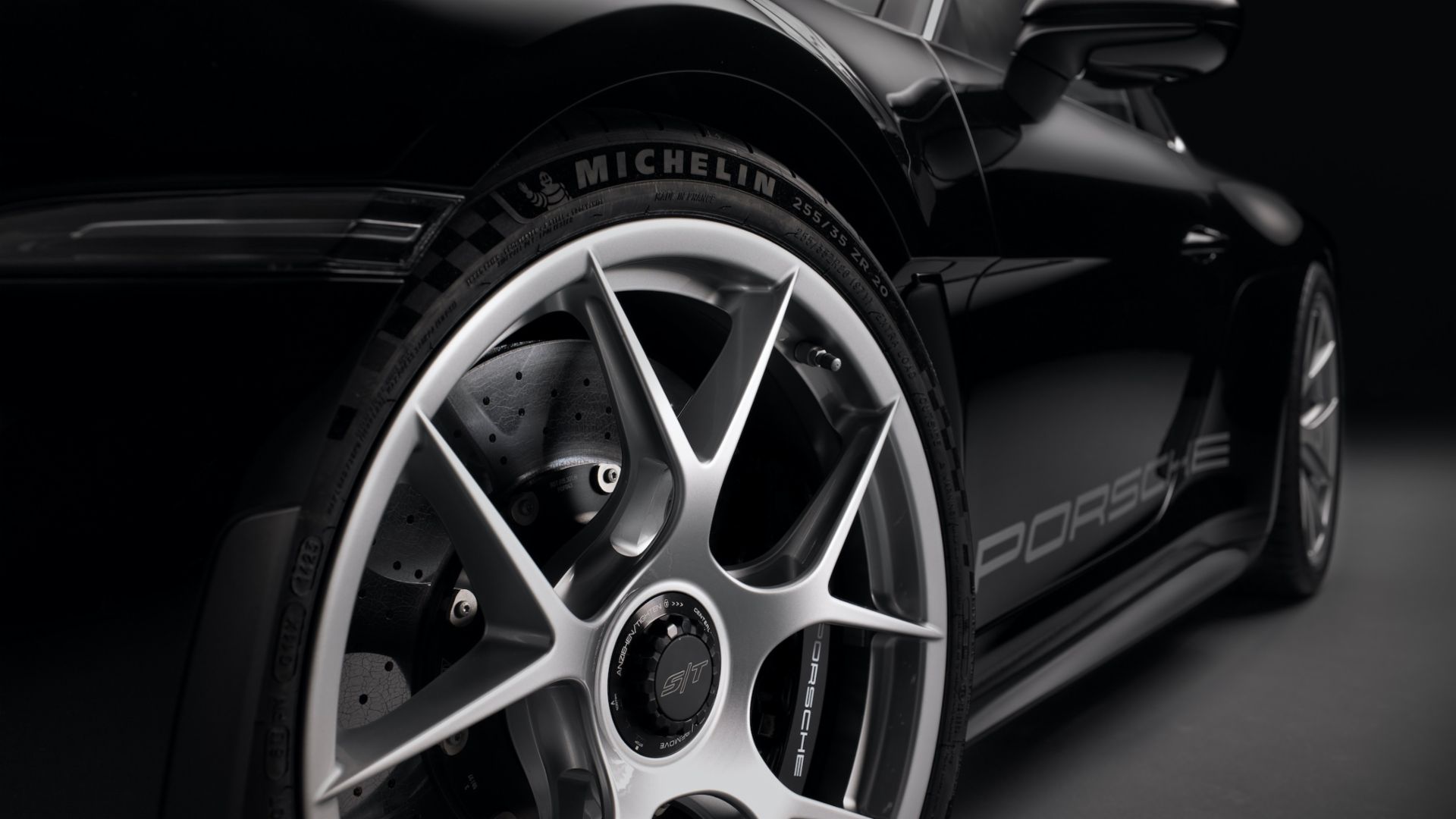
This guide exists to change that. Whether you drive a family crossover, a daily commuter sedan, a full-size pickup, a utilitarian or sporty SUV, or a sports car tuned within an inch of its life not unlike the awesome Porsche 911 S/T and its meaty Michelins in our featured image above, the framework for buying tires very well informed is the same: understand what the codes mean, match your tire to your climate and driving style, use real test data to compare brands, and know when it’s time to replace what you have.
We’ll walk through all of it — including the numbers, the science, the practical shortcuts, and the traps that catch even experienced drivers.
At a Glance…Key Takeaways
- Tires are your most critical safety component. The AAA Foundation found that all-season tires worn to 4/32″ tread need 87 extra feet to stop from 60 mph in the wet — a car still rolling at 40 mph when a car with new tires has already stopped.
- Three numbers tell you almost everything: section width (e.g., 225), load index (e.g., 91), and speed rating (e.g., W). Never go lower than what your door-jamb placard specifies.
- The 45°F / 7°C rule is real. Below that temperature, all-season rubber stiffens and loses grip — on dry roads, not just snow. Tire Rack’s BMW test showed winter tires stopping in ~59 feet from 30 mph on packed snow; all-seasons needed ~89 feet.
- Premium tires are usually cheaper per mile than budget tires — and they stop shorter every single mile.
- Replace at 6 years regardless of tread depth. Read the 4-digit DOT date code on the sidewall. Rubber ages whether you use it or not.
In Our Guide…navigate as you wish…
1. Why Tires Are Your No. 1 Safety Component
The U.S. National Highway Traffic Safety Administration (NHTSA) attributes an estimated 733 highway fatalities in a single year to tire-related failures — a figure the agency revised sharply upward after a methodological review. That number sits alongside a finding from NHTSA’s National Motor Vehicle Crash Causation Survey: tires that are under-inflated by 25% or more are three times more likely to be identified as a critical pre-crash factor.
87 ft
Extra stopping distance on worn (4/32″) vs. new all-season tires from 60 mph in wet conditions
— AAA Foundation
733
Estimated U.S. fatalities per year attributable to tire failure
— NHTSA revised estimate
3×
Higher odds of tire being cited as a crash factor when under-inflated by 25%+
— NHTSA NMVCCS
43%
Increase in wet stopping distance on tires worn to 4/32″ versus new
— AAA Foundation
The AAA finding is the one worth reading twice. Their 2018 test compared brand-new all-season tires to identical tires worn to a legal — but marginal — 4/32″ tread depth. At 60 mph in wet conditions, the worn tires needed 87 more feet to stop. To put that in perspective: a car with new tires has already come to a complete halt at the point where the car with worn tires is still traveling at 40 mph. That gap, across millions of cars on wet roads every day, explains a meaningful portion of those 733 deaths.
“The only thing connecting your car to the road are four contact patches of rubber — each about the size of your open hand.”
The takeaway isn’t meant to be taken away as pessimism — the ultimate takeaway is prioritization. Most drivers will spend hours researching a set of floor mats and ten minutes choosing tires. The data suggests that ratio should most definitely be reversed.
2. Reading the Sidewall: Every Code Explained
The string of numbers and letters molded into the side of every tire looks cryptic the first time. Once you decode it, you’ll read it in seconds. Here’s what a typical tire marking looks like — and what every character means.
How to Read a Tire Size Code — 225/45R17 91W XL
Speed Ratings at a Glance
| RATING | MAX SPEED | TYPICAL USE |
|---|---|---|
| Q | 99 mph / 160 km/h | Winter / snow tires |
| T | 118 mph / 190 km/h | Family sedans, minivans |
| H | 130 mph / 210 km/h | Sports sedans, coupes |
| V | 149 mph / 240 km/h | High-performance sedans & touring |
| W | 168 mph / 270 km/h | Ultra-high performance cars |
| Y | 186 mph / 300 km/h | Exotic / supercar OEM |
| (Y) / ZR (Porsche, baby!) | 186+ mph / 300+ km/h | Track-capable road cars |
Common Load Index Values
| Index | Max Load (lb) | Max Load (kg) | Index | Max Load (lb) | Max Load (kg) |
|---|---|---|---|---|---|
| 87 | 1,201 | 545 | 99 | 1,709 | 775 |
| 89 | 1,279 | 580 | 100 | 1,764 | 800 |
| 91 | 1,356 | 615 | 102 | 1,874 | 850 |
| 94 | 1,477 | 670 | 105 | 2,039 | 925 |
| 95 | 1,521 | 690 | 110 | 2,337 | 1,060 |
| 97 | 1,609 | 730 | 116 | 2,756 | 1,250 |
THE GOLDEN RULE OF SIZING
Always match or exceed the load index and speed rating on your driver’s door-jamb decal. Going lower on either voids most insurance policies and is unsafe. Going slightly higher (e.g., V to W) is fine. Never change the rim diameter without confirming ride-height impact via an online plus-sizing calculator.
Tire Rack has a neat, cogent little article on this titled “What Are Plus Size Wheels & Tires?” which explains how to plus-size wheels and tires.
To figure out alternative tire dimensions, use Tire Rack’s Tire Sizes by Wheel Diameter to look up your original equipment (OE) sizes, and input them into this dimension calculator. Any such calculator, however, is for information purposes only and does not guarantee fitment based on those calculators alone.
Tire and rim plus-sizing works like this: Plus-sizing (or “inch-up” sizing) increases the wheel diameter while decreasing the tire’s sidewall height (aspect ratio). This practice lets you run larger rims without compromising suspension clearance or altering your speedometer readings.
- “Golden” Rule of Thumb: For each 1-inch increase in wheel diameter, increase the tire width by 10 millimeters and decrease the sidewall height by 5% to 10%.
- Speedometer Accuracy: The overall diameter of your new tire/rim combination must remain within 3% of your original equipment (OE) diameter.
Typical plus-size path:
- OE Size: 205/55R16 (16″ rim)
- Plus 1: 225/45R17 (17″ rim)
- Plus 2: 225/40R18 (18″ rim)
To get precise, vehicle-specific wheel fitment and plus-sizing recommendations for your exact car, definitely play it most safe and sound by shopping directly through the Tire Rack Official Website, IOHO the very best-all-around way to shop for and purchase tires, or by calling Tire Rack’s Sales Dept. directly at 888-541-1777 for further assistance.
3. Tire Types: Which One Do You Actually Need?
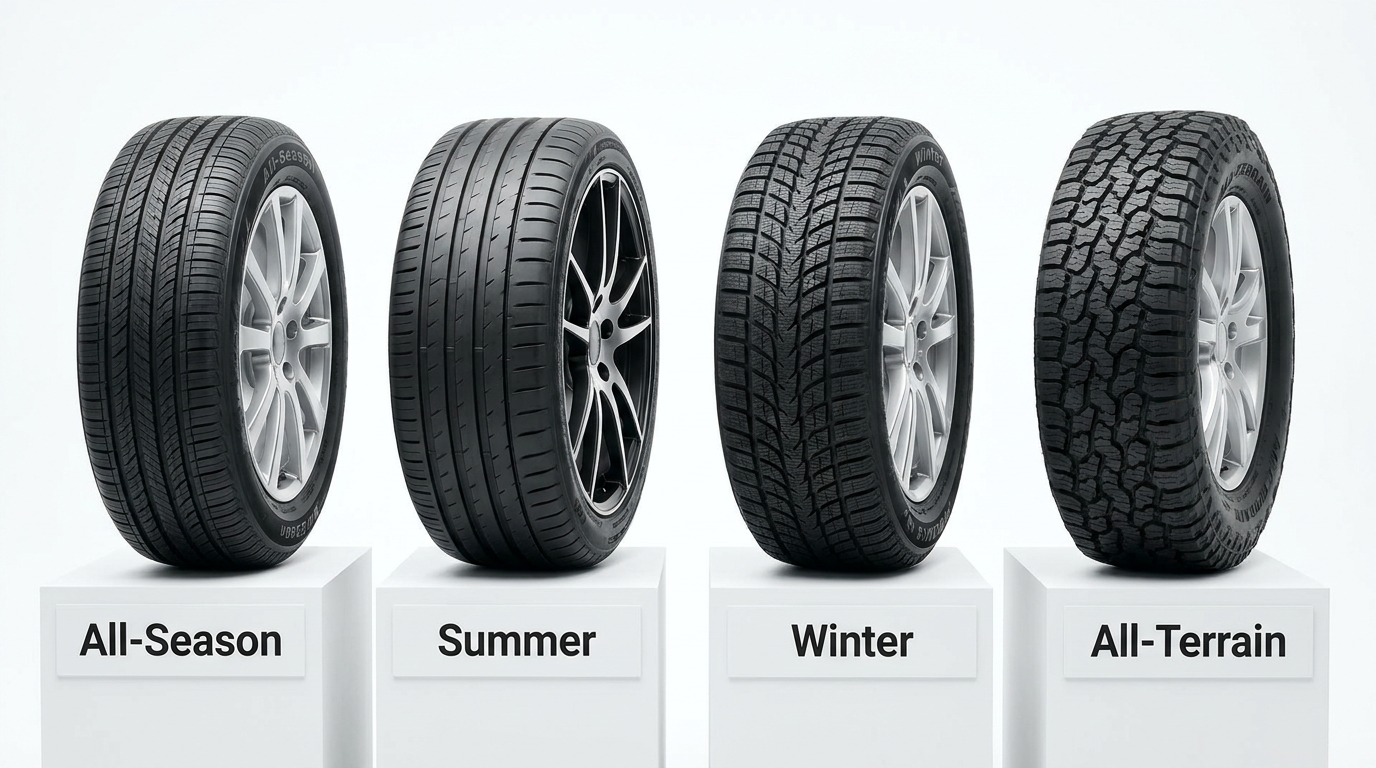
| TYPE | BEST FOR | DRY GRIP | WET GRIP | SNOW/ ICE | TREAD LIFE | NOTES |
|---|---|---|---|---|---|---|
| All-Season | Most cars, mild climate | Good | Good | Light only | Long | M+S marked. The compromise choice. |
| All-Weather (3PMSF) | Year-round, real winters | Good | Very Good | Good | Medium | Best single-tire solution in cold climates. |
| Summer / UHP | Sports & performance cars | Excellent | Excellent | None | Medium | Do not use below 45°F / 7°C. |
| Winter (3PMSF) | Dedicated cold-weather use | Fair | Excellent | Excellent | Medium | Switch back by spring — wears fast in heat. |
| Touring All-Season | Comfort-focused daily drivers | Good | Good | Light | Very Long | Quietest, smoothest — not for performance use. |
| Run-Flat | Cars without spare tires | Good | Good | Varies | Shorter | Stiffer ride; 50 mi / 50 mph after puncture. |
| All-Terrain (SUV) | SUVs with off-road use | Good | Good | Good | Medium | Slightly louder on-highway than H/T. |
| Mud-Terrain (SUV) | Serious off-road only | Fair | Fair | Good | Short | Very loud on highway. Not for daily commuters. |
A Word on Run-Flat Tires
Run-flats use reinforced sidewalls — sometimes up to ¾” thick — that support the car’s weight for approximately 50 miles at 50 mph after a complete air loss, letting you reach a tire shop without a roadside change. They come standard on many BMW, MINI, Corvette, and Lexus models.
The tradeoffs are real: the stiffer sidewall transmits more road noise and harshness, tread life tends to be 10–30% shorter than a comparable standard tire, the tires cost 20–30% more, and most cannot be repaired after any puncture. Many owners swap to conventional tires plus a roadside-assistance subscription at first replacement such as through purchase at Tire Rack — a worthwhile trade for most.
4. Tread Patterns: Symmetrical, Asymmetrical, Directional
The Three Tread Pattern Types
Symmetrical tires have the same pattern on both halves of the tread and can be mounted in any orientation. They rotate freely to any position — forward, backward, cross-axle — making tire management simple and inexpensive. The tradeoff is that they don’t specialize: they handle and drain adequately, but not optimally in any single condition.
Asymmetrical tires use different tread zones on the inner and outer halves. The outer section is typically a denser block pattern for dry cornering grip; the inner section carries wider grooves for wet-weather drainage and aquaplaning resistance. The marked “OUTSIDE” sidewall must always face outward. They can still be rotated front-to-rear — just keep each tire on the same side of the car.
Directional tires use a V-shaped groove pattern engineered to pump water outward as the tire spins in one direction. They provide outstanding wet-weather performance, but the rotation arrow on the sidewall cannot be ignored: mount them in the wrong direction and the V channels water toward the center of the contact patch instead of away from it — exactly backward. Directional tires can only rotate front-to-rear on the same side of the car. Cross-axle swaps require dismounting and remounting on different rims.
5. UTQG Ratings — Useful, With Caveats
The UTQG (Uniform Tire Quality Grade) is a U.S. government-required rating system, and it’s printed on every passenger car tire sidewall. It has three parts:
- Treadwear (a number, e.g., 400, 600, 800) — a relative index where 100 = baseline. A treadwear of 400 lasted 4× as long as the reference tire in standardized Texas convoy testing. Touring all-seasons often reach 600–800; performance summer tires sit at 200–340; max-performance track tires can be as low as 140.
- Traction (AA, A, B, C) — straight-line wet braking grade. AA is top and indicates roughly 0.54g of wet-pavement deceleration. Most modern premium tires earn A or AA.
- Temperature (A, B, C) — heat resistance at speed. Grade A is rated for sustained use above 115 mph. Below A is rare on modern passenger tires.
⚠ CRIICAL LIMITATION
Treadwear ratings are self-certified by the manufacturer — not independently verified. A Hankook rating of 700 and a Michelin rating of 700 were each tested in separate convoys by the manufacturers themselves, on different test vehicles, in different weather, on different days.
Cross-brand comparison using UTQG treadwear is therefore largely meaningless. Use it as an indicator only within a single brand’s lineup, or as a rough category guide (touring vs. UHP). For true comparisons, use Consumer Reports’ and ADAC’s independent test data instead.
6. OE Markings: N-Spec, ★, MO, AO, and More
Some tires carry a small additional code on the sidewall that most buyers never notice — a letter or symbol indicating that the tire was co-developed with a specific automaker and is physically different from the same-named tire on the open market. These are OE (Original Equipment) approvals, and they matter more than the general public appreciates.
| CODE | AUTOMAKER | WHAT IT MEANS |
|---|---|---|
| N0, N1, N2… / NA0, NB0… | Porsche | Co-developed at Weissach, tested at the Nürburgring. The second letter identifies model line: NA = 911, NB = 718, NC = Cayenne, ND = Panamera, NE = Macan, NF = Taycan. The number is the revision — higher ≠ better, just newer. |
| ★ | BMW Group | Acoustic foam-lined for cabin noise, often run-flat specific compound tuning |
| MO / MO1 / MOE | Mercedes-Benz | MOE = Extended (run-flat). Often stiffer sidewall for AMG fitments. |
| AO | Audi | Tuned for Audi-specific suspension geometry and quattro AWD dynamics |
| T0 / T1 | Tesla | Low rolling resistance compound; HL (High Load) construction for EV weight |
| K1 / K2 | Ferrari (Michelin) | Track-focused compound calibration; K2 is the higher-performance revision |
| J | Jaguar | Acoustic and handling tuning for specific Jaguar platforms |
| LR | Land Rover | Load and off-road tuning for Range Rover / Defender platforms |
| MGT | Maserati | Compound and sidewall stiffness calibration for Maserati chassis |
THE PORSCHE N-SPEC IN MORE DETAIL
Of all the OE marking systems, Porsche’s is the most rigorously documented and arguably the most consequential. The “N” stands for Nürburgring — where every approved tire is tested — and the approval process begins four years before a new Porsche enters production. Porsche’s tire development team tests more than 150 sets of prototype tires per model, across the Nürburgring, Nardò Technical Center, and the Contidrom wet-handling facility in Germany.
The tire that earns the N stamp may have different sipe geometry, different compound hardness, or additional reinforcement plies compared to the identical-sounding consumer version. For a car like the 911 — which is extraordinarily sensitive to front-to-rear tire balance due to its rear-engine weight distribution — fitting the wrong N-number, or mixing N-spec with non-N-spec, can measurably change how the chassis behaves at its limit.
7. Winter vs. All-Season vs. All-Weather: The Data
Understanding the distinctions between winter, all-season, and all-weather tires is critical for optimal vehicle performance under varying weather conditions. Winter tires are specifically engineered for low temperatures and icy surfaces, providing superior grip and handling.
In contrast, all-season tires offer a balance suitable for a range of conditions, while all-weather tires are designed to perform adequately in both winter and summer climates. Selecting the appropriate tire type based on regional climate and driving habits is essential for ensuring safety and efficiency.
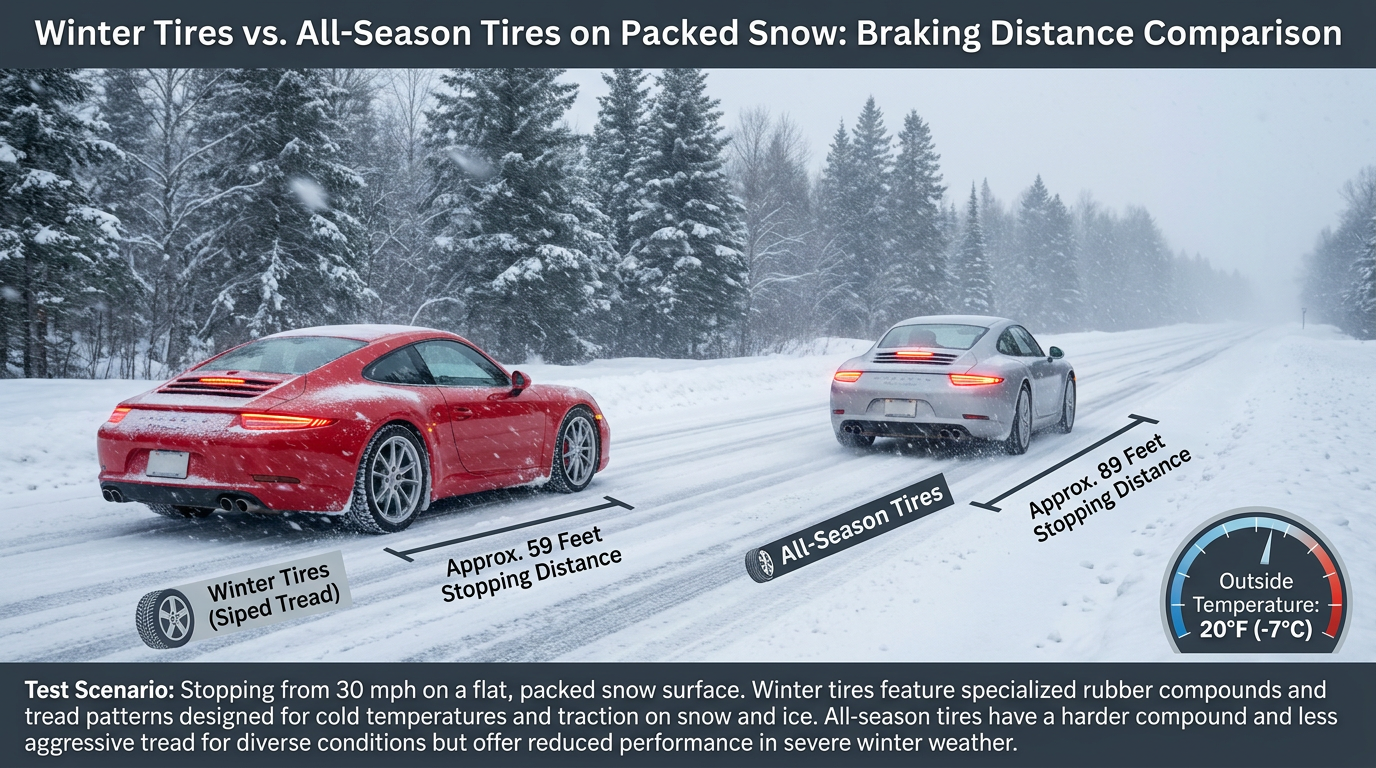
The most important decision most car owners in cold climates never make is whether to run a dedicated set of winter tires. The argument for it is entirely data-driven as dramatically illustrated in the image above.
“In Tire Rack’s BMW 325i comparison test, winter tires stopped from 30 mph on packed snow in approximately 59 feet. All-season tires needed approximately 89 feet — roughly two additional car lengths.”
— Tire Rack, Test #103: All-Season vs. Winter (Passenger Vehicle)
The 7°C / 45°F Rule
Winter tires are not just for snow. The rubber compounds in all-season tires begin to stiffen and lose elasticity below approximately 7°C (45°F) — which means reduced grip on dry and wet cold pavement, not only in snow or ice. If your winters regularly dip below this threshold — even without significant snowfall — a 3PMSF-marked winter or all-weather tire is the honest choice.
3PMSF vs. M+S: Know the Difference
The Three-Peak Mountain Snowflake (3PMSF) symbol means the tire passed an independent standardized snow-traction test (ASTM F1805 or UNECE R117). The M+S (Mud and Snow) marking is self-assigned by the manufacturer based on tread pattern geometry alone — no independent test required. Every 3PMSF tire earns M+S by default, but millions of tires carry M+S without the snowflake. In heavy snow or sustained cold conditions, M+S alone is not enough.
| Metric | Summer Tire | All-Season | All-Weather (3PMSF) | Winter Tire (3PMSF) |
|---|---|---|---|---|
| Dry grip (>45°F) | Excellent | Good | Good | Fair–Good |
| Wet grip (>45°F) | Excellent | Good | Very Good | Very Good |
| Cold dry (<45°F) | Poor | Fair | Good | Excellent |
| Packed snow | Dangerous | Poor–Fair | Good | Excellent |
| Ice | Dangerous | Poor | Fair–Good | Good–Excellent |
| Tread life | Medium | Long | Medium | Short (if used in summer) |
| Seasonal swap needed? | Yes (spring/fall) | No | No | Yes (spring/fall) |
A University of Michigan Sustainable Worldwide Transportation study (SWT-2016-10) put the snow stopping data in striking context: winter-tire stopping distance on packed snow is approximately 35% shorter than all-season tires, and approximately 50% shorter than summer tires. The same study cited Transports Québec’s 2011 impact analysis of the province’s mandatory winter-tire law, which found a net reduction in crash victims of about 5% — roughly 574 fewer injuries in the first two enforcement seasons.
8. Performance Tires Deep Dive
Performance tires exist on a spectrum from “slightly sportier all-season” to “essentially a slick with a token tread pattern.” Understanding where on that spectrum you actually need to be will save you money and potentially your car.
The Performance Tire Ladder
Max-Performance Summer (UHP)
The sweet spot for sports cars, hot hatches, and performance sedans used primarily on public roads above 45°F. Key models: Michelin Pilot Sport 4S, Continental SportContact 7, Bridgestone Potenza Sport, Pirelli P Zero PZ4, Goodyear Eagle F1 Asymmetric 6. Treadwear ratings in the 280–340 range; most owners get 15,000–25,000 miles from a rear set. In the 2025 ADAC summer tire test of 225/40 R18 tires, Continental SportContact 7 placed first, followed by Bridgestone Potenza Sport and Michelin Pilot Sport 5.
Extreme / Track-Day Road Tires (Cup Tires)
These are the tires on which records get set. The Michelin Pilot Sport Cup 2 is standard equipment on the Porsche 911 GT3, GT3 RS, GT2 RS, Corvette Z06, and BMW M4 CSL — and it comes in N0, N1, N2, MO1A, K1, K2, and TPC SPEC variants, each with compound calibrations tuned to a specific car. The Cup 2 R (Road) is the next step: it earned Michelin’s “connect” track-to-road positioning and is specifically what the Porsche 911 GT2 RS MR used for its Nürburgring record laps. Treadwear is typically 180–240; expect rear tires to last 3,000–6,000 miles on a car driven hard. They are genuinely good in the wet when warm, but not recommended for cold-weather driving or daily use in heavy rain from a cold start.
Semi-Slick / Competition Road Tires (100 Treadwear and below)
Toyo Proxes R888R, Yokohama Advan A052, Nankang AR-1. Street-legal but track-focused. Sketchy in the wet, very fast in the dry, very short tread life. The right choice only for dedicated track-day cars that are trailered to events.
⚠ Match the tire to how you actually drive
Cup 2s on a street-driven car that never sees a track day are a waste of money (short life, cold-weather risk) and a slight safety compromise in the rain at lower temperatures. A Michelin Pilot Sport 4S or Continental SportContact 7 is faster in real-world conditions, lasts longer, and handles a wider range of weather.
9. Tire Brands: Who Makes What, and Does the Tier Matter?
| TIER | BRANDS | WHAT THE TESTS SHOW |
|---|---|---|
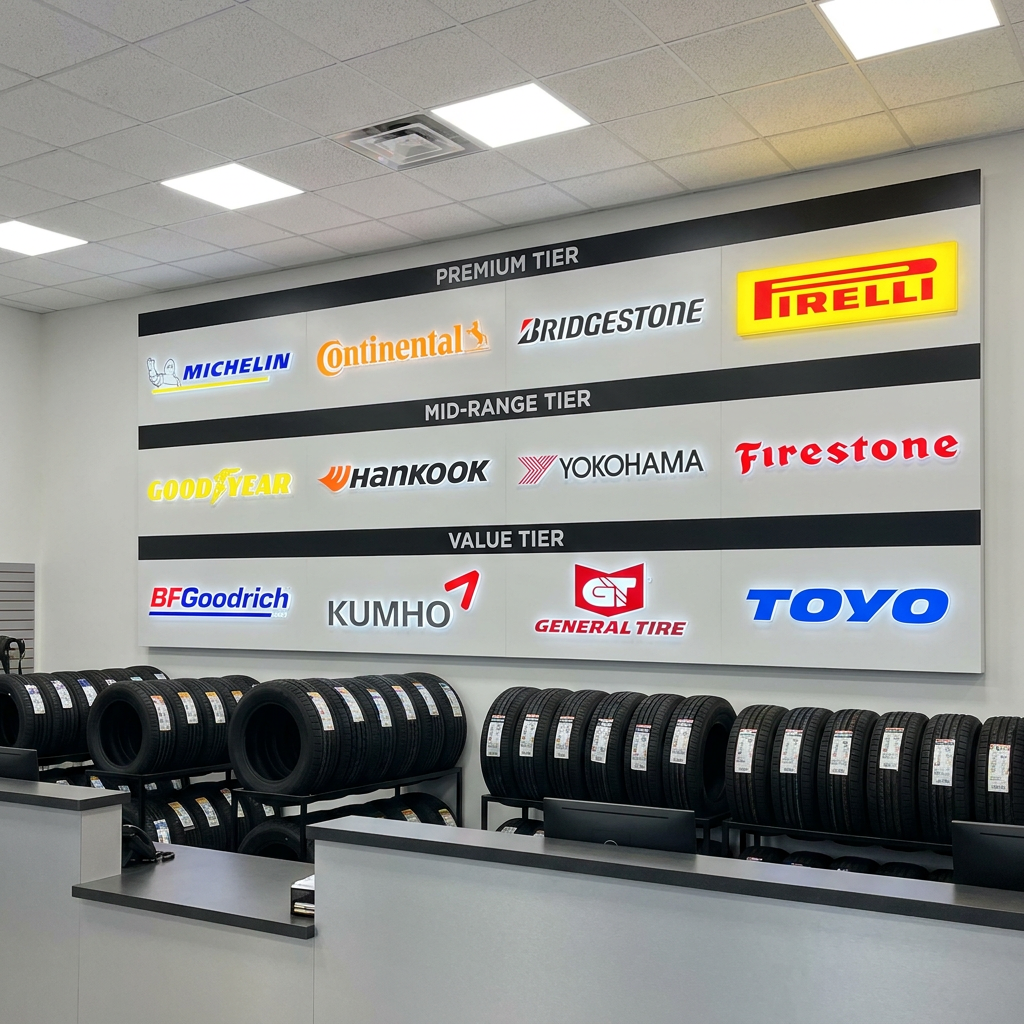
| Premium / Tier 1 | Michelin, Continental, Bridgestone, Goodyear, Pirelli | Routinely top ADAC, Auto Bild, TÜV, Consumer Reports. Shortest wet stopping distances and best tread life per dollar in most categories. |
| Mid-Premium / Tier 2 | Hankook, Yokohama, Toyo, Falken, Kumho, Nokian, Vredestein, Nitto, Dunlop, General, Cooper, Firestone | Frequently within a few percent of Tier 1 in independent tests. The 2025 ADAC test rated Falken Azenis FK520, Yokohama Advan Sport V107, and Vredestein Ultrac Pro as “good” alongside Tier-1 brands. |
| Value / Tier 3 | Nexen, GT Radial, Sumitomo, Hercules, Sailun, Laufenn, Linglong, Milestar | Quality varies widely. The 2025 ADAC test included a budget tire that needed 17 additional meters (56 feet) to stop from 80 km/h compared to the top-rated tire. For performance or winter use, avoid this tier entirely. |
It’s worth noting that some Tier-2 brands are owned by Tier-1 companies: Dunlop and Kelly are Goodyear brands; Firestone is Bridgestone; General Tire is Continental; Laufenn is Hankook. Shared parent companies don’t guarantee equivalent tire performance — each brand operates somewhat independently — but it does suggest manufacturing standards aren’t wildly different from top to bottom within a corporate family.
10. Where and How to Buy
| RETAILER | BEST FOR | WATCH OUT FOR |
|---|---|---|
| Tire Rack (tirerack.com) | Best independent test data, widest catalog, survey results. Ships to a local installer or Tire Rack installer near you. | Two-transaction process (buy online, install separately). Returns more complex. |
| Discount Tire / America’s Tire | Price-match guarantee, 70+ brands, fast installations, huge store network. | Can be aggressive with upsells (TPMS sensors, road hazard). Negotiate. |
| Costco | Best total-cost option for members: installation + lifetime rotation + balancing + flat repair + nitrogen + 5-year road hazard bundled into the sticker price. | Members only; smaller brand selection (mainly Michelin, Bridgestone, Pirelli, BFGoodrich). Wait times can be long. |
| Dealership | The only reliable source for obscure OE-specific tires (Porsche N-spec, BMW ★, Corvette TPC). Right choice for in-warranty vehicles where you want documentation. | Almost always the most expensive option, often 30–50% above independent shops. |
| Local Independent Shop | Personal service, good advice, often willing to price-match. | Quality varies. Verify they have a Road Force balancer — critical for performance and staggered fitments. |
| Amazon | Convenience. Some competitive pricing. | No installation, no road hazard, warranty support inconsistent. Best only if you’re comfortable arranging separate installation. |
5 Questions to Ask Before You Commit
- What is the DOT date code on those specific tires? (Ask to see the sidewall — refuse anything manufactured more than ~12–18 months ago.)
- Does the quoted price include installation, balancing, valve stems, TPMS reset, and old-tire disposal?
- What does the road hazard warranty cover, and is it prorated over time?
- Do you include a four-wheel alignment check, and what does it cost with the tire purchase?
- For staggered setups or performance cars: do you have a Hunter Road Force balancer?
11. When to Replace Your Tires
Tread Depth: New vs. Replace Soon vs. Replace Now
Five triggers tell you it’s time for new tires:
- Tread depth at 4/32″ — start shopping immediately. This is the safety-conscious threshold, backed by AAA’s stopping-distance data. Use the quarter test: insert a U.S. quarter upside-down into the tread groove. If you can see the top of Washington’s head, you’re at or below 4/32″.
- Tread depth at 2/32″ — replace now, not tomorrow. This is the U.S. legal minimum and also the point at which wet-weather grip is critically compromised. The penny test applies here: if Lincoln’s entire head is visible, you’re done.
- Age over six years — replace regardless of tread depth. Rubber oxidizes, hardens, and micro-cracks from the inside out whether you drive on it or not. Read the DOT date code (last 4 digits of the DOT string on the sidewall — e.g., 2322 = week 23 of 2022). Never use tires more than ten years old under any circumstances, and inspect for cracking at five years. Don’t forget the spare.
- Visible damage. Any sidewall bulge, crack, or cut; any cord showing through the tread or sidewall; any puncture within 1 inch of the sidewall — replace, do not repair.
- Uneven wear patterns. Inner-edge wear suggests excessive negative camber or worn control arm bushings. Outer-edge wear points to positive camber or chronic under-inflation. Cupping or scalloping suggests dead shock absorbers or an out-of-balance wheel. None of these fix themselves; address the alignment or suspension issue at the same time as the tire replacement.
12. Tire Maintenance: Pressure, Rotation, Alignment

Tire Pressure
Inflate to the pressure on the driver’s-door jamb placard — not the “MAX PRESS” number molded on the tire sidewall (that’s the tire’s structural limit, not the car’s recommended operating pressure). Check cold, monthly. Tires lose roughly 1 psi per month naturally, and an additional 1 psi for every 10°F (5.5°C) drop in ambient temperature — meaning a properly inflated tire in October can read 5–8 psi low by January in cold climates.
The U.S. Department of Energy estimates that every 1 psi drop across all four tires reduces fuel economy by approximately 0.2%. Properly inflated tires can improve mileage by up to 3%. Don’t rely solely on your TPMS: it only triggers a warning when pressure has dropped 25% below target — well past the point where wear and fuel economy are already suffering.
Rotation
Rotate every 5,000–8,000 miles — most conveniently at every oil change. The pattern depends on drivetrain:
- FWD — Forward Cross: fronts go straight back; rears cross to opposite front corners.
- RWD / AWD / 4WD — Rearward Cross: rears go straight forward; fronts cross to opposite rear.
- Directional tires: front-to-rear only, same side. Cannot cross over.
- Staggered fitments (e.g., most 911s, many rear-drive sports cars): cannot be rotated at all. Budget for replacing rears approximately twice as often as fronts.
Alignment and Balancing
Get a four-wheel alignment every time you install new tires and any time the car pulls, the steering wheel sits off-center at straight-ahead, or you’ve hit a significant pothole. Misalignment by even 0.3° can cut tire life by thousands of miles. Balance at every new mounting and whenever you feel a steering-wheel vibration at highway speed. For performance cars and staggered fitments, insist on a Hunter Road Force balancer, which simulates the tire rolling under load — standard spin-balance misses the internal irregularities that cause vibration at speed.
Off-Season Storage
Store seasonal tires clean, bagged (airtight bags reduce ozone exposure), in a cool dark area away from electric motors and direct sunlight. Lay unmounted tires flat, or hang mounted assemblies. Avoid standing mounted tires on their tread for months — it can flat-spot the tire.
13. EV and Hybrid Tires: What’s Actually Different
Electric vehicles pose three specific challenges that standard tires weren’t designed for:
- Weight. Most EVs weigh 20–30% more than comparable ICE vehicles due to battery packs. A standard load-index tire may be technically adequate but wears faster and runs hotter under the extra load.
- Instant torque. EV motors deliver maximum torque at zero rpm, subjecting the rear (or all four) tires to shear forces that a gradually-spooling combustion engine never generates. Michelin reports EV tires can wear up to 20% faster than equivalent ICE-car tires.
- Noise. Without an engine to mask it, tire noise becomes the dominant in-cabin sound on an EV. Most EV-specific tires incorporate acoustic foam liners (Continental ContiSilent, Bridgestone Turanza EV) or specific resonator cavities to address this.
Rolling resistance matters more on an EV than on any other vehicle type. Michelin’s internal testing across approximately 50 tire models on the same EV found a 14% difference in range between the best and worst tires tested. On a 300-mile-range vehicle, that’s 42 miles of range difference — from a tire choice.
Practical buying advice for EV owners: Look for the EU tire label’s rolling resistance grade of A, an XL or HL load designation meeting or exceeding OE specs, and a wet-grip grade of A or B. EV-specific branding (Pirelli P Zero Elect, Goodyear ElectricDrive, Hankook iON, Bridgestone Turanza EV) is real, but the label itself matters less than those three underlying specs.
14. SUV and Truck Tires: Load Ratings and Real-World Choices
P-Metric vs. LT: Know Which Your Vehicle Requires
The prefix on your tire size tells you which standard to which it was built:
- P (P265/70R17) — Passenger metric. Used on most crossovers and lighter SUVs.
- LT (LT265/70R17) — Light Truck. Stronger sidewall, higher inflation, greater load capacity. Required on most ¾-ton and 1-ton trucks.
- No prefix (265/70R17) — Euro-metric; functionally similar to P but a different load-capacity standard. Common on European-market vehicles.
⚠ If your truck came with LT tires, replace with LT
Fitting P-metric tires on a vehicle that was designed for LT requires a mandatory 10% load-capacity de-rating per Tire and Rim Association rules. Your factory specs already account for this. Don’t downgrade.
Quick SUV / Truck Recommendations
| VEHICLE TYPE | RECOMMENDED TIRE CATEGORY | EXAMPLE TIRES |
|---|---|---|
| Crossover / family SUV (on-road) | Premium all-season or all-weather (P-metric) | Michelin CrossClimate2, Continental CrossContact LX25, Goodyear Assurance WeatherReady |
| Half-ton truck, light towing | LT highway-terrain all-season | Michelin Defender LTX M/S, BFGoodrich KO3 (AT) |
| ¾-ton+ or heavy towing | LT Load Range E minimum | Michelin LTX AT2, Continental TerrainContact A/T |
| Off-road weekender / overland | All-terrain (80% on-road, 20% off) | BF Goodrich KO3, Falken Wildpeak A/T4W, Toyo Open Country A/T III |
| Serious off-road / rock crawling | Mud-terrain (be prepared for road noise) | BFGoodrich Mud-Terrain T/A KM3, Goodyear Wrangler MT/R |
15. Budget Guide: Think Cost Per Mile, Not Cost Per Tire
The framing most buyers use — “the cheapest tire that fits” — is mathematically wrong. A $200 tire that lasts 65,000 miles costs $0.003 per mile. A $120 tire that lasts 30,000 miles costs $0.004 per mile — 33% more expensive over its life, and with shorter stopping distances every single mile it’s driven. The premium tier nearly always wins on cost-per-mile when tread life is factored in.
| DRIVER PROFILE | RIGHT TIRE TYPE | SUGGESTED BRANDS | ESTIMATED 4-TIRE INSTALLED COST (USD) |
|---|---|---|---|
| Daily commuter, mild climate | Premium touring all-season | Michelin Defender2, Continental PureContact LS | $700–$950 |
| Daily commuter, real winters | All-weather 3PMSF or all-season + winter set on steel wheels | Michelin CrossClimate2, Nokian WRG5 | $750–$1,100 (one set); $1,100–$1,600 (two sets) |
| Performance enthusiast | Max-perf summer + winter set | Michelin PS4S, Continental SportContact 7 | $1,100–$1,800 per set |
| Family SUV | Premium P-metric all-season / all-weather | CrossClimate2, Goodyear Assurance WeatherReady | $900–$1,300 |
| Working pickup | LT all-terrain or highway-terrain | BFGoodrich KO3, Michelin LTX AT2 | $1,000–$1,600 |
| Classic / collector car | Period-correct or approved classic spec | Pirelli Cinturato Collezione, Coker, Vredestein Classic | Varies significantly by size |
16. Seven Mistakes That Cost Drivers Every Year
- Mixing tire brands or types across an axle. Two different tires on the same axle behave differently under load. On AWD vehicles, mismatched circumference can damage the center differential. Always replace in matched pairs, minimum — all four is ideal.
- Ignoring the DOT date code on “new” tires. Tires can sit in a warehouse for 2–4 years before reaching your car. Always check the production date before accepting installation. A tire with 8/32″ of tread but a four-year-old DOT code is already nearly halfway to its recommended replacement age.
- Running summer tires in winter temperatures. Below 45°F, summer rubber stiffens dramatically. This is not a theoretical risk — it is a documented, measurable loss of braking and cornering grip on cold-dry and cold-wet roads.
- Chronic under-inflation. Three times the pre-crash factor risk per NHTSA, reduced fuel economy, dramatically accelerated wear on the outer tread edges. A $7 tire gauge used monthly prevents all of this.
- Skipping rotation. On a FWD car, front tires can wear out 10,000–15,000 miles before rears without rotation, forcing you to replace a single axle at odd intervals and creating potential for mismatched wear states across the car.
- Fitting cheap tires on a performance or sports car. The chassis, brakes, and electronics of any performance car were engineered around specific tire behavior. Downgrading to a Tier-3 tire to save $200 per corner changes the braking distance, grip limit, and handling balance the engineers designed in.
- Skipping alignment after new tires. Even a minor misalignment — within normal spec but at the edge of tolerance — can eat through new tires 20–30% faster than correctly aligned wheels. New tires plus a fresh alignment is money better spent than new tires alone.
17. Frequently Asked Questions
Do I need to replace all four tires at once?
You should replace tires in matched pairs by axle at minimum. On AWD vehicles (Subaru, Audi Quattro, Porsche Carrera 4, most modern crossovers), significant tread-depth differences front-to-rear can stress the center coupling — many manufacturers recommend replacing all four when any tire is significantly worn. On RWD sports cars with staggered fitments, fronts and rears are different sizes and cannot be swapped, so replacement timing differs naturally.
Can I mix brands as long as the size and rating are the same?
Technically legal in most places, but not recommended. Two tires from different manufacturers — even with identical size codes — can have different grip curves, lateral stiffness, and aquaplaning behavior. Ideally, run four matching tires. At minimum, run matched pairs on each axle.
What does the “XL” or “Extra Load” designation mean on my tires?
XL (or Reinforced / RF) tires are built with a stiffer carcass that allows them to carry approximately 10–15% more weight than a standard-load tire of the same size, at higher inflation pressures (up to 41 psi versus ~36 psi for standard load). They are commonly required for heavier vehicles — SUVs, EVs, and performance cars with significant curb weight. If your car’s door-jamb placard specifies XL or Extra Load, you must replace with XL.
Are all-weather tires (3PMSF) as good as dedicated winter tires?
Close, but not equal on ice. In moderate cold-climate conditions (occasional snow, mostly cold wet roads) all-weather 3PMSF tires like the Michelin CrossClimate2 or Nokian WRG5 perform very close to dedicated winters. In deep-cold Nordic conditions, severe ice, or sustained sub-freezing temperatures, dedicated winter tires — particularly Nordic studless designs like the Bridgestone Blizzak — still have a grip advantage. For most North American and Northern European climates outside of Scandinavia and Quebec, the all-weather is an excellent and convenient choice.
What is the OE tire on my car, and should I replace it with the same model?
Your door-jamb placard and owner’s manual specify the OE tire size and minimum speed/load ratings. For most cars, replacing with the same or equivalent model from the original tier is right. For high-performance cars with OE markings (N-spec Porsches, BMW ★, Mercedes MO), matching the exact OE specification is important — particularly while under warranty. For everyday drivers, a well-reviewed Tier-1 or Tier-2 equivalent with better consumer-facing tread life can be a legitimate improvement over a pure OE replacement.
Can I inflate my tires to the maximum pressure shown on the tire sidewall?
No. The “MAX PRESS” figure on the tire is the tire’s structural maximum — not the recommended operating pressure. Always use the pressure specified on your car’s door-jamb placard. Over-inflating reduces the tire’s contact patch (less grip), increases wear in the center of the tread, and creates a harsher, less controlled ride.
How do I know if my tires are too old even if there’s tread left?
Read the DOT date code on the tire sidewall. Find the letters “DOT” followed by a series of characters; the last four digits are week and year of manufacture (e.g., 2321 = week 23 of 2021). Porsche recommends replacing tires older than six years regardless of remaining tread depth, and never using tires over ten years old. Most major tire manufacturers and the British Rubber Manufacturers Association hold to the same six-year guidance.

We may earn a modest commission when you make a secure purchase through our links — but at absolutely no additional cost to you. So thanks for your kind support IN KEEPING US AD-FREE and keeping the lights on, here at StuttgartDNA! Please peruse our disclosure policy to learn more.